Table of Contents
I remember sitting at my kitchen table a few years ago, scrolling through a news app on my phone. The headlines were filled with the same geopolitical tension we see almost every week regarding the Middle East. I glanced over at my worn-out study Bible sitting on the counter and wondered: is any of this in there? I wanted to know exactly what the Bible predicted about Iran. I assumed it would be a cryptic, hard-to-understand mystery. But what I actually found totally shifted my perspective.
If you are looking to understand what the Bible predicted about Iran, you might get confused if you just try typing “Iran” into a Bible app search bar. You will probably get zero results. That used to frustrate me until I learned a basic historical fact: nations change their names. To discover what the Bible predicted about Iran, we have to use the names that were active thousands of years ago.
When I started digging into ancient maps, I realized that understanding geography is the main key to unlocking what the Bible predicted about Iran. Once you know what to look for, the scriptures light up with incredible accuracy. You realize that what the Bible predicted about Iran is not just a bunch of doom and gloom. It actually contains some of the most hopeful, redemptive promises in the entire historical record.
Finding Iran in Ancient Maps: Persia and Elam
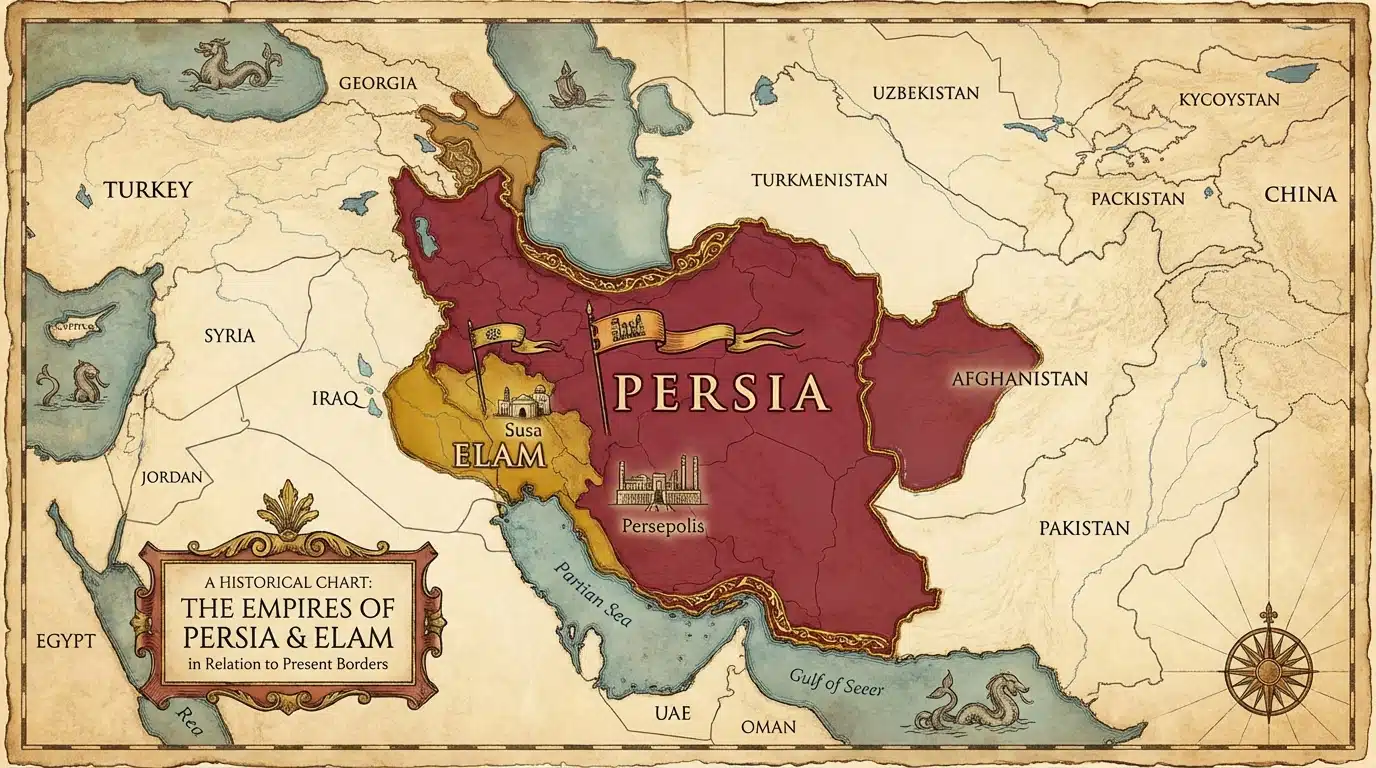
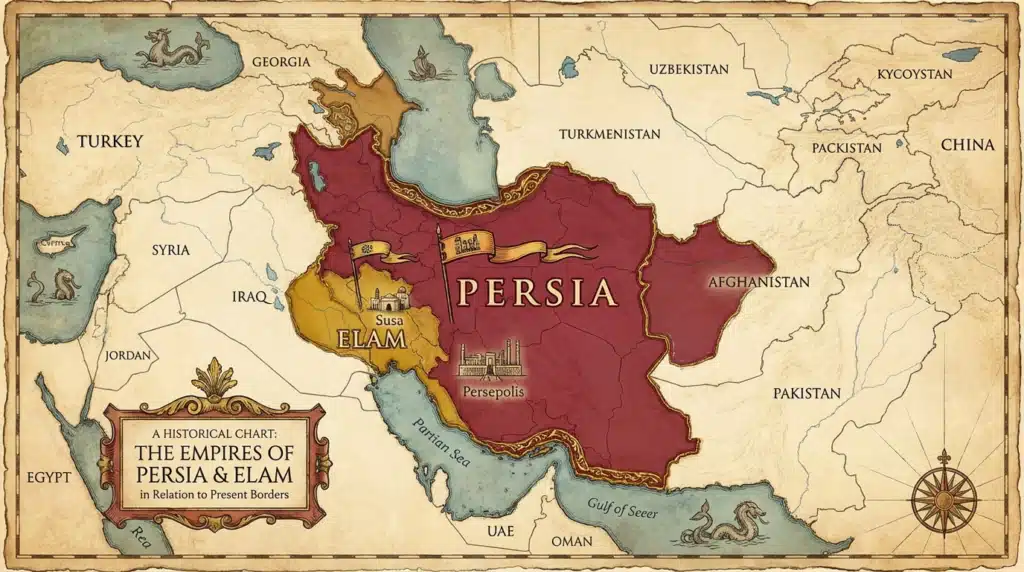
Before 1935, the modern nation we know today was called Persia. The government officially requested that the international community start using the historical, native name “Iran” in the early 20th century. But if you go back even further into ancient biblical times, long before the Persian Empire peaked, the western part of modern-day Iran was known as Elam.
Whenever you read the Old Testament and see the names “Persia” or “Elam,” you are reading what the Bible predicted about Iran. The Elamites were a powerful ancient people who lived in the valleys and plains east of the Tigris River. They were known for their fierce warriors and incredible archers. I actually bought a historical atlas of the Middle East to trace these borders myself. Seeing the ancient boundaries of Elam overlapping exactly with the western borders of the modern Iranian state was a massive “aha” moment for me.
If you miss this geographical connection, you miss out on almost everything the Bible predicted about Iran. Persia is mentioned heavily in the books of Esther, Ezra, Nehemiah, and Daniel. Elam shows up in Genesis, Isaiah, Jeremiah, and Ezekiel. By putting these two names together, we get a complete picture of what the Bible predicted about Iran over thousands of years.

Isaiah’s Shocking Prophecy: King Cyrus
A lot of people assume that all ancient prophecies regarding Middle Eastern nations are negative. But one of the most incredible things the Bible predicted about Iran is actually overwhelmingly positive. It revolves around a man named King Cyrus the Great.
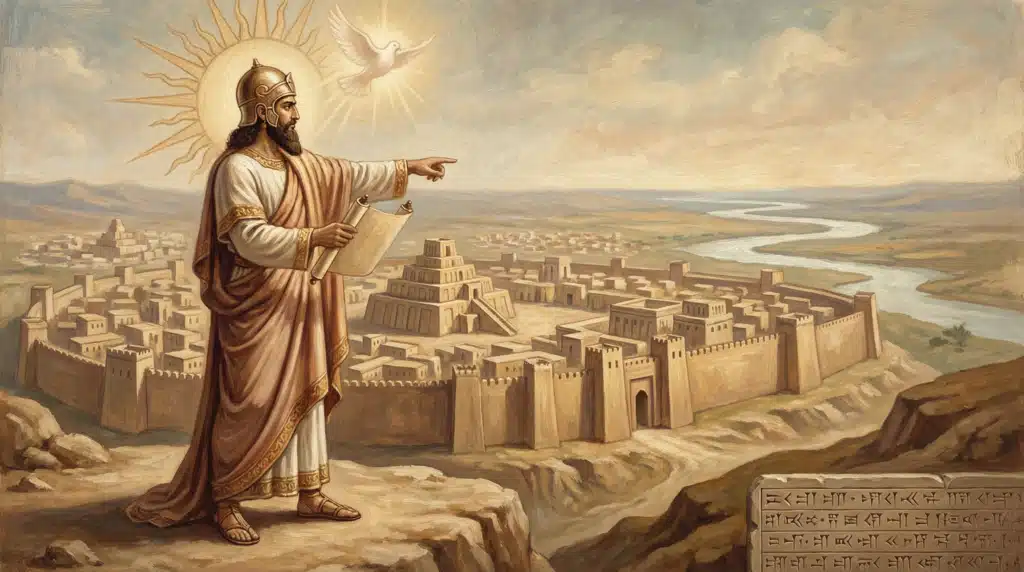
In the book of Isaiah, written around 700 BC, the prophet writes down a message from God to a future king. God names this king “Cyrus.” Here is the crazy part: Cyrus wasn’t even born yet. In fact, he wouldn’t come to power for another 150 years. I remember reading Isaiah 44 and 45 and just staring at the page. God called Cyrus His “anointed” and said that this Persian king would be the one to free the Jewish people from captivity in Babylon and decree the rebuilding of Jerusalem.
This is a major piece of what the Bible predicted about Iran. When Cyrus the Great conquered Babylon in 539 BC, he did exactly what the prophecy said. Historical artifacts, like the famous Cyrus Cylinder currently housed in the British Museum, actually verify this biblical account. Cyrus instituted human rights policies that allowed displaced people, including the Jews, to return to their homelands.
I find it deeply moving that some of the greatest ancient support the Jewish people ever received came from Persia. So, when someone asks me what the Bible predicted about Iran, I always start here. The Bible predicted about Iran that its leadership would literally save the Jewish people from exile. It is an amazing piece of history that gets lost in modern political arguments.
Jeremiah 49: The Breaking and Restoration of Elam
As I kept researching what the Bible predicted about Iran, I stumbled upon a less famous but incredibly important chapter: Jeremiah 49. In the final verses of this chapter, Jeremiah gives a specific prophecy concerning Elam (western Iran).
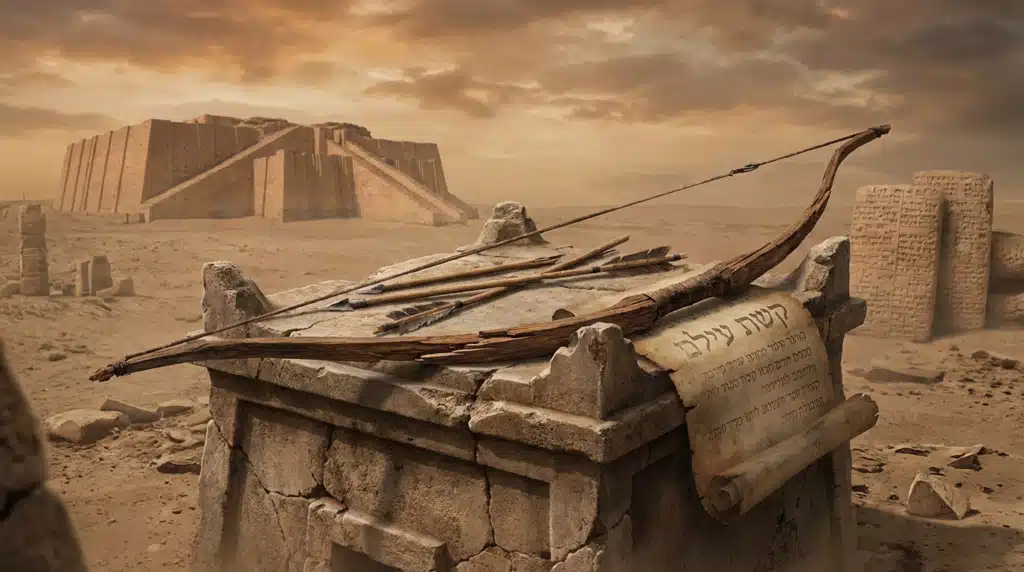
God says through Jeremiah: “I will break the bow of Elam, the mainstay of their might.” Historically, Elamite archers were famous. They were the special forces of their day. This prophecy was fulfilled when the Elamites were defeated and scattered, eventually being absorbed into the larger Persian empire. But the prophecy doesn’t stop with military defeat. This is where what the Bible predicted about Iran gets really interesting for our modern era.
God also declares in Jeremiah 49:38, “I will set my throne in Elam.” And then He finishes the prophecy in verse 39 with a beautiful promise: “But in the latter days I will restore the fortunes of Elam, declares the Lord.”
When I first processed what the Bible predicted about Iran in this passage, I thought about the modern Iranian people. I have talked with friends who work with humanitarian and faith-based groups in the Middle East. They constantly tell me that despite the heavy restrictions in the country, there is a massive, underground spiritual awakening happening right now among everyday Iranians. Many theologians and researchers look at this explosive growth of house churches and wonder: is this the fulfillment of God setting His “throne” in Elam?
This promise of restoration is central to what the Bible predicted about Iran. It reminds us not to look at people groups through the lens of pure politics. The Bible predicted about Iran that its people would ultimately experience spiritual restoration and favor.
Ezekiel 38: The Future Alliance
You cannot talk about what the Bible predicted about Iran without addressing the elephant in the room: the Gog and Magog war. This is probably the most famous prophecy people bring up when discussing future events.
In Ezekiel 38, the prophet describes a future massive military coalition that will come against a restored Israel “in the latter days.” Ezekiel lists the ancient names of these nations. He mentions Rosh, Meshech, Tubal, Put, Cush, Gomer, Togarmah, and—explicitly—Persia. Again, because we know our geography, we know that Ezekiel is spelling out what the Bible predicted about Iran.
According to this text, Persia will be drawn into an alliance (often interpreted by modern scholars to include nations geographically aligned with modern-day Russia, Turkey, Sudan, and Libya) to invade Israel. I remember mapping these ancient names to modern borders with some highlighters at my desk. It is chilling to see how the geopolitical alliances of today mirror the exact coalition Ezekiel described 2,600 years ago.
What the Bible predicted about Iran in this chapter is that this invasion force will ultimately be defeated by divine intervention, not by human armies. The purpose of this defeat, according to Ezekiel, is so that the whole world will recognize God’s power.
Some people let this prophecy scare them. When I read what the Bible predicted about Iran in Ezekiel 38, I try to keep a level head. It is easy to watch the news and assume the world is spinning out of control. But seeing these ancient texts reminds me that history has a script. The things the Bible predicted about Iran and other nations show that none of this catches God by surprise.
Daniel’s Ram and Goat Vision
I also want to mention what the Bible predicted about Iran in the book of Daniel, because it is one of the clearest examples of fulfilled prophecy in history. Daniel chapter 8 describes a vision of a ram with two horns and a male goat with one prominent horn.
You do not have to guess what these animals represent because the angel Gabriel literally tells Daniel a few verses later. Gabriel says, “As for the ram that you saw with the two horns, these are the kings of Media and Persia.” (Daniel 8:20). He then explains that the goat represents Greece.
What the Bible predicted about Iran here was its rise as a dominant world power (the Medo-Persian empire) and its eventual sudden defeat by the Greek empire (led by Alexander the Great). History books confirm this happened exactly as described when Alexander crushed the Persian forces at the Battle of Gaugamela in 331 BC.
Reading this helped build my confidence in the text. Seeing how accurately what the Bible predicted about Iran played out in ancient history gives me confidence that the unfulfilled, future prophecies will also happen exactly as written.
What This Means for Us Today
So, what do we do with all this information? Knowing what the Bible predicted about Iran shouldn’t make us panic, and it shouldn’t make us view everyday Iranian citizens as enemies. That is the biggest mistake I see people make when they start studying eschatology (end-times theology).
When I reflect on what the Bible predicted about Iran, I see a full circle. I see a nation that was used by God to bless and rescue His people through King Cyrus. I see a nation that will unfortunately be drawn into a dark military alliance in the last days. But most importantly, through the prophecy of Elam, I see what the Bible predicted about Iran regarding ultimate hope. The promise to “restore the fortunes of Elam” is a beautiful reminder that God loves the people of that region.
Whenever I see an alarming news alert about the Middle East, I take a deep breath. I remember my study Bible. I remember the ancient maps. And I remember that everything the Bible predicted about Iran points to a sovereign Creator who is orchestrating history toward a final, redemptive resolution. It truly blows my mind how ancient words can provide so much clarity and peace for our modern lives.