Table of Contents
I distinctly remember the evening I was sitting at my kitchen table, staring at Genesis 6, and feeling completely lost. If you have ever taken a deep dive into the supernatural side of the Bible, you will eventually hit a massive roadblock: Watchers and demons. When I first started researching Watchers & demons, I made the rookie mistake of assuming they were just two different words for the exact same evil spirits. I would read about fallen angels, Watcher and demons, and just lump them all together into one big category of “bad guys.”
But as I dug into ancient near-eastern texts, the original Hebrew, and the historical context of the First Century church, the biblical truth completely shifted my perspective. The truth is, Watchers & demons are profoundly different entities. Mixing up Watchers & demons is like confusing a human scientist with the radioactive waste they left behind—they are related, but their nature, origin, and power are entirely different.
Understanding the exact differences between Watchers & demons will change the way you read your Bible. It clarifies weird passages in the New Testament, explains why evil spirits act the way they do when Jesus confronts them, and gives us a much richer view of the spiritual realm. So, let’s peel back the layers of ancient history and look at Watchers & demons to finally answer: are they the same?

The Great Confusion Around Watchers and Demons
Why do so many of us confuse Watcher and demon? Mostly, it comes down to pop culture and modern church traditions. For the last few hundred years, a lot of Western Christianity has simplified the spiritual realm. We get taught that Satan rebelled, a third of the angels fell with him, and those fallen angels are what we now call demons. Because of this simplified narrative, whenever we hear about Watcher and demon, our brains automatically merge them.
However, ancient readers of the Bible did not view Watchers & demons this way. Second Temple Jews (the people living during the time of Jesus and the Apostles) had a very specific, well-documented theology regarding Watchers & demons. To them, Watchers were powerful, celestial beings created by God, while demons were something entirely different—something unnatural. If we want to understand Watchers & demons the way Peter, Jude, and Jesus did, we have to look at the definitions of both.
Who Are the Watchers Exactly?
To differentiate between Watchers & demons, we first need to define the Watchers. The term “Watcher” (in Aramaic, Iyr) literally means “one who is awake” or “a wakeful one.” You can find this exact term used in the canonical Bible in Daniel 4, where King Nebuchadnezzar has a terrifying vision.
He says, “I saw in the visions of my head as I lay in bed, and behold, a watcher, a holy one, came down from heaven.” (Daniel 4:13). Here, we see that a Watcher is a type of heavenly being. They are part of God’s divine council, tasked with observing humanity and carrying out decrees. So right away, when we compare Watchers & demons, we realize that Watchers started out as holy, immensely powerful angels.
But the story of Watchers & demons gets dark when we turn to Genesis 6. Genesis 6:1-4 talks about the “Sons of God” (Bnei Ha’Elohim) looking down at human women, seeing they were beautiful, and coming down to take them as wives. Ancient Jewish texts, like the Book of Enoch (which is directly quoted in the biblical Book of Jude), identify these “Sons of God” as a specific group of Watchers who rebelled against God.
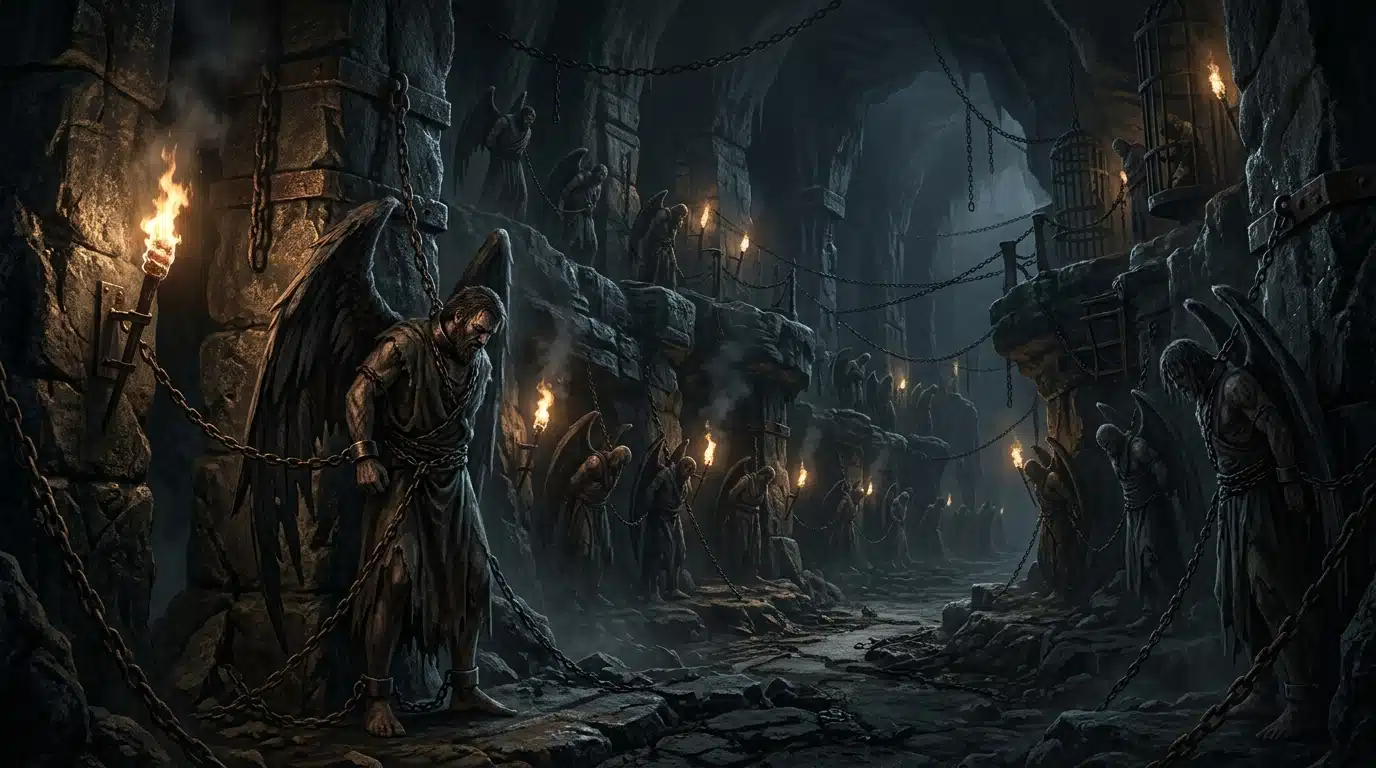
These rebellious Watchers abandoned their heavenly posts, corrupted humanity, and taught mankind forbidden knowledge (like warfare, sorcery, and weapons making). Because of this severe rebellion, God judged them harshly. 2 Peter 2:4 and Jude 1:6 tell us that these specific angels (the Watchers) were bound in everlasting chains in darkness (a place called Tartarus or the Abyss), awaiting the final judgment.
Who Are the Demons?
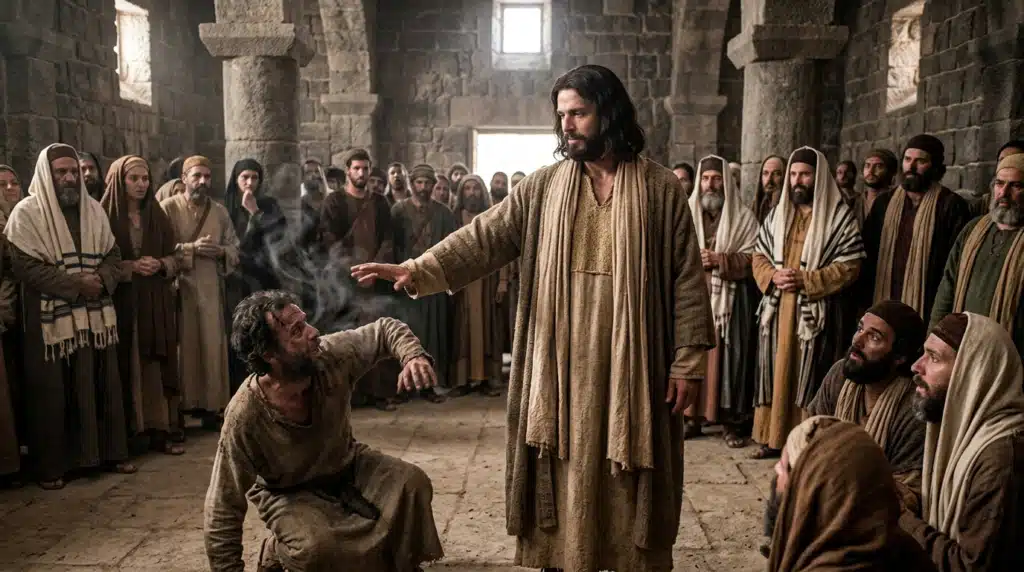
Now, to figure out the puzzle of Watchers and demons, let’s switch gears to demons. If the fallen Watchers are locked away in chains of darkness inside the Abyss, then who is roaming around the earth causing havoc in the New Testament? When Jesus is casting out evil spirits, He isn’t casting out Watchers. He is casting out demons.
If we look closely at the behavior of demons in the Gospels, they have some very specific traits. They are desperately seeking to inhabit physical bodies. Remember the story of the Demoniac of Gadara? When Jesus confronts the horde of demons known as Legion, they beg Him not to send them into the Abyss, but rather to let them enter a herd of pigs. Why? Because demons crave physical embodiment.
When examining Watchers & demons, this is a massive clue. Angels (including fallen Watchers) already have their own celestial bodies. They don’t need to possess humans or animals to interact with the physical world; as we saw in Genesis 6, they were capable of physical interaction on their own. Demons, on the other hand, are disembodied spirits wandering the earth, seeking rest but finding none (Matthew 12:43). This brings us to the ultimate connection between Watchers & demons.
The Nephilim Connection: Bridging Watchers and Demons
Here is the missing link that finally solved the mystery of Watchers & demons for me. When the rebellious Watchers came down in Genesis 6 and mated with human women, they created an unnatural, hybrid offspring known as the Nephilim (the Giants). These Nephilim were towering, violent, flesh-eating tyrants who filled the earth with bloodshed. They were part human, part angelic.
God sent the great flood of Noah’s day primarily to wipe out this corrupted Nephilim bloodline. But here is the theological catch: while the physical bodies of the Nephilim drowned and died in the flood, their spirits did not. Because they were born of a heavenly, immortal father (the Watcher) and an earthly mother (the human), their spirits could not simply pass on like normal human souls.
Ancient Jewish literature, specifically 1 Enoch 15, spells this out incredibly clearly. It states that when the giants die, their evil spirits will proceed from their bodies and roam the earth as evil spirits. These disembodied spirits of the dead Nephilim are what the ancients, the Apostles, and Jesus called demons!
So, are Watchers & demons the same? Absolutely not. Watchers are the rebellious fathers. Demons are the bastard, disembodied spirits of their dead Nephilim children. Once I understood this distinction between Watchers & demons, the entire biblical narrative snapped into crystal-clear focus.
The 5 Core Differences Between Watchers and Demons
If you are mapping out the spiritual realm, keeping Watchers & demons separate is vital. Here is a breakdown of the primary differences between Watchers & demons based on biblical and Second Temple context:
- 1. Their Origins Are Completely Different: Watchers are direct creations of God. They are heavenly beings created before humanity. When comparing Watchers & demons, remember that demons were never created by God. Demons are the unnatural byproduct of a forbidden union between Watchers and humans.
- 2. Their Current Location: The rebellious Watchers from Genesis 6 are currently imprisoned in chains in Tartarus (the Abyss) according to Peter and Jude. They are not roaming the earth right now. In the context of Watchers & demons, demons are the ones currently roaming the earth, inhabiting the dry places and seeking bodies.
- 3. Their Physical State: Watchers possess their own divine, celestial bodies. They can physically interact with the world. Demons are strictly disembodied spirits; they are essentially “ghosts” of the ancient giants who desperately crave a physical vessel to experience the world through.
- 4. Their Power Levels: In the hierarchy of Watchers & demons, Watchers operate on a massive, cosmic scale. They are high-level principalities. Demons, while dangerous to humans, are much lower on the spiritual totem pole. They are ground-level spiritual pests that harass humanity.
- 5. Their Ultimate Goal: The rebellious Watchers sought to alter the human genome and create their own offspring to usurp God’s rule. The demons are simply surviving, wandering in misery, trying to avoid their ultimate judgment in the lake of fire while tormenting humanity in the process.
Why Understanding Watchers and Demons Actually Matters
You might be thinking, “Okay, the history of Watchers & demons is fascinating, but why does this actually matter for my faith today?” It’s a fair question. The truth is, understanding the theology of Watchers & demons validates the bizarre, heavily debated passages of the New Testament.
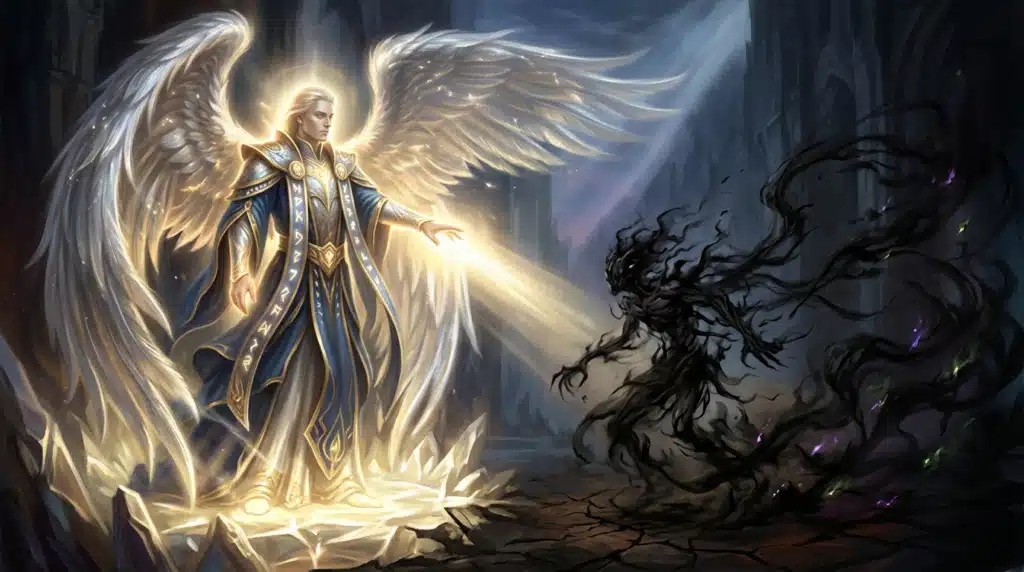
For instance, have you ever read 1 Peter 3:19-20? It talks about Jesus, after His crucifixion, going and preaching to “the spirits in prison, who formerly were disobedient… in the days of Noah.” For years, I had no idea what this meant. But once you understand the history of Watchers & demons, it makes total sense. Jesus descended to the Abyss to proclaim His absolute victory over the rebellious Watchers who had been locked up since the flood! He was putting the originators of evil on notice.
Furthermore, recognizing the difference between Watchers & demons helps us understand spiritual warfare. We are not just fighting a generic blob of “bad energy.” We are dealing with a structured, complex spiritual ecosystem. The biblical framework of Watchers & demons shows us that God has supreme authority over all of it. Jesus easily commanded the demons because He is the Creator of the universe. He cast them out with a single word.
It is easy to get hyper-focused on the creepy elements of Watchers & demons. I definitely went through a phase where I was watching way too many spooky YouTube documentaries on the Nephilim. But studying Watchers & demons shouldn’t produce fear; it should produce awe at the sovereignty of God. Knowing the full story of Watchers & demons reveals the depth of the biblical narrative. It proves that the Bible is a deeply interconnected, supernatural text that tells the real, raw history of our cosmos.
The story of Watcher and demon is ultimately a story of rebellion that failed. The Watchers tried to corrupt humanity, and they were locked in chains. The demons try to oppress humanity, but Jesus gave His followers authority to trample over them. Whether we are talking about Watcher and demon, fallen angels, or principalities, the end of the story is the same: Christ is seated above them all.