Table of Contents
Introduction to Gog and Magog
When I first started diving deep into biblical prophecy years ago, the cryptic passages of Ezekiel left me scratching my head. Among the most debated and heavily discussed topics is the famous coalition known in Scripture as Gog and Magog. Whenever geopolitical tensions flare up in Eastern Europe, pastors, prophecy buffs, and everyday believers start asking the same pressing question: Is Russia a sign of the end times? This subject has sparked countless late-night Bible studies, passionate conference debates, and heated online discussions.
My personal journey into understanding Gog and Magog began during a period of intense global uncertainty. I remember sitting at my kitchen table with multiple translation Bibles, a commentary, and a map of the ancient Near East, trying to piece together how ancient geography maps onto our modern world. It is easy to get bogged down in sensationalized headlines, but when you strip away the fear-mongering and look strictly at the text, a fascinating picture emerges. Understanding this prophecy requires patience, historical awareness, and a careful balance of biblical interpretation without forcing current events to fit a rigid mold.
Throughout history, generation after generation has looked at their contemporary geopolitical foes and tried to identify them as the fulfillment of Ezekiel’s prophecy. During the Cold War, many preachers pointed directly at the Soviet Union. Today, with shifting alliances between Moscow, Tehran, and other regional powers, the conversation has naturally resurfaced with renewed urgency. As we explore this complex topic together, we will look at what the Bible actually says, examine the historical geography, and evaluate how modern nations fit into the ancient prophetic framework without falling into the trap of date-setting or sensationalism.

Decoding Ezekiel 38 and the Major Players
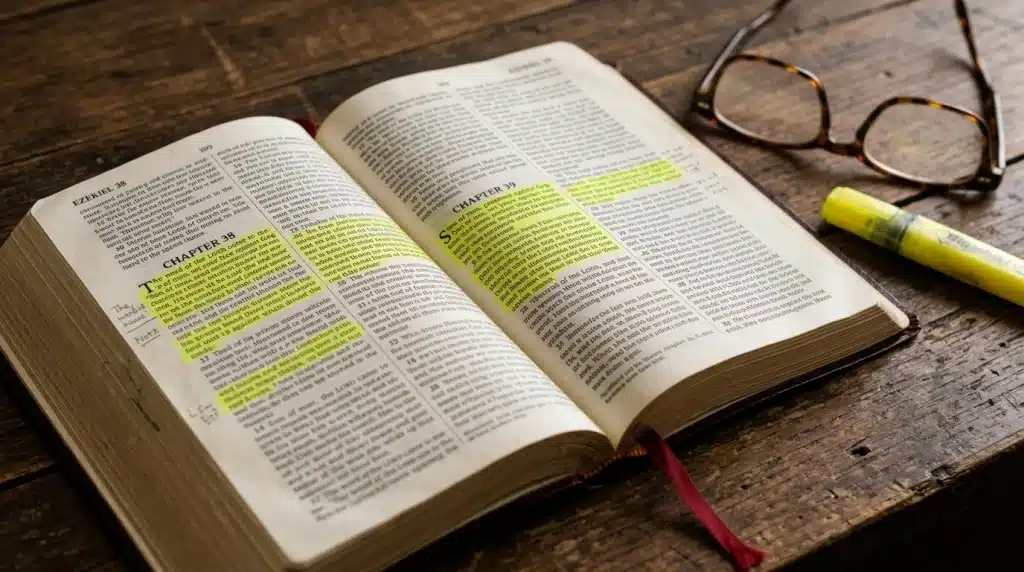
To truly grasp the significance of Gog and Magog, we have to go straight to the source text found primarily in Ezekiel chapters 38 and 39. Written by the prophet Ezekiel during the Babylonian exile, these chapters outline a massive, multi-nation coalition that forms against the restored land of Israel in the latter days. The passage explicitly names Gog, the leader from the land of Magog, and lists specific allied nations such as Meshech, Tubal, Persia, Cush, Put, Gomer, and Beth-togarmah from the remote parts of the north. For anyone studying biblical eschatology, breaking down these ancient place names is the critical first step in connecting past history to current global dynamics.
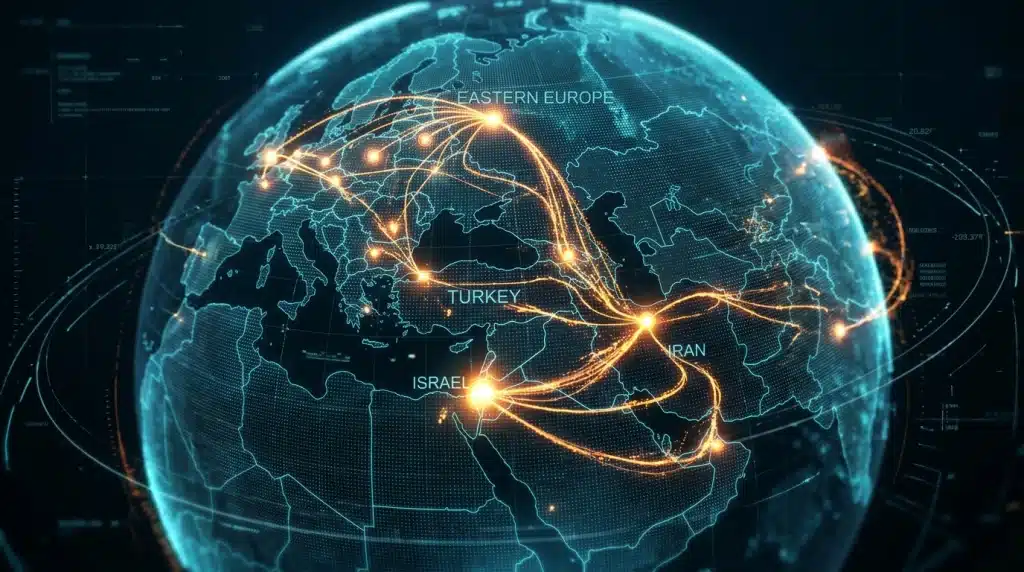
In my own study, I quickly realized that you cannot just guess where these nations are located; you have to rely on ancient historian records, maps, and linguistic roots. For instance, most biblical scholars and historians trace Magog, Meshech, and Tubal to the geographic regions north of the Black and Caspian Seas, which modern-day maps identify as Russia and parts of Central Asia and the Caucasus. When Ezekiel wrote about forces coming from the ‘remote parts of the north,’ that phrasing literally points straight up from Jerusalem on a map, directly crossing through modern Turkey and landing squarely on the territory of the Russian Federation.
However, interpreting these passages demands intellectual honesty. We have to avoid the temptation to cherry-pick verses to match every single evening news broadcast. The coalition described in Ezekiel 38 is not just a random gathering of countries; it is a specific military alliance driven by greed, hostility toward Israel, and a calculated geopolitical strategy. As we examine the text closely, we see that God Himself claims to be the one who puts hooks in the jaws of Gog, drawing this massive army down against the mountains of Israel for His own sovereign purposes and ultimate glory.
Is Russia Really Magog in Modern Prophecy?
The core question that keeps drawing people back to this topic is simple: Is Russia definitively identified as Magog in the Bible? Based on the overwhelming consensus of historical geography and linguistic derivation, the answer proposed by many prophecy experts is a strong yes. When you look at ancient writers like Josephus, they identified Magog with the Scythians, nomadic tribes that inhabited the vast steppes north of the Caucasus, an area that encompasses modern Russia. When modern readers ask about Russia and the end times, they are usually trying to reconcile this ancient geographic mapping with the aggressive military posture we witness on the world stage today.
I remember discussing this exact point with a theology professor who pointed out a fascinating linguistic connection. The Hebrew root words for Meshech and Tubal sound remarkably similar to ancient names for Moscow and Tobolsk, two major historical hubs in Russia. While we must be careful not to build an entire theological framework on phonetic similarities alone, the cumulative weight of geographic direction and historical migration makes the connection to Russia compelling. Russia possesses the vast landmass, the military capability, and the northern geographical positioning that perfectly matches Ezekiel’s description of the primary aggressor.
At the same time, we must maintain a balanced perspective. Russia’s current political leadership, economic struggles, and military engagements change from year to year. While Moscow’s recent foreign policy decisions and partnerships with nations like Iran have aligned eerily well with the Ezekiel 38 blueprint, we should view these developments as potential staging grounds rather than final fulfillments. Being watchful does not mean panicking; rather, it means recognizing the remarkable way global pieces are moving onto the board in alignment with ancient prophetic scripts written thousands of years ago.
Geopolitical Alliances Forming Today
One of the most convincing arguments that we are living in prophetic times is the actual lineup of nations described in Ezekiel 38, many of which are aligning in real-time right before our eyes. The text specifically mentions Persia (modern-day Iran), Cush (Sudan/Ethiopia), Put (Libya), Gomer, and Beth-togarmah (Turkey and surrounding regions). For centuries, an alliance between Russia, Iran, and Turkey seemed completely impossible due to historical rivalries, religious differences, and competing imperial ambitions. Yet, if you look at the headlines today, you will see these exact nations cooperating closely on military, economic, and diplomatic fronts.
I recall following the shifting dynamics in the Middle East over the last decade, watching in mild astonishment as Russia and Iran forged deep military ties in places like Syria. Turkey, traditionally a NATO member with Western leanings, has increasingly pivoted toward independent regional maneuvering and cooperation with Moscow and Tehran. Seeing these historically disparate countries form a tight-knit axis gives modern Bible students a tangible sense of awe. The political and economic conditions required for the Gog and Magog invasion are not theoretical anymore; they are actively visible on our evening news.
This convergence of nations is not happening by accident. Economic necessity, energy pipelines, shared opposition to Western influence, and a common hostility toward the sovereign state of Israel serve as the modern glue holding this coalition together. When Ezekiel penned these words, Israel was a scattered, defenseless people with no national identity, yet today Israel sits securely as a prosperous, technologically advanced nation in the Middle East. The stage has been meticulously set over the past seventy-odd years, making the prospect of the Gog and Magog war more plausible and closer than ever before in human history.
The Timing of the Invasion of Israel
A major point of discussion among prophecy scholars is the exact timing of the Gog and Magog invasion. Does this dramatic event happen before the Tribulation, during the Tribulation, or at the very end of the age? Ezekiel 38 describes Israel as dwelling securely in unwalled villages, living quietly without bars or gates, which clearly does not describe the hyper-fortified, mandatory military service reality of modern Israel today. This discrepancy leads many prophecy teachers, including myself, to conclude that a period of profound peace or false security must descend upon Israel prior to the actual launch of the Ezekiel 38 attack.
When I first encountered different eschatological views, the variety of timelines felt overwhelming. Some dispensational scholars argue that the Rapture of the church triggers a geopolitical vacuum, allowing Russia and its allies to make their move while the restraining influence of the Holy Spirit is removed. Others suggest that a major Middle Eastern peace treaty, perhaps mediated by a rising global figure, gives Israel a false sense of security, causing them to let down their guard. Regardless of the exact chronological mechanics, the Bible is crystal clear about the outcome: God Himself intervenes directly to destroy the invading armies on the mountains of Israel, using a massive earthquake, torrential rain, hailstones, fire, and brimstone.
The aftermath of this failed invasion is equally significant. Ezekiel 39 tells us that it will take seven months for the house of Israel to bury the dead and seven years to use the abandoned weaponry as fuel. This staggering detail proves that this specific battle is distinct from the Battle of Armageddon at the very end of the Tribulation, where Christ returns bodily to earth with His saints. Recognizing these chronological distinctions keeps our theology clean and prevents us from confusing separate prophetic milestones outlined in the biblical text.
Common Misconceptions About the Prophecy
Whenever people start exploring Bible prophecy, misunderstandings and sensational claims inevitably follow. One of the most common mistakes I frequently encounter is treating the Gog and Magog prophecy as a blank check for anti-Russian prejudice or political fear-mongering. The Bible speaks of nations and governments, but it also contains individual souls loved by God. We must distinguish between geopolitical critique and unchristian hostility. Prophecy is given to us by God not so we can play fortune-teller or hate specific nationalities, but so that when these events unfold, our faith will be strengthened and we will know that God is sovereign over human history.
Another major misconception is confusing the Gog and Magog war of Ezekiel 38-39 with the final rebellion mentioned in the Book of Revelation chapter 20. In Revelation, the names Gog and Magog are used symbolically to describe the nations of the earth that Satan gathers at the very end of the thousand-year Millennial Reign, right before the final judgment and the creation of the new heavens and new earth. Conflating these two distinct events creates absolute theological chaos. Ezekiel’s prophecy describes a military invasion during the present age, while Revelation’s mention describes a final spiritual rebellion after Christ’s literal reign on earth.
Avoiding these pitfalls requires diligent study and a commitment to handling the Word of God with accuracy. We should never twist Scripture to fit the latest viral internet conspiracy theory or panic every time a world leader makes a threatening speech. Prophecy is meant to produce spiritual stability, personal holiness, and active witness, not anxiety or obsession. Keeping a level head allows us to appreciate the accuracy of God’s Word without discrediting the Christian message through wild, unfounded speculations.
How to Prepare Spiritual for the Future
Studying heavy prophetic texts like Gog and Magog can easily leave a person feeling anxious about the state of the world, wondering what the future holds for their family, finances, and safety. But Scripture never reveals future hardships to terrify believers; it reveals them to fortify our faith. If God knows the end from the beginning, and if He is powerful enough to orchestrate the movements of global superpowers as described in Ezekiel, then we can rest securely in His sovereign hands no matter what headlines flash across our screens tomorrow.
In my own walk of faith, I have found that tracking prophecy should always drive me closer to practical holiness and intentional evangelism. If the return of the Lord is drawing nearer, as the convergence of modern alliances suggests, our primary focus should not be stocking up on canned goods or predicting geopolitical timelines down to the month. Instead, our priority should be sharing the gospel with our neighbors, strengthening our local church communities, and living lives characterized by love, integrity, and radical generosity. The early Christians lived with an eager expectation of Christ’s return, and that hope fueled their resilience through immense persecution.
Ultimately, the message of Ezekiel 38 and 39 is not about the unstoppable power of Russia or the impending doom of nations; it is about the ultimate vindication of God’s holy name. God declares that through these future events, the nations will know that He is the Lord. That ultimate purpose should comfort every believer today. As the world grows increasingly unstable and complex, our anchor holds firm. We can watch current events with discerning eyes, maintain our peace in the midst of global turmoil, and look forward with great hope to the fulfillment of God’s eternal kingdom.