Table of Contents
- Introduction to Elijah’s Invocation
- The Historical Context: Ahab, Jezebel, and Apostasy
- The Mount Carmel Showdown: A Test of Deities
- Preparing the Altar: Water, Stones, and Wood
- Anatomy of Elijah’s Invocation: A Deep Dive
- The Fire From Heaven: Divine Intervention Manifested
- Modern Lessons on Biblical Prayer from Elijah’s Invocation
- The Theological Significance of the Fire
- Conclusion: The Lasting Echo of Elijah’s Invocation
Introduction to Elijah’s Invocation
There are many moments in the Bible where God steps in and does something amazing, but the battle on Mount Carmel is one of the most dramatic and real. Elijah’s invocation, which was a unique moment of biblical prayer that sent literal fire from heaven, is the most important part of this amazing historical and theological event. Elijah’s prayer is still one of the most studied and recognized examples of faith, obedience, and divine authority in the Old Testament.
When we read Elijah’s invocation, we’re not just reading a story from the past; we’re learning how to live by Yahweh’s covenant. Elijah’s prayer in 1 Kings 18 sparks a national spiritual awakening that shows beyond a doubt that the God of Abraham, Isaac, and Jacob is the only true living God. By examining the depths of Elijah’s prayer, both believers and scholars can obtain significant insights on the characteristics of effective biblical prayer, the omnipotence of God, and the courage required to resist cultural apostasy. The tale of Elijah’s prayer is quite detailed.
It reveals how the frenetic, self-destructive rituals of idol worshippers are radically different from real biblical prayer, which is peaceful and authoritative. To comprehend what Elijah said, we need to go back to the parched, sandy deserts of ancient Israel, when the stakes were the lives of a whole country.
The Historical Context: Ahab, Jezebel, and Apostasy
To truly grasp how serious Elijah’s prayer was, you need to know the very serious historical and spiritual situation in which it happened. King Ahab of Israel and his Phoenician queen, Jezebel, ruled the country. During their reign, the worship of Yahweh was methodically supplanted by the cult of Baal, the Canaanite storm deity purportedly accountable for rain, fertility, and agricultural abundance. This terrible spiritual compromise is what made it necessary for Elijah to call on God. Jezebel had commanded the killing of the Lord’s prophets, forcing the faithful to hide and replacing them with 450 prophets of Baal and 400 prophets of Asherah.
As Elijah had said, there was no rain in Israel for three and a half years. This was a sign of the spiritual dryness. This physical drought was a direct attack on what Baal was supposed to be in charge of. The people had to be led to the brink of complete despair before Elijah’s call could be heard across the mountain. The famine was bad, and the people were unsure of what to do. Elijah would later say that they were “limping” between two ideas. In the middle of this deep apostasy, Elijah was called to the stage. The people’s hearts were hard, their minds were twisted by syncretism, and their leaders were completely corrupt.
So, Elijah’s prayer wasn’t merely asking for a miracle; it was an urgent call for the revival of the covenant. Elijah’s invocation was the most counter-cultural thing he could have done. It was a lone voice of truth in a time when lies were everywhere. The political and religious establishment was completely against him, which makes Elijah’s invocation even more impressive.
The Mount Carmel Showdown: A Test of Deities
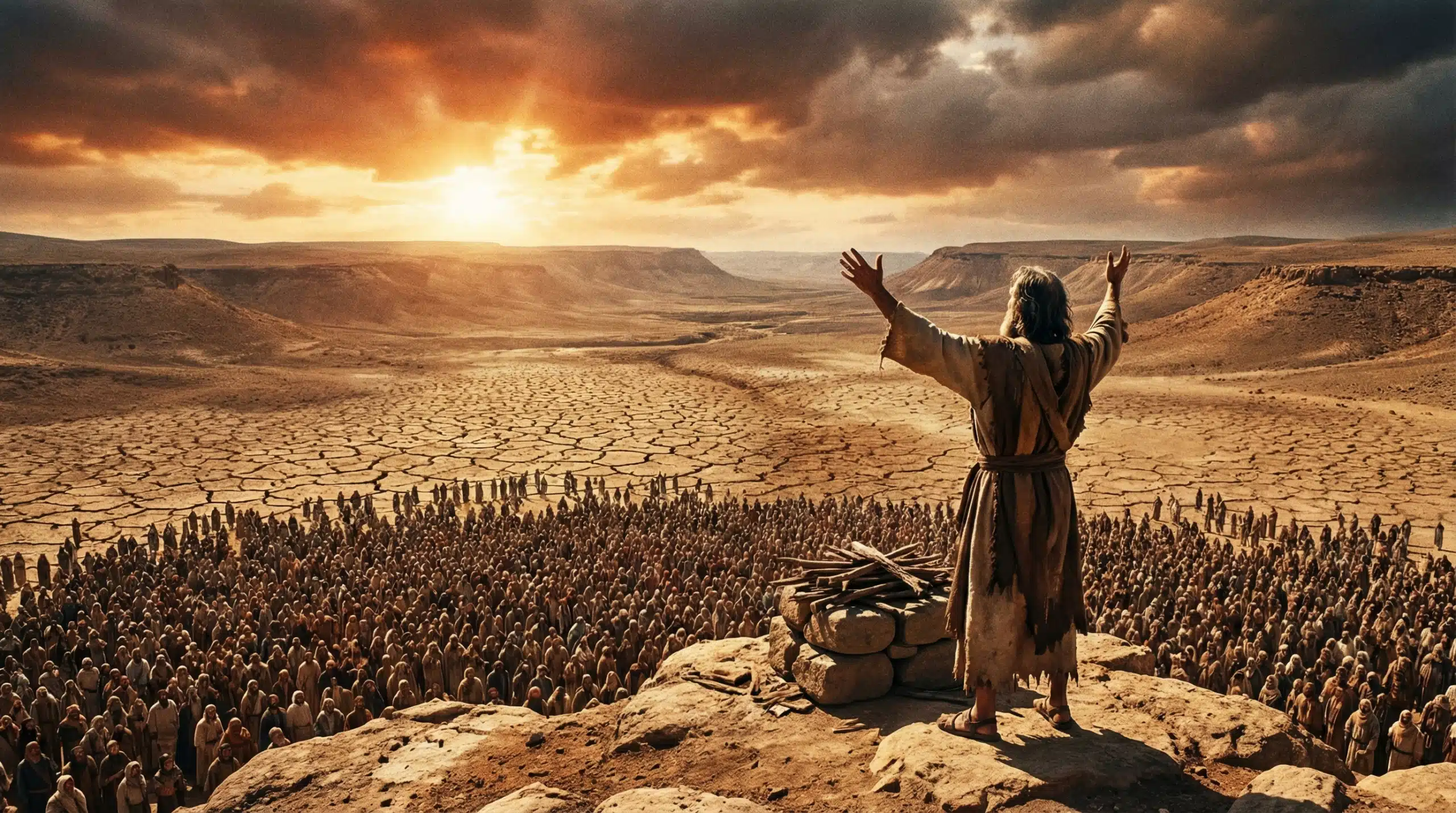
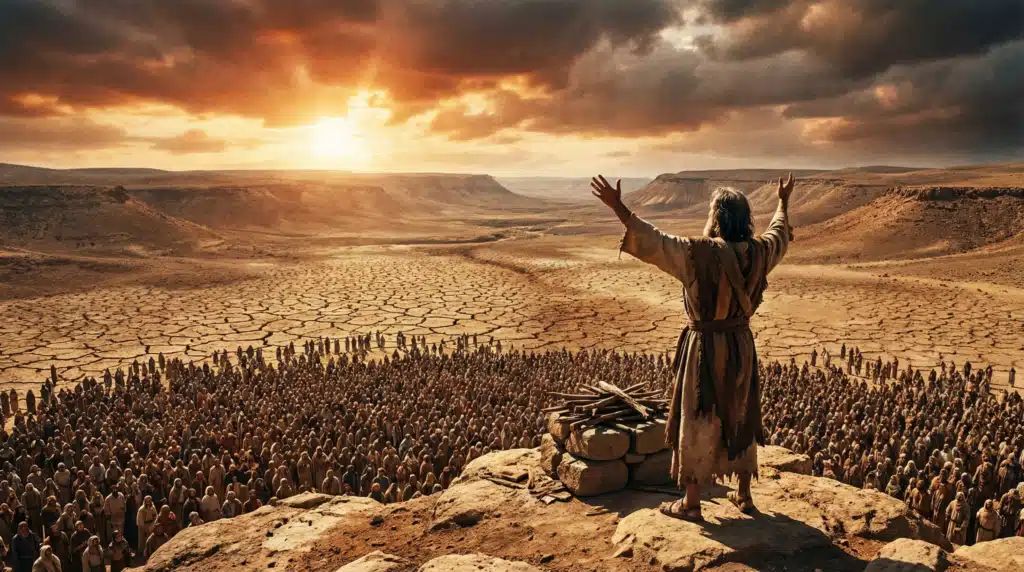
The top of Mount Carmel, a green hill that jutted out into the Mediterranean Sea, was the stage for this huge spiritual struggle. The idea was simple but deep, and it provided the perfect environment for Elijah’s call. He is God, the one who answered with fire. First came the prophets of Baal. They yelled, danced, and finally cut themselves with swords and spears, as was their tradition, from morning until midday, hoping to get their god to do something. Their frenetic, gory rites are very different from the serious and calm prayer that Elijah would say next.
Even though they worked hard, there was no voice, no answer, and no one listened. Baal’s deafening silence was the only thing that could have led to Elijah’s call. Elijah even made fun of them by saying that their deity was sleeping or preoccupied. This ridicule wasn’t just teasing; it was a powerful theological attack on idol worship. When it was time for the evening sacrifice, the Baal worshippers’ frenetic energy had turned into tired defeat. It was time for Elijah to pray. The shift from the disorderly behavior of the false prophets to the careful, planned actions of Elijah shows what real biblical prayer is like.
Elijah’s invocation would not depend on human effort, self-harm, or repetitive chanting, but rather on a connection with the living God. The battle on Mount Carmel shows clearly that praying loudly, often, and with a lot of effort is pointless without the real God. This makes Elijah’s prayer even more important.
Preparing the Altar: Water, Stones, and Wood
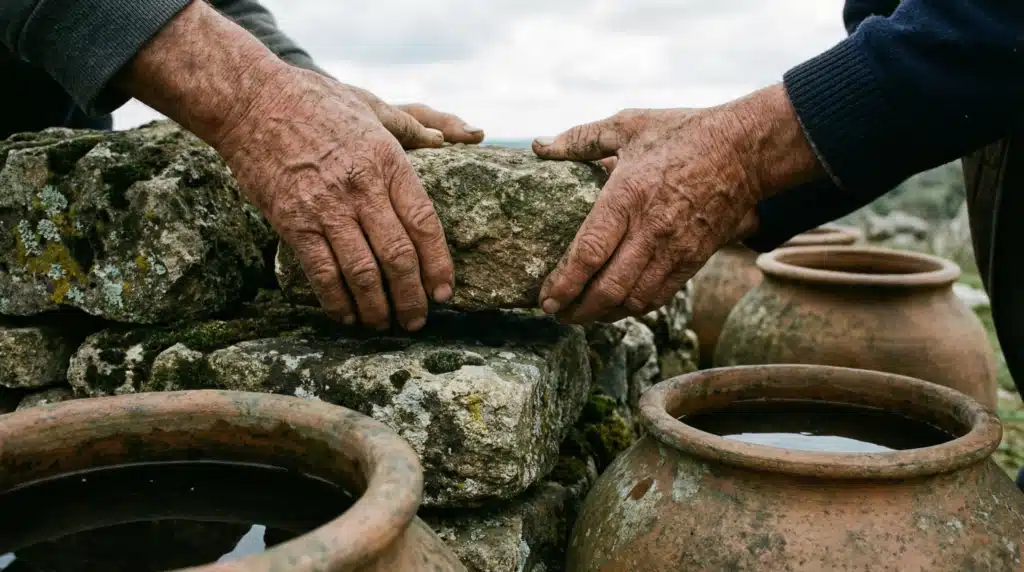
Before Elijah’s invocation was spoken, careful planning was done, and each part had a deep symbolic meaning. Elijah beckoned the people over, showing that his invocation was not a secret ceremony but a public display of faith meant for everyone. He used twelve stones to reconstruct the Lord’s broken altar. These stones stood for the twelve tribes of Israel. This gesture alone was a silent sign that Elijah would call on God, and it was a tangible sign that the shattered covenant was being restored.
Israel was split up, but Elijah’s call to prayer reminded them of their shared inheritance in Jacob. After that, the water came. Elijah told them to pour four big jars of water over the sacrifice and the wood so that no one could say they were trying to fool them and to make the miracle seem even more powerful. He made them do this three times, which added up to twelve jars. The water completely soaked the wood and filled the ditch around the altar. Using this much water during a period of severe drought was a huge act of faith and a huge sacrifice.
The preparations were done, and it was now time for Elijah to call. The soaked altar looked difficult to light, which went against the laws of nature and made it such that only divine intervention could work. Every phase of this preparation was an act of faith that led up to the most important part, Elijah’s invocation. The drenched altar showed that God often works in ways that appear impossible to people when they pray according to the Bible. Elijah’s call really shines in this setting of impossible.
Anatomy of Elijah’s Invocation: A Deep Dive
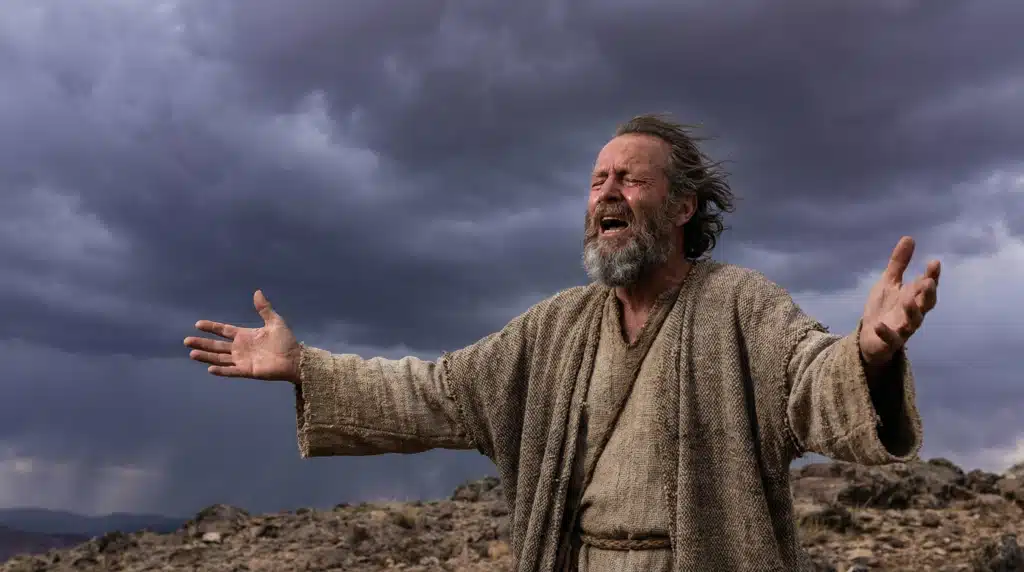
The prophet stepped forward when it was time for the evening sacrifice. Elijah’s invocation is very short, with only roughly 60 words in the original Hebrew text. Elijah’s prayer, on the other hand, is without a doubt one of the most powerful examples of biblical prayer ever recorded. Let’s look closely at how Elijah’s invocation works. He started by saying, “Lord, the God of Abraham, Isaac, and Israel, let it be known today that you are God in Israel and that I am your servant and have done all these things at your command.” The very beginning of Elijah’s prayer ties it to the history of the covenant.
By mentioning Abraham, Isaac, and Israel (Jacob), Elijah was reminding God of His promises and the people of who they really were. Elijah’s invocation was completely centered on God. It was about God’s glory, God’s vindication, and God’s identity as the rightful king of Israel. Elijah’s prayer went on: “Answer me, Lord, answer me, so these people will know that you, Lord, are God and that you are bringing their hearts back to you.” Pay attention to what Elijah’s prayer was really about. It wasn’t only about raining fire from heaven for the sake of a show, and it wasn’t about showing that he was better than the prophets of Baal.
The real heart of Elijah’s prayer was the salvation of Israel. He prayed that their hearts would change. This shows that real biblical prayer is intercessory. Elijah’s invocation worked because it was completely in line with God’s will. It wanted what God wanted: for His people to turn away from their sins and come back to Him. Elijah’s short prayer is a timeless reminder that prayers don’t have to be long or eloquent to be heard. Elijah’s invocation was powerful because it was theologically accurate, historically based, and full of genuine faith.
The Fire From Heaven: Divine Intervention Manifested
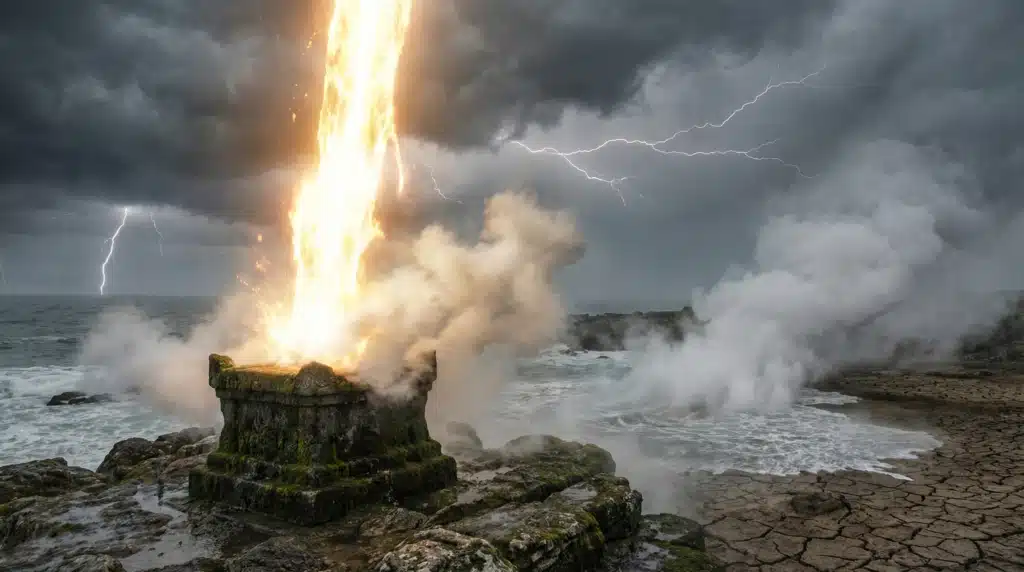
The reaction to Elijah’s call was quick and strong. The text says that right after Elijah called on God, “the fire of the Lord fell and burned up the sacrifice, the wood, the stones, and the soil, and also licked up the water in the trench.” The fire from heaven is so big that it’s hard to believe. It didn’t just set fire to the wood; it also burned the stones, dust, and water. This was an undeniable theophany, a clear sign of Yahweh’s all-consuming holiness and power. The fire from heaven was God’s loud “Amen” to what Elijah said. It made everything clear.
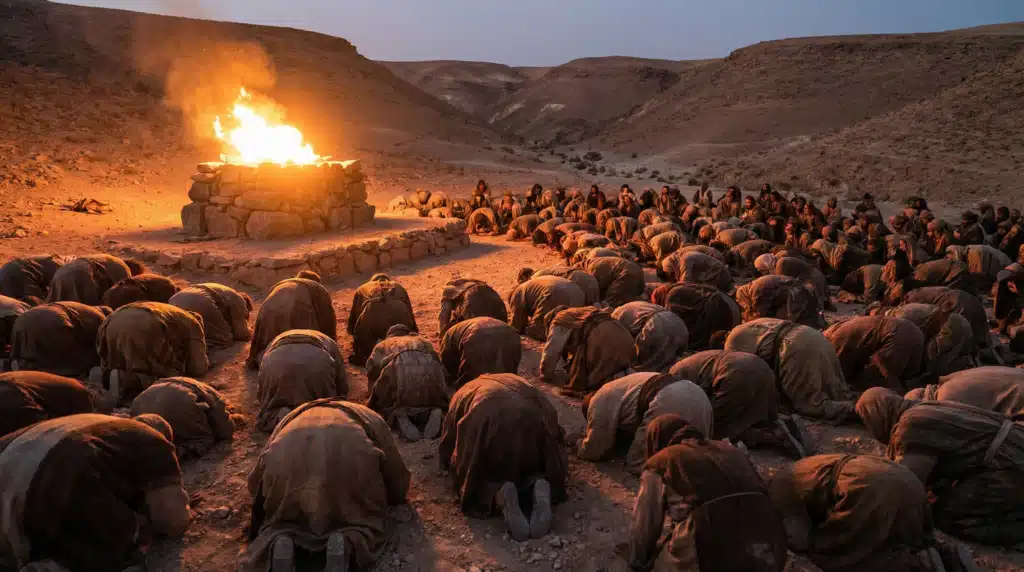
There was a huge difference: the false prophets worked for hours, spilling blood, and got nothing, whereas Elijah’s 60-word prayer brought down a fire that consumed everything. Elijah’s prayer asked on the Israelites to respond in the same way. When the people saw it, they fell to the ground and shouted, “The Lord is God!” The Lord is God! In a flash, the country’s spiritual lethargy was broken. Elijah’s call to prayer led to national repentance. This spectacular occurrence shows how powerful biblical prayer can be in changing the atmosphere, breaking down strongholds, and showing God’s glory in ways that can’t be denied.
The fire from heaven was not merely a punishment for the prophets of Baal; it was also a kind revelation to a people who had lost their way. Elijah’s prayer showed that God is a consuming fire, but He is also a very personal God who hears the cries of His faithful slaves. The story of Elijah’s prayer and the fire that followed from heaven is still one of the most important stories for comprehending how amazing divine intervention can be.
Modern Lessons on Biblical Prayer from Elijah’s Invocation
Although contemporary believers often do not summon real fire from heaven, the concepts inherent in Elijah’s invocation provide essential insights for contemporary biblical prayer. Elijah’s invocation teaches us how important it is to know who God is. Elijah prayed with complete faith because he knew the God of the covenant. His prayer was based on the Bible and the history of God. Second, Elijah’s prayer shows that good prayer is in line with God’s plans. He prayed not for his personal glory, but for the glory of God’s name and the change of people’s hearts. When our prayers reflect God’s heart’s aspirations, they have the same spiritual power as Elijah’s prayer.
Third, the difference between the prophets of Baal and Elijah’s prayer tells us that God can’t be swayed by our emotional outbursts, physical effort, or long-winded repetition. Real prayer in the Bible is about relationships, faith, and obedience, exactly as Elijah’s prayer. Elijah’s prayer also reminds us about how brave faith can be. He prayed with courage in a very dangerous place. Elijah’s call to action encourages believers to stand fast and pray loudly for a revival of truth and a change of hearts in a culture that often pushes truth to the side.
Elijah’s prayer is simple enough to make any Christian who thinks like they aren’t praying enough feel better; God listens to the heart, not the fancy words. In the end, Elijah’s invocation leaves the modern church with a challenge: to look at what it is praying for. Are we praying just for our own comfort, or are we, like Elijah, praying for our communities to wake up spiritually? By imitating the heart underlying Elijah’s prayer, current believers can find new strength and honesty in their own and their group’s prayers.
The Theological Significance of the Fire
The events that happened after Elijah called on God are very important from a theological point of view, even though they seem exciting in the moment. The fire from heaven has a lot of meaning. Fire is often used in the Old Testament to show that God is there, holy, and accepting. By eating the sacrifice after Elijah called on Him, God was showing that He accepted the offering and was ready to restore His relationship with a penitent Israel. Also, the fact that the fire burned the stones and dust shows that Yahweh’s might is greater than the natural order.
He is the Creator, which is much better than the localized, nature-bound ideas of gods like Baal. The theological victory of Elijah’s invocation was the definitive defeat of syncretism.The fire from heaven set a clear line that Israel could no longer cross between worshiping Yahweh and Baal. Elijah’s call made people choose. The spiritual fence-sitting was done. This shows a very important theological truth: when we meet the live God, we have to do something. The effectiveness of Elijah’s invocation also strengthens the prophet’s function as a mediator of the covenant. At this juncture, Elijah was in the middle of a holy God and a disobedient people.
He was an intercessor whose prayer brought both enlightenment and healing. Elijah’s prayer has a deep theological meaning that carries over into the New Testament, when the apostles also pray for courage and see God respond with force. The fire that fell on Mount Carmel when Elijah called for it is like the spiritual fire of the Holy Spirit that came down at Pentecost and lit up the hearts of believers so they could witness over the world. So, examining Elijah’s invocation is not only a look back at history; it is also a look at how God continues to save, cleanse, and send out His people.
Conclusion: The Lasting Echo of Elijah’s Invocation
The story of Mount Carmel is a stunning tapestry of divine force, human bravery, and important events in history, all held together by the simple beauty of Elijah’s call. In a world full of spiritual uncertainty and idol worship, Elijah’s call was clear and powerful, cutting through the clamor without a doubt. It is a timeless reminder that one person who is wholly devoted to God and prays faithfully can change the course of a nation. Elijah’s prayer reminds us that the God of Abraham, Isaac, and Jacob still hears the prayers of His people. He is still working to bring people back to Him.
When we think about the amazing fire from heaven, let’s not forget the calm, faith-filled words that came before it. The ultimate force of Elijah’s invocation was not in how loud the prophet’s voice was, but in how great and powerful the God who heard it was. May the study of Elijah’s petition encourage a new generation to pray with faith that has been passed down through the ages, to seek God’s glory above all else, and to believe that God still hears the sincere prayers of his people.

1 thought on “Elijah’s Invocation: The Power of Biblical Prayer and Fire From Heaven”