
Table of Contents
- The Legend of King Solomon’s Magic
- What the Bible Actually Says About Solomon
- The Testament of Solomon: A Window into Ancient Occultism
- Cultural Context of Sorcery in the Ancient Near East
- How Modern Media Shapes Our View of Solomon
- Wisdom vs. Magic: Where is the Line Drawn?
- The Spiritual Consequences of Solomon’s Choices
The Legend of King Solomon’s Magic
When I first started diving into ancient history and biblical apocrypha, I was struck by how often the question ‘Did King Solomon practice witchcraft?’ appeared in literature and pop culture. It seems every generation finds a new reason to romanticize Solomon as the ultimate magician. In my own research, I discovered that this reputation isn’t rooted in the canonical Bible but rather in centuries of folklore, particularly medieval grimoires that credit him with commanding demons.
Many people assume that because he is associated with the ‘Seal of Solomon,’ he must have been a practitioner of the dark arts. However, the distinction between ‘wisdom’—which he received as a gift from God—and ‘magic’ is significant. From my perspective, these legends were likely born out of a desperate human need to explain his incredible architectural feats and administrative success. When you look at the complexity of the Temple of Jerusalem, it’s easy to see why ancient writers felt that only supernatural help could have achieved such a thing.
Early in my studies, I encountered many misconceptions about what witchcraft actually meant in the ancient world. It wasn’t just about potions; it was about the manipulation of spiritual forces. By attributing these powers to Solomon, storytellers weren’t necessarily condemning him as a witch; they were elevating his stature to a level that felt mythical. It is a classic case of folklore evolving over time, layering fiction onto a historical figure who was already larger than life.
What the Bible Actually Says About Solomon
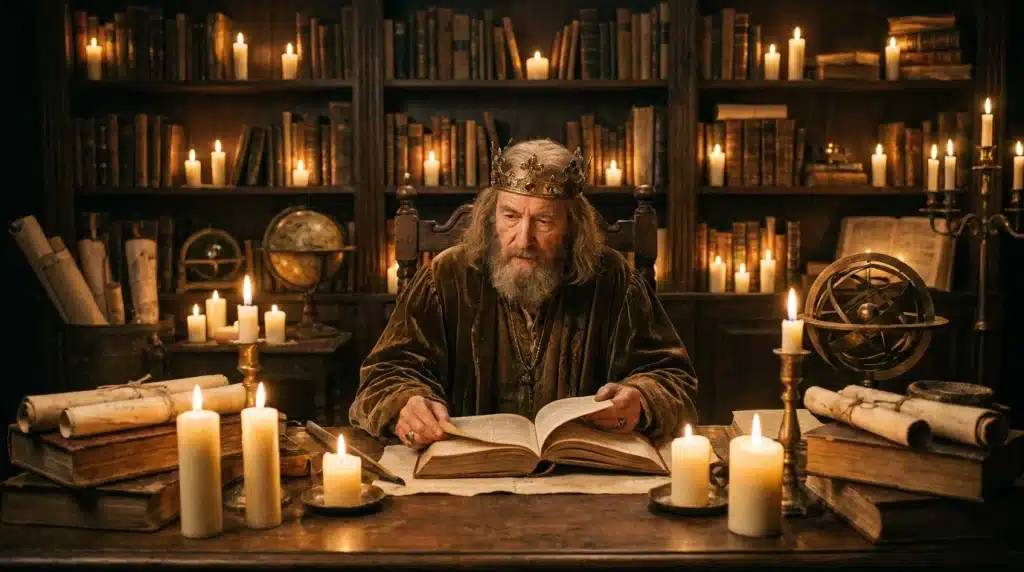
To really answer if King Solomon practiced witchcraft, we have to go back to the source. The canonical books of Kings and Chronicles describe Solomon as the wisest man who ever lived, a king granted divine favor to build the house of God. Nowhere in these pages is he described as casting spells or practicing sorcery. In fact, the biblical law was strictly against such things, and Solomon himself was tasked with upholding that law.
However, the Bible does record a turn in his life. As he aged, his many foreign wives influenced him to turn his heart toward other gods. This, in the context of the Hebrew scriptures, is a form of spiritual infidelity that is arguably more severe than mere witchcraft. For me, this is a much more grounded and somber reality than the fantastical stories of demon-summoning. It highlights a common struggle with power, influence, and the compromise of one’s principles.
I’ve often wondered why so many readers gloss over this actual biblical critique to focus on the ‘magical’ aspects of his later life. Perhaps the idea of an ‘occult king’ is more exciting than the reality of a leader failing his spiritual commitments. When you read 1 Kings 11, you see a man who was deeply conflicted, yet there is no mention of occult incantations. He allowed his heart to stray, but he wasn’t depicted as a sorcerer in the traditional sense of the word.
The Testament of Solomon: A Window into Ancient Occultism
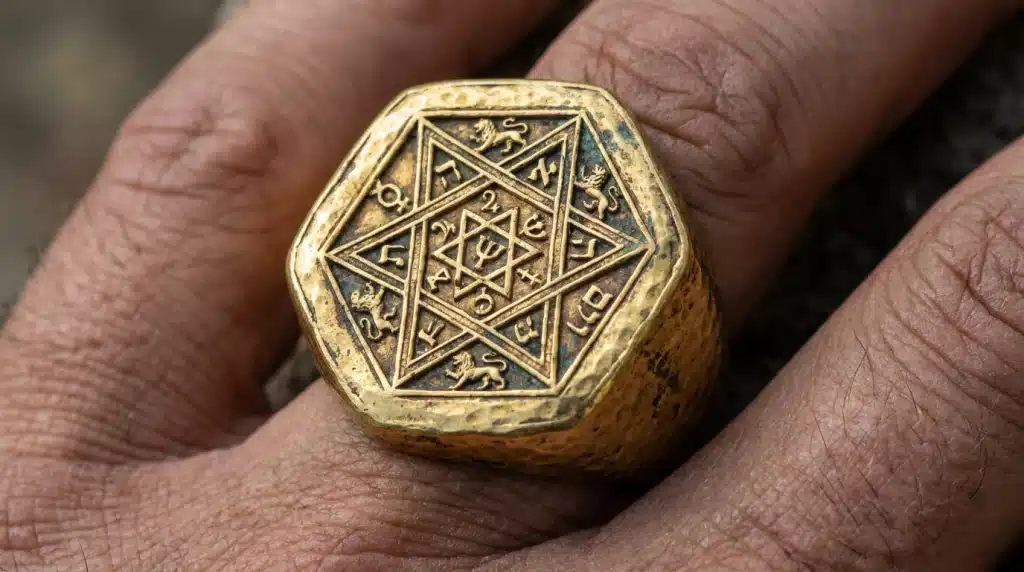
The ‘Testament of Solomon’ is where the real myths reside. This pseudepigraphical text is where the ‘King Solomon practice witchcraft’ narrative gets its strongest legs. Written much later than the biblical accounts, this text portrays Solomon as an expert in demonology who uses a magic ring to force demons to help him build the Temple. It’s an fascinating read, but it’s crucial to understand that it holds no theological weight for mainstream Judaism or Christianity.
I remember sitting with a copy of this text, struck by how vivid the descriptions of the demons were. It reads like a survival guide for exorcists. While it’s captivating, it is essentially historical fiction from a much later period. It serves as evidence of how ancient cultures viewed authority—that even a king, to be truly supreme, must be able to command the supernatural.
If you choose to explore this text, keep in mind that it was created in a vastly different intellectual environment than the one Solomon actually lived in. It is a product of its time—a time when syncretism, the mixing of different religious and magical traditions, was common. It does not reflect the life of the actual King Solomon, but rather the collective imagination of those who came centuries after him.
Cultural Context of Sorcery in the Ancient Near East
To understand the accusations of witchcraft, we have to look at the atmosphere of the Ancient Near East. Magic and religion were not as neatly separated back then as they are today. Many leaders were seen as intermediaries who could communicate with the divine. For a king to be seen as ‘magical’ was, in some circles, a sign of legitimate power and divine favor.
When I look at the surrounding empires—the Egyptians, the Babylonians, the Canaanites—they all had court magicians and sorcerers. It was part of the political infrastructure. By assigning magical status to Solomon, these later authors might have been trying to place him on an equal footing with the great sorcerer-kings of other nations. They wanted their king to be the best at everything, including the mastery of the unseen.
It’s a mistake to project modern, post-Enlightenment views of science and magic onto that era. They didn’t see the world through a cold, empirical lens. They saw a world teeming with spiritual agencies, and a king’s job was to negotiate with those agencies. So, if we ask, ‘Did King Solomon practice witchcraft?’, we might be asking the wrong question. Maybe they weren’t accusing him of being a ‘witch’ in the modern, derogatory sense, but praising him for his mastery over spiritual forces.
How Modern Media Shapes Our View of Solomon
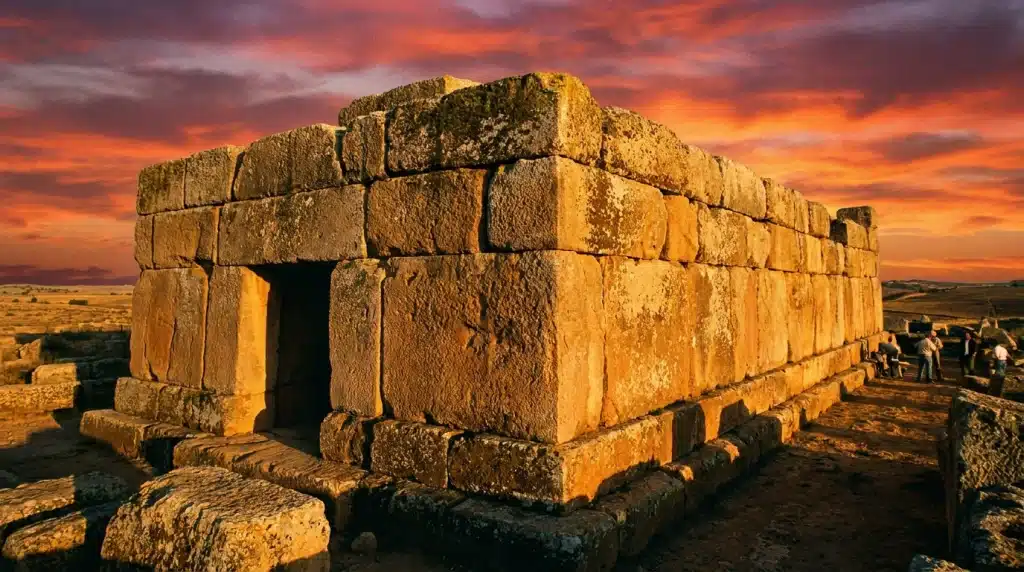
Today, our perception of Solomon is heavily influenced by fantasy literature, video games, and cinema. We see the ‘Seal of Solomon’ appear in everything from occult tabletop games to mystery novels. This constant exposure creates a ‘feedback loop’ where the myth becomes more real to people than the actual historical or biblical narrative. I’ve encountered many people who are genuinely shocked to learn that the Bible doesn’t mention his magic ring.
This is why it’s so important for us to distinguish between primary sources and secondary cultural adaptations. When we consume media, we have to ask ourselves: is this an attempt to provide historical insight, or is this simply using a recognizable name to add gravitas to a fictional story? It’s very easy for a show to call itself ‘based on history’ while taking massive liberties with the truth.
In my own writing and discussions, I always emphasize that we shouldn’t discard the legends entirely. They are meaningful artifacts of human culture. They tell us what people *wanted* to believe about Solomon. They reveal our own human fascination with power and the desire to control our environment. But we must be diligent enough to separate those cultural artifacts from the historical record.

Wisdom vs. Magic: Where is the Line Drawn?
The core of the issue often boils down to how we define ‘wisdom’ and ‘magic’. Solomon’s wisdom was legendary—his ability to judge complex cases, his understanding of nature, and his administrative brilliance. I’ve often felt that this kind of profound insight into the human condition can seem ‘magical’ to those on the outside. When someone perceives a situation with such clarity that they know the outcome before it happens, people often call that ‘intuitive’ or even ‘mystical’.
Is it possible that Solomon’s legendary wisdom was misremembered or embellished into ‘witchcraft’ because his contemporaries couldn’t comprehend the source of his insight? History is full of examples where high-functioning intellects are misunderstood by the masses. While this doesn’t excuse the later occult attributions, it helps explain their origin. His wisdom was so expansive it bordered on the supernatural in the eyes of his subjects.
True wisdom, as described in the book of Proverbs, is about character and moral uprightness. It is the opposite of the self-serving, manipulative nature of witchcraft. If we use the biblical definition, Solomon’s wisdom was about alignment with divine will, whereas the witchcraft he was later accused of is about alignment with selfish desire. These are two fundamentally different approaches to reality.
The Spiritual Consequences of Solomon’s Choices
Finally, we have to address the moral arc of his life. If we look at the later part of his reign, the Bible suggests he suffered real consequences for his choices—the loss of the kingdom’s unity, for instance. This is a far more compelling narrative than a magical battle with demons. It shows us that even the wisest and most powerful individuals are susceptible to the corrupting influence of their surroundings.
As I reflect on this, the lesson isn’t really about whether he practiced sorcery. It’s about the vulnerability of power. Solomon had everything—wisdom, riches, and influence—and yet he still faltered. This is a timeless, human truth that resonates far more deeply than any fable about a magic ring or a legion of demons. The real danger wasn’t witchcraft; it was the slow erosion of his core values.
So, did King Solomon Practice Witchcraft? From a historical and biblical standpoint, the answer remains a clear ‘no’. But as a symbol of human ambition, temptation, and the burden of leadership, he remains a figure that will continue to spark our imagination. Whether we focus on the man of history or the magician of legend, Solomon remains one of the most intriguing characters of the ancient world.