Table of Contents
Introduction to Gog and Magog
When I first started diving into comparative theology, I expected to find a lot of differences. But what caught my attention the most were the eerie, deeply fascinating similarities between major world religions, especially when it comes to the end times. One concept that kept popping up across different ancient texts was the story of Gog and Magog. Whether you are reading through the Old Testament, the Book of Revelation, or the Quran, Gog and Magog are central figures in eschatology—the study of the end times.
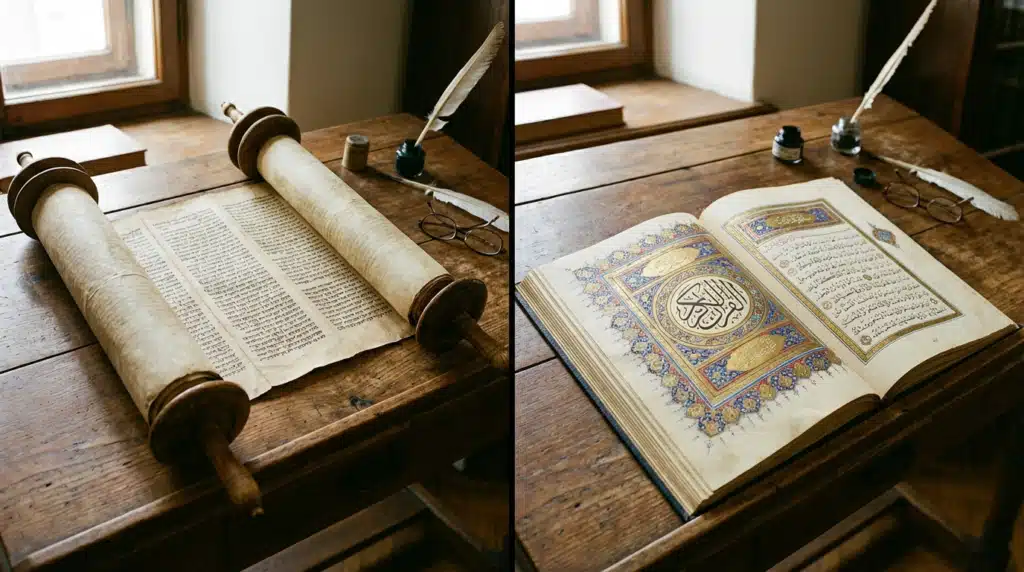
My fascination with Gog and Magog began during a late-night study session. I was reading Ezekiel 38, trying to wrap my head around this massive, looming apocalyptic battle. A few days later, I was reading a translation of Surah Al-Kahf in the Quran and hit a startling realization: Gog and Magog were right there, too, known as Yajuj and Majuj. The realization that millions of Christians, Jews, and Muslims share a largely parallel narrative about Gog and Magog blew my mind. I wanted to map out exactly how Gog and Magog are described in these traditions, where the stories overlap, and where they diverge.
In this post, we are going to deeply explore the mysterious identities of Gog and Magog. We will look at practical scriptural references, historical contexts, and what everyday believers understand about Gog and Magog. If you have ever felt confused by these prophetic symbols, you are not alone. Let us unpack the mystery of Gog and Magog together.
What Exactly Are Gog and Magog?
Before we break down the specific texts, we need to answer a basic question: What exactly are Gog and Magog? Depending on who you ask and what text you are reading, Gog and Magog can be a person and a place, two distinct nations, or purely symbolic representations of chaos.
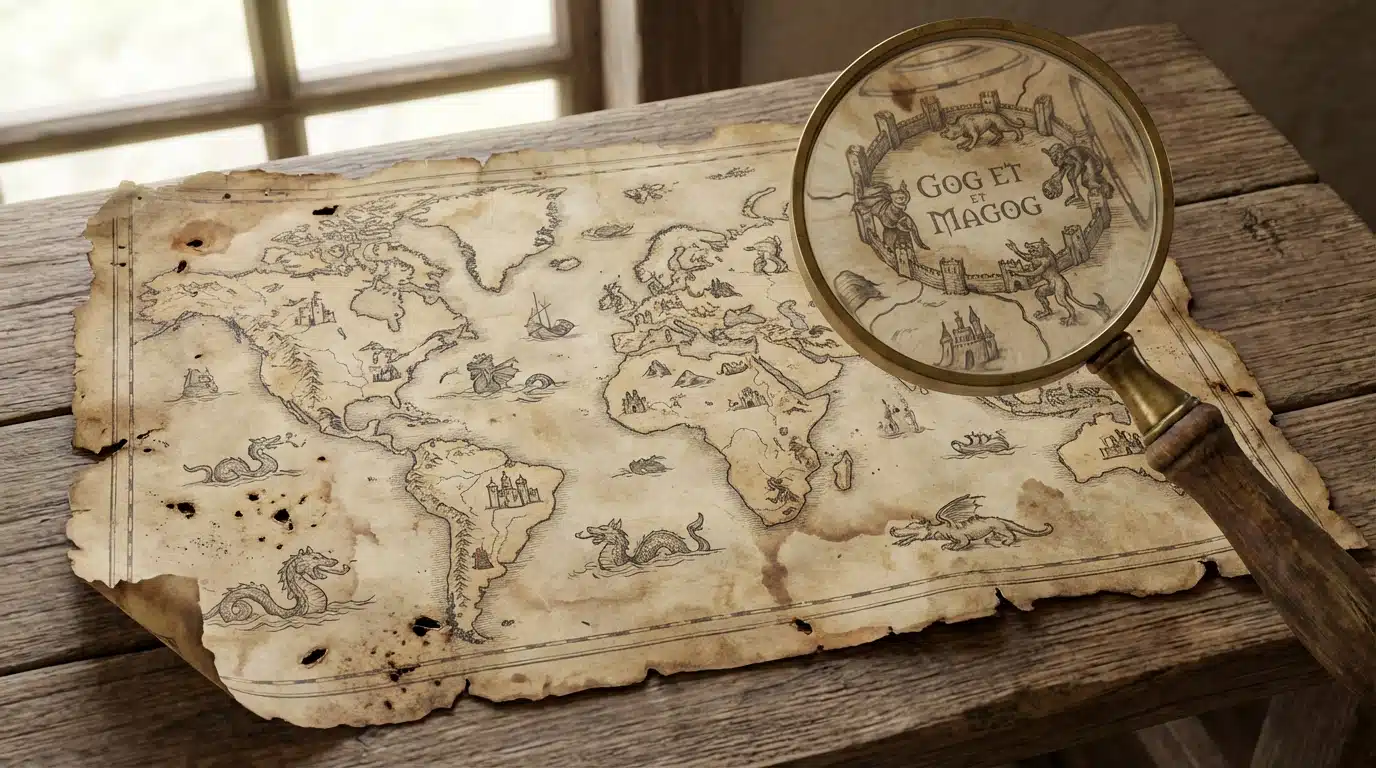
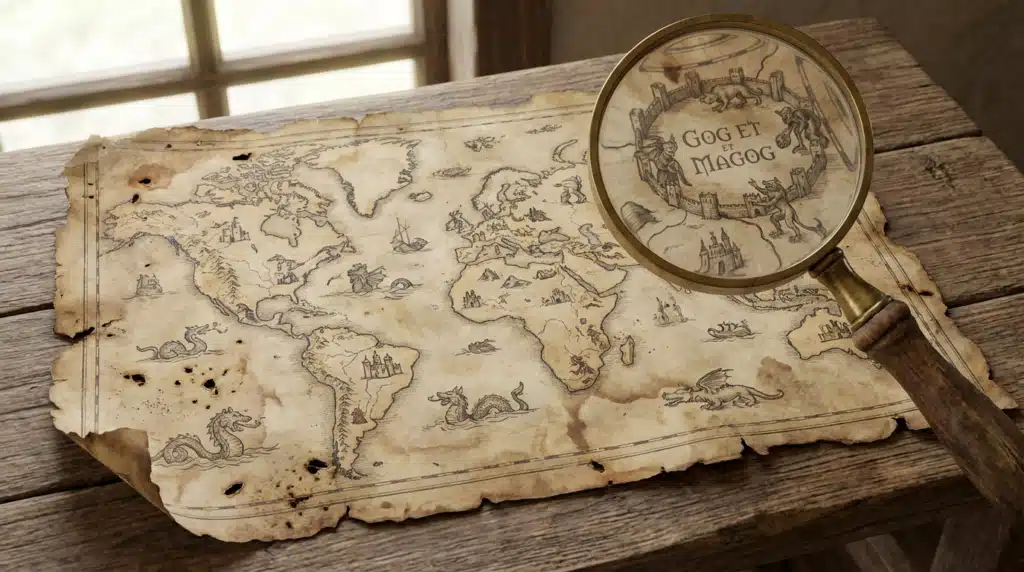
In general terms, Gog and Magog represent a chaotic, destructive force that will be unleashed upon the world right before the final judgment. In ancient historical maps, you will often find Gog and Magog placed at the extreme edges of the known world—usually the far north or the distant east. To the ancient writers, Gog and Magog represented the ultimate “other.” They were the uncivilized, terrifying hordes living outside the boundaries of the peaceful, ordered world.
When studying Gog and Magog, it is important to remember that these names have evolved over millennia. While early mentions of Gog and Magog might have referred to specific, historical tribal groups, later prophetic writings transformed Gog and Magog into cosmic enemies of God. The transition of Gog and Magog from literal ancient tribes to symbolic end-time villains is one of the most interesting literary evolutions in religious history. Now, let’s see how Gog and Magog appear in the Bible.
Gog and Magog in the Bible
If you want to understand the biblical foundation of Gog and Magog, you have to look at two primary places: the Old Testament book of Ezekiel and the New Testament Book of Revelation. The way Gog and Magog are handled in these two texts shows a major shift in prophetic scale.
Gog and Magog in Ezekiel 38-39
The first major, detailed prophecy regarding Gog and Magog appears in Ezekiel chapters 38 and 39. Here, Gog is described as an individual—a ruler or chief prince of the lands of Meshech and Tubal. Magog, on the other hand, is the land from which Gog originates. So in Ezekiel, the formula is basically “Gog from the land of Magog.”
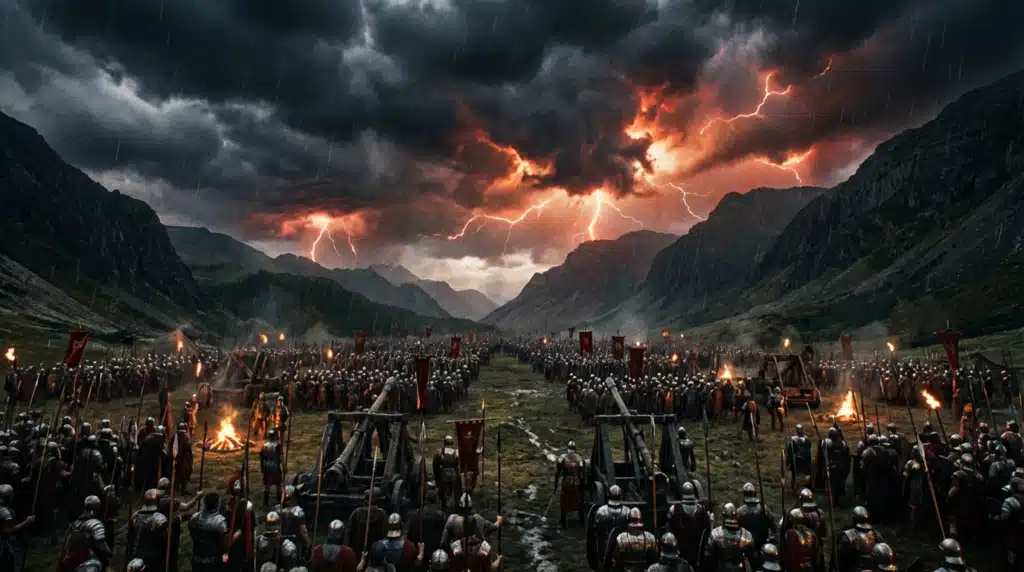
Ezekiel paints a terrifying picture. God tells Ezekiel to set his face against Gog and prophesy that Gog will gather a massive coalition of nations. This army of Gog and Magog will march against the peaceful, restored land of Israel. However, the prophecy makes it clear that Gog and Magog will not succeed. God promises to intervene directly with earthquakes, pestilence, and fire from heaven, utterly destroying the forces of Gog and Magog on the mountains of Israel. For ancient Israelites, this story of Gog and Magog offered comfort: no matter how massive the enemy alliance, God would protect His people.
Gog and Magog in the Book of Revelation
Fast forward a few hundred years to the New Testament. In Revelation 20:7-8, the imagery of Gog and Magog shifts. The author, John of Patmos, expands the localized war of Ezekiel into a massive, cosmic rebellion. Here, Gog and Magog are no longer just a single leader and his land; Gog and Magog are described as the nations in the four corners of the earth.
According to Revelation, after the thousand-year reign of Christ (the Millennium), Satan is released from his prison and goes out to deceive the nations—specifically named as Gog and Magog. He gathers Gog and Magog for a final battle against the “camp of God’s people.” Just like in Ezekiel, the forces of Gog and Magog are defeated by fire coming down from heaven. In this text, Gog and Magog have become the ultimate, final enemies of the divine order, symbolizing all earthly rebellion against God.
Gog and Magog in the Quran
The narrative shifts geographically and culturally when we turn to Islamic eschatology, but the core theme of an apocalyptic horde remains perfectly intact. In the Quran and the Hadith (the recorded sayings of Prophet Muhammad), Gog and Magog are known as Yajuj and Majuj. For Muslims, the emergence of Gog and Magog is one of the major signs of the Day of Judgment (Yawm al-Qiyamah).
Gog and Magog and the Wall of Dhul-Qarnayn
To understand Gog and Magog in Islam, I always point people to Surah Al-Kahf (Chapter 18 of the Quran). This chapter tells the story of a great, righteous ruler named Dhul-Qarnayn (often translated as “The Two-Horned One”). During his travels, he meets a tribe of people living between two mountains who are being constantly terrorized by Gog and Magog.
The people beg Dhul-Qarnayn to build a barrier to protect them from Gog and Magog. Using blocks of iron and pouring molten copper over them, Dhul-Qarnayn constructs an impenetrable wall. According to Islamic tradition, Gog and Magog are trapped behind this wall to this day. They spend every day trying to dig through the barrier, only to have their work undone overnight. But the Quran warns that when the end times approach, God will allow the wall to crumble, and Gog and Magog will swarm out “from every elevated place.”
Gog and Magog in Surah Al-Anbiya
The Quran mentions Gog and Magog a second time in Surah Al-Anbiya (21:96-97). This passage explicitly connects the breaking of the barrier of Gog and Magog to the final judgment. It is a terrifying image: a horde so massive that they consume all resources, famously drinking the Sea of Galilee (Lake Tiberias) completely dry, according to accompanying Hadith literature.
In Islamic eschatology, the destruction of Gog and Magog also requires divine intervention. Jesus (Isa in Islam), who has returned to earth to defeat the Antichrist (Dajjal), will take the believers to Mount Tur for safety. He will then pray to God, who will send a miraculous pestilence—often described as a worm or insect in their necks—that will wipe out the entire horde of Gog and Magog overnight.
Comparing Gog and Magog Across Traditions
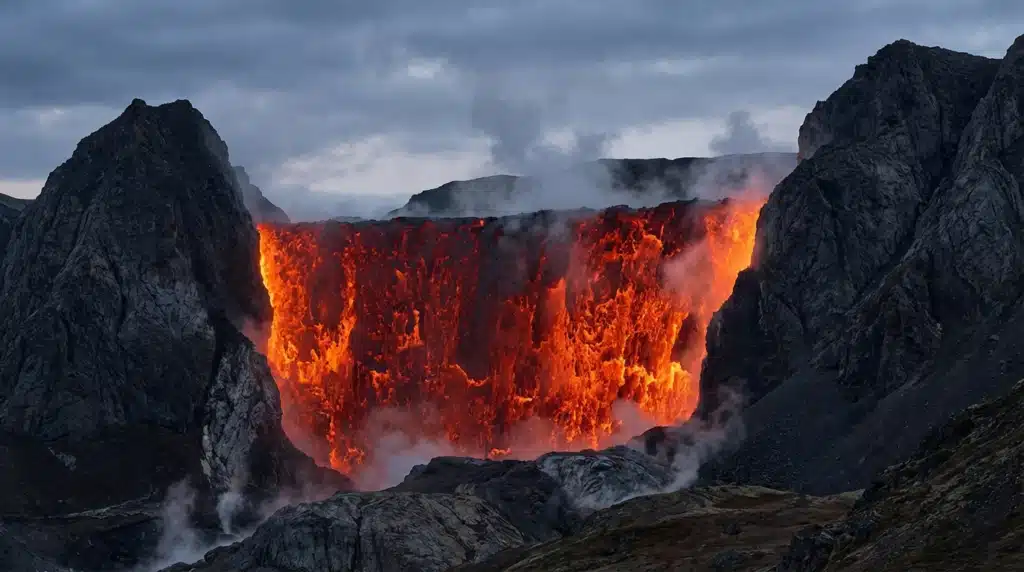
When you sit down with both texts side-by-side, the parallels involving Gog and Magog are impossible to ignore. I remember making a physical chart on my desk, drawing lines between Ezekiel, Revelation, and the Quran. The shared DNA of the Gog and Magog prophecy is remarkable.
First, in both traditions, Gog and Magog represent an overwhelming, innumerable force of destruction. They are not a small invading army; the forces of Gog and Magog are a global threat. Second, human weapons are entirely useless against Gog and Magog. Whether it is the Israelites in Ezekiel, the saints in Revelation, or Jesus and the believers in Islamic tradition, the righteous do not fight Gog and Magog with swords or guns. They retreat, they pray, and God destroys Gog and Magog directly through natural or supernatural disasters (fire, earthquakes, pestilence).
However, there are also distinct differences. The biblical Gog and Magog prophecy focuses heavily on the land of Israel as the focal point of the invasion. Ezekiel frames Gog and Magog as a northern confederacy. In Islam, the origin point of Gog and Magog is tied specifically to the iron wall built by Dhul-Qarnayn, often speculated by historical geographers to be somewhere in the Caucasus or Central Asia. Furthermore, the Quranic Gog and Magog are currently imprisoned, actively trying to escape daily, whereas the biblical Gog and Magog in Ezekiel seem to be nations that will simply be manipulated into a bad decision at the end of days.
Historical Attempts to Identify Gog and Magog
Because the prophecies about Gog and Magog are so terrifying, humans have spent the last two thousand years trying to map them onto real-world enemies. I find this aspect of human psychology fascinating. Whenever a terrifying new empire arises, religious scholars are quick to point fingers and shout, “It’s Gog and Magog!”
In ancient times, Jewish historian Josephus identified Gog and Magog with the Scythians, a brutal, nomadic warrior culture from the Eurasian steppes. To the civilized Mediterranean world, the horseback-riding Scythians absolutely felt like the apocalyptic horde of Gog and Magog.
During the Middle Ages, as the Mongol Empire violently swept across Asia and into the Middle East and Europe, both Christian and Muslim scholars were absolutely convinced that Genghis Khan’s armies were Gog and Magog unleashed. The Mongols seemed to come from nowhere, their numbers were vast, and their devastation was complete—perfectly matching the profile of Gog and Magog.
During the Cold War era, many Western Christian evangelicals attempted to identify Gog and Magog with the Soviet Union, pointing out that “Meshech and Tubal” sounded phonetically similar to Moscow and Tobolsk (a linguistic stretch that most serious scholars reject today). Today, you still see people trying to label modern geopolitical alliances involving Russia, Iran, or China as the fulfillment of the Gog and Magog prophecy.
Why Gog and Magog Prophecies Matter Today
You might be wondering: if we are not facing armies on horseback anymore, why should we care about ancient prophecies regarding Gog and Magog? What I have learned from my deep dive into this topic is that the story of Gog and Magog is not really about geography, politics, or identifying a specific country on a map.
The prophecy of Gog and Magog serves as a powerful theological anchor. It tells believers that chaos, evil, and destruction have a limit. The sheer scale of Gog and Magog is meant to represent insurmountable odds. In our own lives, we look at the state of the world—wars, corruption, natural disasters—and it can feel like a horde of Gog and Magog is constantly at the gates. But the core message across both the Quran and the Bible is one of profound hope and divine sovereignty.
God’s defeat of Gog and Magog demonstrates that human arrogance and destructive power will ultimately be checked by divine justice. We do not need to obsess over identifying which modern nation represents Gog and Magog. Instead, the focus should be on the promise that follows the defeat of Gog and Magog: a restored world, free from violence, where peace finally reigns supreme.
Exploring the connections between the Quran and the Bible has deepened my appreciation for how shared narratives shape our understanding of the divine. The prophecy of Gog and Magog stands as a brilliant reminder that humanity has long struggled with the concept of ultimate evil, and yet, has always held onto the enduring hope of ultimate salvation.