Table of Contents
- The Primordial Grudge: Esau to Amalek
- The Coward’s Strike at Rephidim
- The Battle of Divine Endurance
- The Eternal Decree: Why God Remembers
- Scourge of the Judges
- The Trial of King Saul
- Samuel and the Execution of Agag
- David’s Duel at Ziklag
- The Agagite Ghost: Rise of Haman
- The Theology of Obliteration
- Metaphysical Amalek: The Ego
- Mythic Shadows of Giants
- The Vanishing Bloodline
- Frequently Asked Questions
Why did God command the absolute erasure of one specific bloodline from history? It was not merely a call for military defeat, but a mandate for total annihilation of their memory. They were the Amalekites, the only people against whom the Creator swore an eternal war. Standard biblical history teaches that they vanished into the dust of antiquity thousands of years ago. But a closer examination reveals a more disturbing truth.
The Amalekites didn’t just disappear; they evolved. From the deserts of the Negev to the palaces of Persia, the spirit of this ancient enemy has persisted, acting as the ultimate antagonist to the biblical narrative. To understand why the Amalekites are considered the arch-villains of scripture, we must trace a bloodline of hatred that spans centuries.
The Primordial Grudge: From Esau to Amalek
To understand a hatred that transcends time, we must descend into the genesis of a blood feud so ancient it predates the existence of the nation of Israel itself. The war with the Amalekites did not begin on a battlefield. It began in the intimate betrayal of a family. Imagine the sheer weight of a destiny stolen, a cosmic inheritance ripped away in a moment of hunger and deception. It begins with two brothers, twins wrestling in the womb, destined to become two nations: Jacob and Esau.
We know the story well. Jacob, the heel-catcher, takes the birthright; he seizes the blessing intended for the firstborn. But history is often written by the victors. To understand the Amalekites, we must look into the eyes of the vanquished. What happens to the rage of a man who believes God himself has turned against him? Esau’s bitter cry when he discovered he had been supplanted did not vanish into the ether. It festered. It became a legacy a psychological inheritance passed down to his son, Eliphaz.
However, the true catalyst, the spark that ignited this primordial grudge into an eternal flame, was a woman named Timna. The ancient texts reveal that Timna was a princess of the Horites, royalty in her own right. Yet, drawn by the spiritual magnitude of the patriarchs, she sought to join the house of Abraham, Isaac, and Jacob. She came not as a conqueror, but as a seeker, willing to humble herself. But the doors were bolted shut. The patriarchs, seeing something unstable in her essence, rejected her.
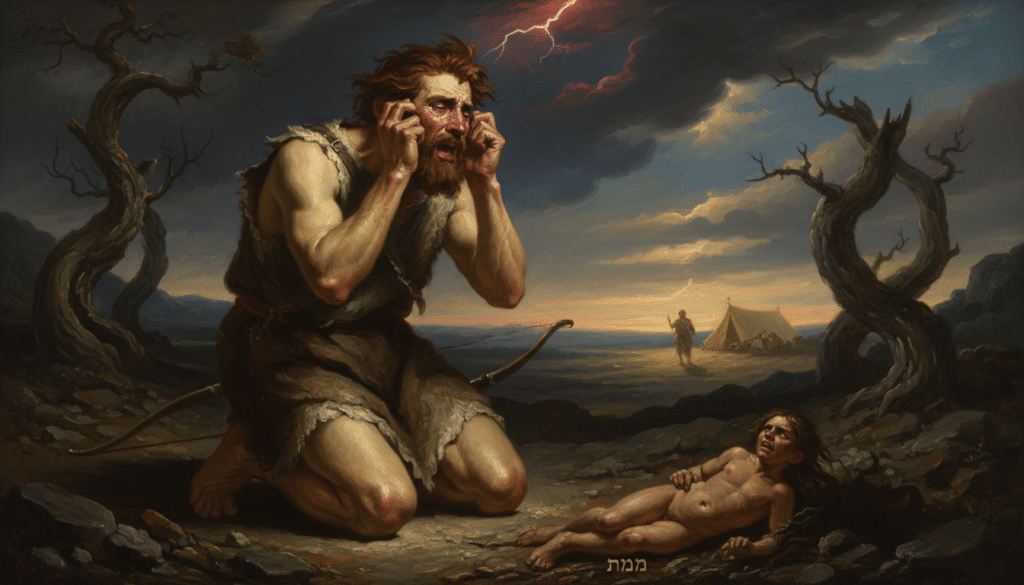
Cast aside and humiliated, she made a choice that would haunt the world forever. She declared that it was better to be a servant in the house of Esau than a mistress in the house of kings. She became the concubine of Eliphaz, Esau’s son. From this union of a bitter grandfather’s stolen glory and a spurned mother’s vengeance, Amalek was born. The father of the Amalekites was not merely a child; he was the personification of rejection. He grew up on the knees of Esau, listening to the stories of the stolen blessing, fed on the milk of his mother’s humiliation.
As the family expanded, they transformed. They moved away from the fertile lands and plunged into the abyss of the wilderness. They claimed the Negev, a land of scorching heat, jagged rock, and unforgiving scarcity. The geography forged their soul. The Amalekites ceased to be a mere family and became a nomadic warrior culture the wolves of the desert. While other nations settled, built cities, and planted crops, the Amalekites honed the art of the raid. They became masters of irregular warfare, striking from the shimmering heat haze and vanishing before a defense could be mounted.
The Coward’s Strike: The Sin at Rephidim
The waters of the Red Sea had scarcely settled over the ruins of Pharaoh’s army when the silence of the Sinai was shattered. The Children of Israel were drifting through the wilderness of Shur and Sin. They were not yet a nation of warriors; they were a vast, undulating sea of refugees. At the front of this column marched the strong, carrying the Ark of the Covenant. But the column had a tail. Far behind the vanguard lagged the stragglers: the elderly, the sick, the pregnant women, and the heavy-laden.
It was here that the Amalekites revealed their true nature. They did not sound a trumpet or send an emissary to declare war. Instead, they waited until the strong were out of sight, and then they descended like a plague of locusts upon the weak. The scriptures in Deuteronomy describe this act with a chilling specificity: they “cut off the tail.” It was a massacre of the helpless. The Amalekites fell upon the rear of the column with a savagery that defied the conventions of the ancient world.
In the ancient Near East, there existed an unwritten law of the desert a code of hospitality. To strike a traveler who is faint from the journey was considered an abomination. But the Amalekites possessed no fear of God. They viewed the vulnerable not as objects of pity, but as prey. This was the Sin at Rephidim. By targeting the “tail” of the camp, the Amalekites attacked the part of the body that represents the weary and the downtrodden the very people God claims as His special protectees.
The Battle of Divine Endurance: Moses on the Peak
The dust of the desert floor had barely settled from the initial slaughter when the realization dawned: this would not be a mere skirmish. It was a war for existence. Joshua was tasked with the impossible to rally a terrified mob against the Amalekites, the apex predators of the Negev. But the true battle was not destined to be decided by the sharpness of Joshua’s blade.
While the metal clashed in the valley, Moses ascended the heights. In his grip was the Staff of God. He stood silhouetted against the blinding Sinai sun, accompanied by Aaron and Hur. As long as Moses held the staff aloft, the untrained Israelites fought with the fury of lions, pushing the Amalekites back. But Moses was mortal. As his hands trembled and fell, the tide of war instantly turned.
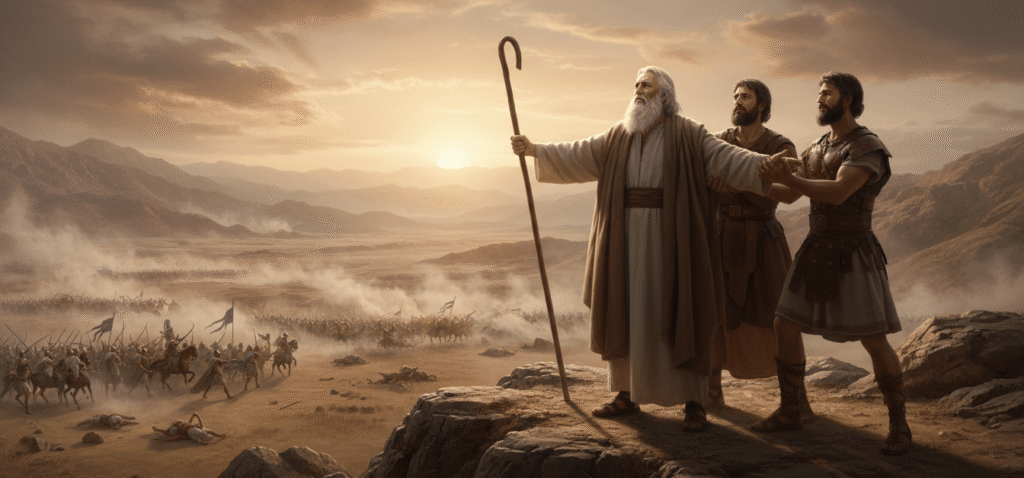
In the valley, the Amalekites surged forward. The realization that the survival of an entire people hinged on the failing deltoids of one old man was terrifying. Aaron and Hur understood the assignment. They found a stone and placed it under him. Then, they physically bore the weight of the burden, propping up his hands. The image is iconic: three men on a hill, locked together in a sculpture of desperate intercession. With the conduit reopened, Joshua overwhelmed the Amalekites with the edge of the sword.
The Eternal Decree: Why God Remembers
When the dust settled, Moses built an altar and named it Jehovah-Nissi The Lord Is My Banner. By giving God this title, Moses was declaring that the war against the Amalekites was not Israel’s war alone. It was God’s war. The scripture records a chilling justification: “Because the Lord has sworn: the Lord will have war with Amalek from generation to generation.”
Why does the God of mercy declare a forever war against this one specific lineage? It is because the Amalekites are not merely a tribe; they are a principle. They represent the cold, calculating rejection of God’s government. They are the embodiment of chaotic evil that seeks to undo creation. To tolerate the Amalekites is to tolerate a cancer in the spiritual organs of the world.
This leads to the paradox in Deuteronomy: “You shall blot out the remembrance of Amalek from under heaven… You shall not forget.” How do you blot out a memory by keeping it alive? God is commanding a unique form of memory a vigilance designed for destruction. We are commanded to remember the cruelty of the Amalekites specifically so that we can recognize their spirit when it resurfaces in new forms.
Scourge of the Judges: The Nomadic Terror
During the dark age of the Judges, the Amalekites evolved into the ultimate opportunistic predators. They understood that a nation at war with itself is a carcass waiting to be stripped. In the Book of Judges, we see the Amalekites rising not as conquerors seeking to occupy territory, but as a recurring scourge designed to break the will of the Hebrews.
They formed alliances with the Midianites, arriving like a plague of locusts during the harvest. The Amalekites had no interest in governing the farmers of Israel. They wanted to starve them. They destroyed the increase of the earth, leaving no sustenance for Israel. It was a strategy of total suffocation. Yet, through Gideon, the myth of Amalekite invincibility was shattered. Gideon’s small band, using sound and light, turned the terror of the Amalekites against them, causing the coalition to collapse in panic.
The Trial of King Saul: The Gilgal Compromise
The era of judges passed, and Israel crowned a king. Saul, the son of Kish, was tested by an execution order. The Prophet Samuel delivered the divine command: “Go and strike Amalek and devote to destruction all that they have.” There was to be no mercy. The Amalekites were to be erased man, woman, child, and beast.
Saul gathered an army and shattered the might of the Amalekite host. But in the flush of triumph, Saul made a fatal calculation. He saw Agag, the King of the Amalekites, as a trophy to be paraded. He spared Agag and the best of the livestock, destroying only that which was worthless. He chose pragmatism over purity.
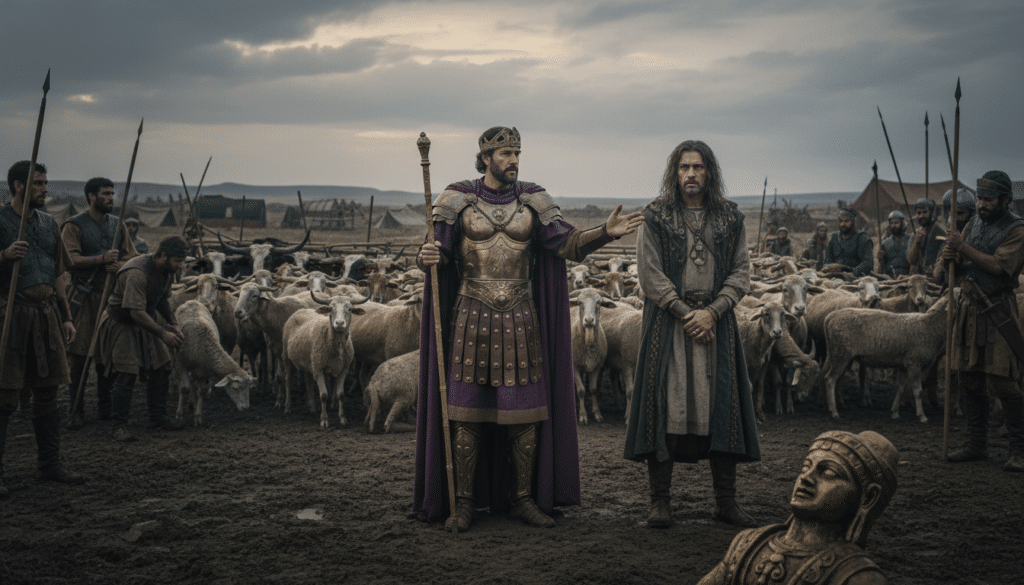
At Gilgal, Samuel confronted Saul with the haunting question: “What then is this bleating of the sheep in my ears?” Because Saul rejected the word of the Lord regarding the Amalekites, the Lord rejected him from being king. The dynasty was torn away because the King of Israel hesitated to destroy the ancient enemy.
The Prophet’s Wrath: Samuel Heaves the Blade
The dust of Gilgal settled, but the air remained heavy. Samuel, the old prophet, stepped forward to finish what the monarchy was too weak to complete. King Agag of the Amalekites was brought forward, walking “delicately,” arrogantly believing the bitterness of death was past. But he was not standing before a politician; he was standing before the vessel of God’s wrath.
Samuel declared, “As your sword has made women childless, so shall your mother be childless among women.” The text states that Samuel “hewed Agag in pieces” before the Lord. It was a ritualistic purging, a “Herem”. However, ancient commentaries suggest a delay occurred a singular night between Agag’s capture and execution where the seed of the Amalekites may have been preserved, allowing the bloodline to escape the prophet’s blade.
David’s Duel with Destiny: The Ziklag Raid
The torch passed to David, but the Amalekites were not finished. While David and his men were away, the raiders struck Ziklag, burning the city and abducting the wives and children of the future king. The Amalekites had hollowed out David’s future. Amidst the mutiny of his own men, David strengthened himself in God and pursued.
The chase led them to an abandoned Egyptian slave, left to die by his Amalekite master. This act of callousness was Amalek’s undoing. The slave led David to the enemy camp, where the Amalekites were reveling in their spoils. David launched an attack at twilight, recovering everything. Yet, four hundred young Amalekites escaped on camels, carrying the seeds of hatred back into the deep desert.
The Agagite Ghost: The Rise of Haman
Centuries later, in the citadel of Susa, the seed of the Amalekites resurfaced. Haman, the vizier of the Persian Empire, is introduced in the Book of Esther with a terrifying title: “Haman the Agagite.” This patronymic links him directly to the king Samuel butchered. The ghost of Agag had returned to power.
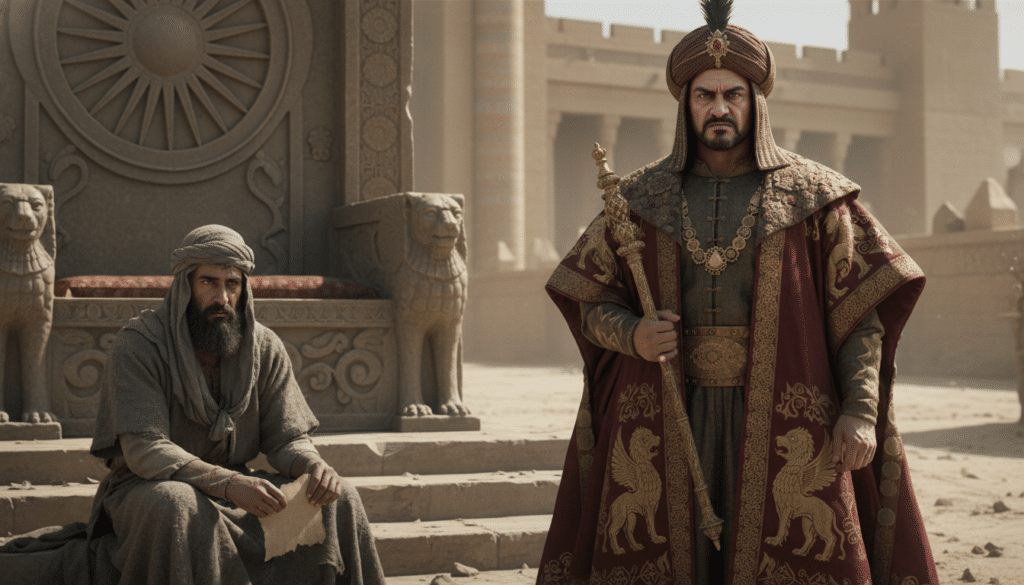
When Mordecai, a descendant of the same tribe as King Saul, refused to bow, Haman’s rage transcended the personal. He sought the total annihilation of the Jewish people the “Final Solution.” This was the ancient grudge of the Amalekites on a global scale. But in a divine reversal, Haman was hanged on his own gallows. The failure of the ancestor (Saul) was rectified by the faithfulness of the descendant (Mordecai), and the name of the Amalekites was once again blotted out.
The Theology of Obliteration: Herem Explained
The command to destroy the Amalekites involves the concept of “Herem” total devotion to destruction. It is the theology of obliteration. The Amalekites were diagnosed as a spiritual malignancy. If a surgeon finds a tumor, he does not negotiate with it. To leave even a single cell is to condemn the patient.
The spoils of the Amalekites were forbidden because the war was not for profit; it was a sterile act of judgment. The theology of obliteration asserts that there are some things in this world like the predatory evil of the Amalekites that cannot be redeemed, only destroyed.
Beyond the Flesh: Amalek as the Ego
According to the secret teachings of the Kabbalah, the war with the Amalekites is also internal. The numerical value (Gematria) of “Amalek” is 240, the same as the Hebrew word for “Doubt” (Safek). The Amalekites represent the cooling of spiritual passion. They are the voice of cynicism that mocks faith and introduces doubt at the moment of inspiration.
The command to “blot out the remembrance of Amalek” is a manual for spiritual survival. We must identify the coldness in our own hearts the inner Amalekite and obliterate it with the fire of conviction and purpose.
Mythic Shadows: Legends of the Desert Giants
Legends suggest the Amalekites were more than simple raiders; they were practitioners of dark arts and perhaps carriers of the Nephilim bloodline. Rabbinic tradition whispers of their ability to shape-shift and their sorcery in the Negev. These stories paint the Amalekites as the literal seed of the serpent, a hybrid monstrosity waging a cosmic war.
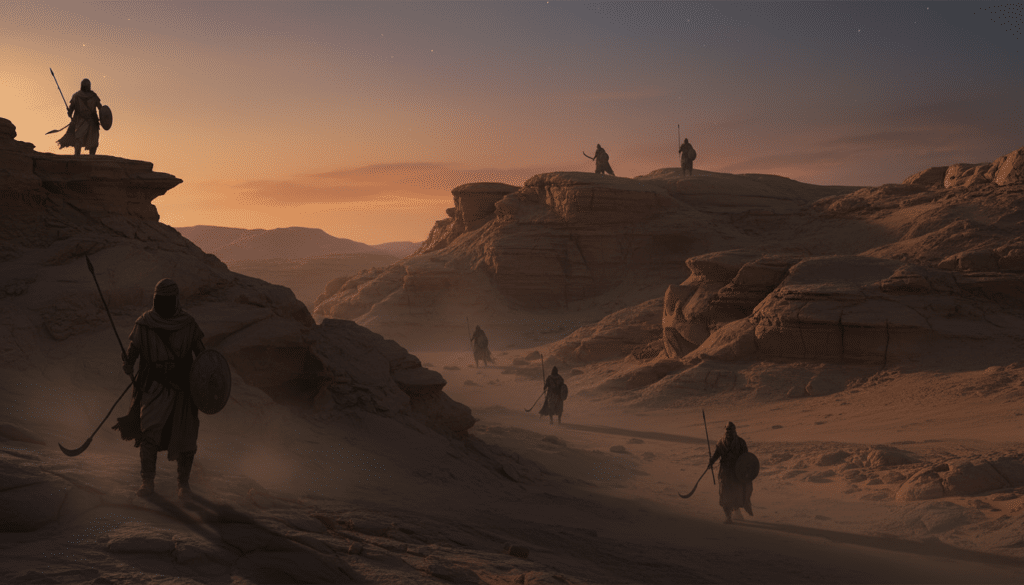
Yet, they left no monuments. Legend dictates that because they sought to erase a nation, their own existence was condemned to be formless the Curse of the Wandering. The Amalekites are the ghosts of antiquity, leaving behind only the chill of hatred.
The Vanishing Bloodline: History’s Erasure
The historical record of the Amalekites eventually goes black. In the days of King Hezekiah, a remnant was slaughtered in Mount Seir. After that, they dissolved into the surrounding nations. To this day, archaeology has found no inscription written by an Amalekite. They have been scrubbed from the physical record.
But the decree succeeded in a profound way. We remember the name “Amalek,” but only as the archetype of evil. They ceased to be a biological lineage and became a spiritual condition. As long as there is a hand raised against the throne of the Almighty, the spirit of the Amalekites lives on, demanding our eternal vigilance.