Table of Contents
- Defining Biblical Forgiveness: More Than Just a Feeling
- God’s Forgiveness: The Foundation of Our Faith
- The Mandate: Why We Must Forgive Others
- The Mathematics of Mercy: The Unmerciful Servant
- Forgiveness vs. Reconciliation: Understanding the Difference
- The Spiritual Danger of Harboring Bitterness
- Key Scriptures on Forgiveness Explained
- Frequently Asked Questions
One of the most frequent and difficult questions asked by believers and seekers alike is: what does the Bible say about forgiveness? It is a topic that touches the core of the human experience—we have all been hurt, and we have all hurt others. Yet, the Bible presents a radical counter-cultural view on this subject. It does not treat forgiveness as a mere suggestion for emotional well-being, but as a central pillar of the Christian faith.
To truly understand what the Bible says about forgiveness, we must move beyond trite sayings and explore the depths of Scripture. From the Old Testament laws to the teachings of Jesus in the Gospels, the message is consistent: forgiveness is the mechanism by which God redeems us, and it is the standard by which we are called to live.
Defining Biblical Forgiveness: More Than Just a Feeling
When investigating what does the Bible say about forgiveness, we must first define our terms. In our modern culture, forgiveness is often equated with a feeling—the absence of anger—or the act of forgetting an offense ever happened. However, the biblical definition is far more robust and active.

The primary Greek word used for forgiveness in the New Testament is aphiemi. This word literally means “to send away,” “to let go,” or “to release.” It is a legal and financial term as much as it is an emotional one. When you forgive, you are essentially canceling a debt. You are acknowledging that a wrong was done, a “debt” was incurred against you, but you are choosing to release the debtor from the obligation to pay.
This distinction is crucial. What does the Bible say about forgiveness regarding memory? It does not say you must have amnesia. God, who is all-knowing, chooses to “remember our sins no more” (Jeremiah 31:34), meaning He will not hold them against us. Biblical forgiveness is a decision of the will, not a fluctuation of emotion. It is the deliberate act of releasing the right to revenge.
God’s Forgiveness: The Foundation of Our Faith
We cannot fully grasp what does the Bible say about forgiveness without first looking at God’s forgiveness toward us. This is the vertical dimension of forgiveness that makes the horizontal dimension (forgiving others) possible. Ephesians 4:32 summarizes this perfectly: “Be kind to one another, tenderhearted, forgiving one another, as God in Christ forgave you.”
The entire narrative of Scripture, from Genesis to Revelation, is a story of God making a way to forgive humanity. The sacrificial system of the Old Testament was a foreshadowing of the ultimate sacrifice—Jesus Christ. In the New Covenant, forgiveness is not earned by our works; it is granted by God’s grace through faith.

Key aspects of God’s forgiveness include:
- It is Complete: Psalm 103:12 tells us, “As far as the east is from the west, so far does he remove our transgressions from us.”
- It is Costly: It cost the life of His Son. Hebrews 9:22 reminds us that “without the shedding of blood there is no forgiveness of sins.”
- It is Continuous: 1 John 1:9 assures us that “If we confess our sins, he is faithful and just to forgive us our sins and to cleanse us from all unrighteousness.”
When asking what does the Bible say about forgiveness, the answer always starts at the Cross. We forgive because we are forgiven. A failure to understand the depth of our own debt to God often leads to an inability to release the debts of others.
The Mandate: Why We Must Forgive Others
This is where the teaching becomes difficult. What does the Bible say about forgiveness regarding our enemies or those who betray us? Is it optional? The clear answer from Scripture is no. Forgiveness is a command, not a suggestion.
In the Lord’s Prayer, Jesus teaches us to pray: “And forgive us our debts, as we also have forgiven our debtors” (Matthew 6:12). He follows this immediately with a stern warning in verses 14-15: “For if you forgive others their trespasses, your heavenly Father will also forgive you, but if you do not forgive others their trespasses, neither will your Father forgive your trespasses.”
This passage terrifies many theologians and believers. Does this mean our salvation is conditional? The consensus among biblical scholars is that this speaks to relational fellowship with God and the evidence of genuine faith. A heart that has truly received God’s massive forgiveness cannot remain hard and unforgiving toward others. If we refuse to forgive, it is evidence that we do not understand or perhaps have not truly experienced the grace of God.
Therefore, what does the Bible say about forgiveness is that it is the natural outflow of a regenerate heart. You cannot be a conduit of God’s grace if you block the flow to others.
The Mathematics of Mercy: The Unmerciful Servant
To illustrate the absurdity of unforgiveness in the life of a believer, Jesus told the Parable of the Unmerciful Servant in Matthew 18:21-35. Peter asks Jesus, “Lord, how often will my brother sin against me, and I forgive him? As many as seven times?” Peter thought he was being generous, as rabbinic tradition often suggested three times was sufficient.
Jesus responds, “I do not say to you seven times, but seventy-seven times” (or seventy times seven). He then tells the story of a servant who owed the King 10,000 talents. In modern currency, this is an unpayable debt—billions of dollars. The King has mercy and cancels the debt entirely.
That same servant then finds a fellow servant who owes him 100 denarii—a few months’ wages. Despite the fellow servant’s pleas, the first servant chokes him and throws him in prison. When the King hears of this, he is furious. He reinstates the original debt and hands the servant over to the torturers.
So, what does the Bible say about forgiveness through this parable? It teaches the “mathematics of mercy.” The debt we owe God (sin) is incalculable and unpayable. The debt others owe us (offenses), while real and painful, is miniscule in comparison to our offense against a Holy God. To accept the cancellation of a billion-dollar debt but refuse to cancel a thousand-dollar debt is legally and morally wicked.
Forgiveness vs. Reconciliation: Understanding the Difference
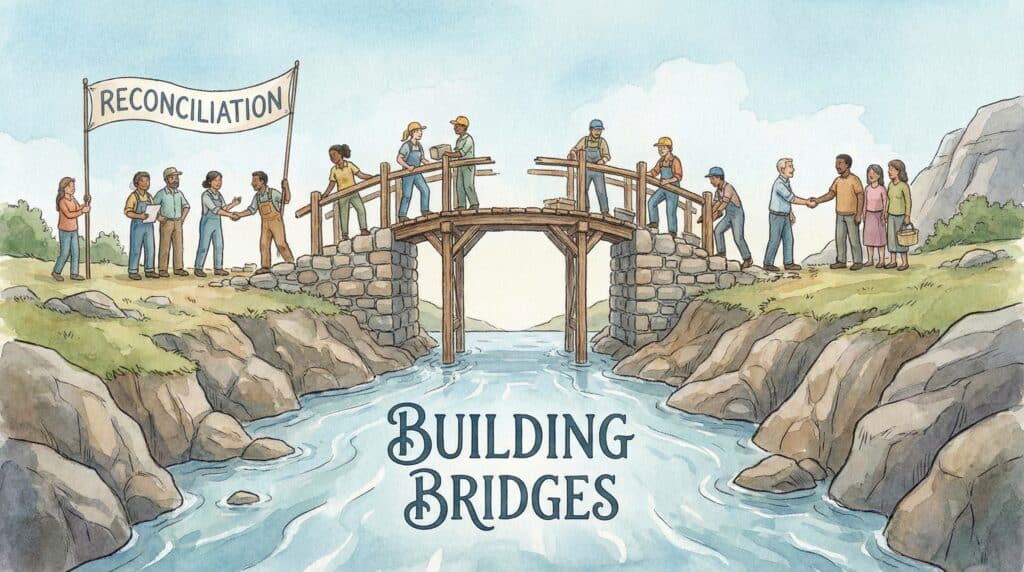
A common misconception when asking what does the Bible say about forgiveness is confusing forgiveness with reconciliation. They are not the same thing.
- Forgiveness is a solo act. It takes one person to forgive. It happens between you and God, where you release the offender from your judgment.
- Reconciliation takes two people. It requires the offender to repent, acknowledge their wrong, and work to rebuild trust.

The Bible commands us to forgive everyone, but it does not command us to trust everyone immediately. Romans 12:18 says, “If possible, so far as it depends on you, live peaceably with all.” The phrase “if possible” implies that sometimes, due to the other person’s unrepentance or toxicity, restoration of the relationship is not possible.
What does the Bible say about forgiveness in abusive situations? It says you must release the bitterness and pray for them, but it does not require you to remain in harm’s way or allow the abuse to continue. Boundaries are biblical. You can forgive someone and still call the police; you can forgive someone and never speak to them again if they remain dangerous.
The Spiritual Danger of Harboring Bitterness
Why is the Bible so insistent on this topic? Because God knows that unforgiveness destroys the vessel that holds it. Hebrews 12:15 warns us: “See to it that no one fails to obtain the grace of God; that no ‘root of bitterness’ springs up and causes trouble, and by it many become defiled.”
Unforgiveness is often described as drinking poison and expecting the other person to die. What does the Bible say about forgiveness and spiritual health? It indicates that holding onto grudges hinders our prayer life. In Mark 11:25, Jesus says, “And whenever you stand praying, forgive, if you have anything against anyone, so that your Father also who is in heaven may forgive you your trespasses.”

Harboring resentment grieves the Holy Spirit (Ephesians 4:30-31). It locks us in a prison of the past. When we ask what does the Bible say about forgiveness, we find that God’s command is ultimately for our protection. He wants us free from the corrosive effects of anger.
Key Scriptures on Forgiveness Explained
To further your study on what does the Bible say about forgiveness, meditate on these foundational verses:
- Colossians 3:13: “Bearing with one another and, if one has a complaint against another, forgiving each other; as the Lord has forgiven you, so you also must forgive.” (The standard of forgiveness is Christ’s action toward us.)
- Luke 6:37: “Judge not, and you will not be judged; condemn not, and you will not be condemned; forgive, and you will be forgiven.” (The principle of reciprocity in the Kingdom of God.)
- Proverbs 17:9: “Whoever covers an offense seeks love, but he who repeats a matter separates close friends.” (Forgiveness involves not constantly bringing up past wrongs.)
- Luke 23:34: “And Jesus said, ‘Father, forgive them, for they know not what they do.'” (The ultimate example of forgiving enemies while suffering.)
- Isaiah 43:25: “I, I am he who blots out your transgressions for my own sake, and I will not remember your sins.” (God forgives for His glory, not just our benefit.)
In conclusion, when we ask what does the Bible say about forgiveness, we find a message that is challenging yet liberating. It requires us to die to our pride and our right to revenge. It invites us into the divine nature of God Himself. Whether you are struggling to forgive a small offense or a life-altering betrayal, the Scripture offers the power to let go through the Holy Spirit.