Table of Contents
- The Prophetic Significance of Ezekiel 38-39
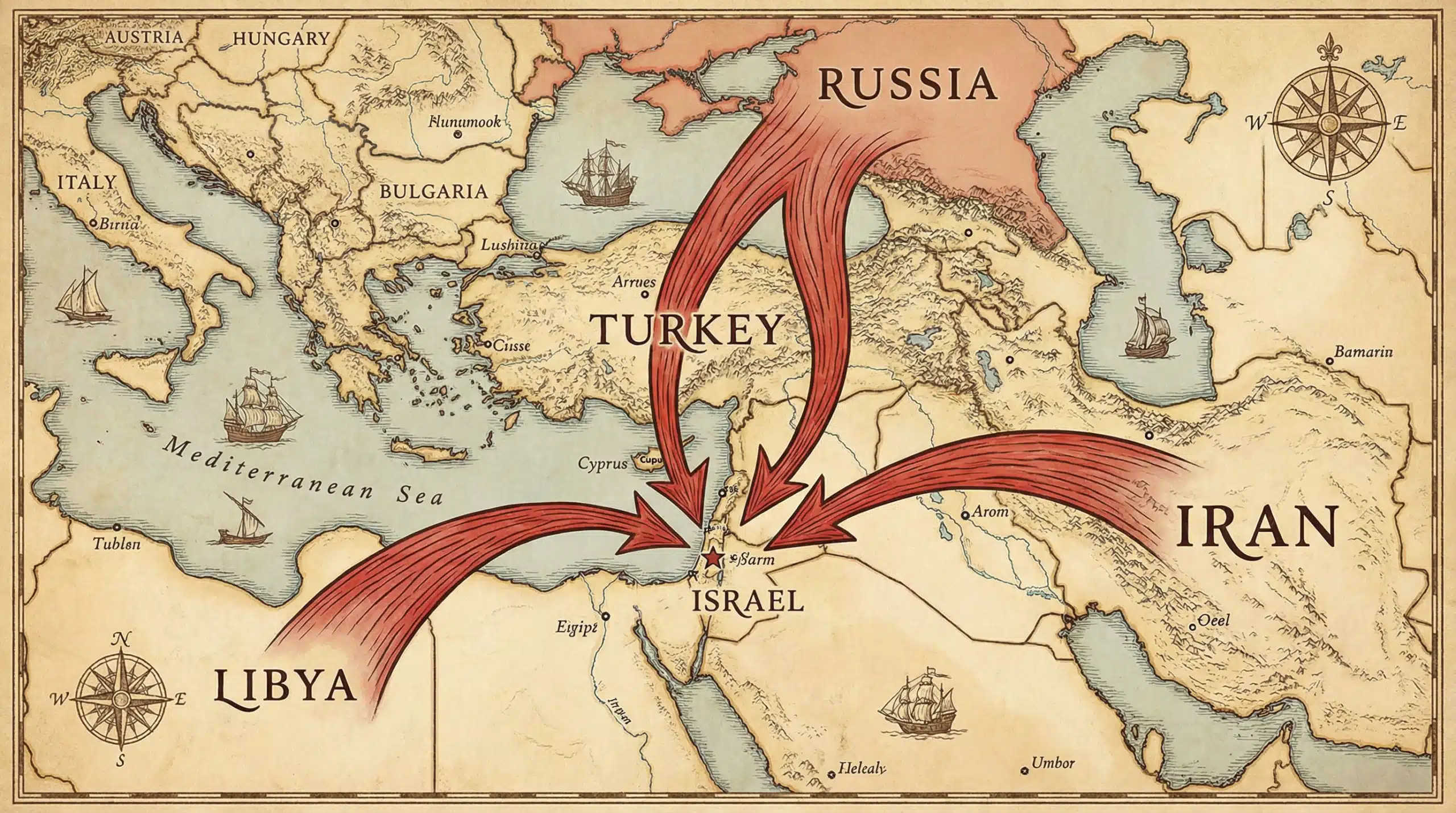
- Decoding the Gog and Magog War Map
- The Great Debate: Is Rosh Russia?
- Persia: The Iranian Connection
- The African Alliance: Cush and Put
- Gomer and Beth-Togarmah: The Turkish Front
- Why Israel? The Strategic Motive
- The Divine Outcome and Aftermath
- Frequently Asked Questions
For centuries, theologians, historians, and geopolitical analysts have poured over the ancient Hebrew text of Ezekiel 38 and 39, attempting to reconstruct the Gog and Magog war map. This prophetic passage describes a massive, multi-nation coalition descending upon the mountains of Israel in the “latter years.” In the current climate of Middle Eastern volatility, the alignment of nations described by the prophet Ezekiel over 2,500 years ago bears a striking resemblance to modern geopolitical headlines.
Understanding the Gog and Magog war map requires more than just reading the Bible; it demands a deep dive into ancient etymology, historical geography, and modern international relations. Who is Gog? Where is Magog? And crucially, who are the allies that join this invasion? This article provides an authoritative, detailed breakdown of the nations involved, placing ancient names onto a modern map to answer the pressing question: Who attacks Israel?
The Prophetic Significance of Ezekiel 38-39
The prophecy of Ezekiel, written during the Babylonian captivity in the 6th century B.C., outlines a specific military campaign unlike any other in scripture. While some historical critics attempt to place this event in the past (such as during the Maccabean revolt), the internal evidence of the text strongly supports a futurist interpretation. The text explicitly states the invasion occurs when Israel has been gathered from many nations and is dwelling safely—a condition that arguably has only begun to manifest since the establishment of the State of Israel in 1948, or perhaps refers to a future peace treaty.
The Gog and Magog war map is not merely a diagram of troop movements; it is a theological assertion of God’s sovereignty. The text repeats the phrase “that the nations may know that I am the LORD” (Ezekiel 38:16). This conflict is the stage upon which divine power is displayed to the Gentile world. Consequently, identifying the players on the Gog and Magog war map is essential for students of eschatology.
Decoding the Gog and Magog War Map
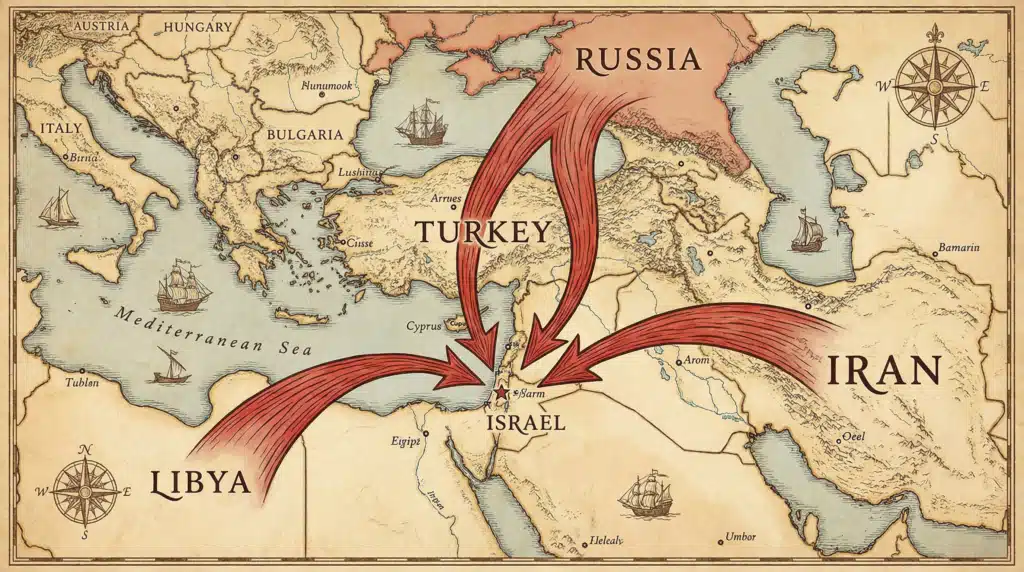
To construct an accurate Gog and Magog war map, we must translate the ancient tribal names listed in Ezekiel 38:2-6 into their modern national equivalents. The text identifies the leader as “Gog, of the land of Magog,” who is the “chief prince of Rosh, Meshech, and Tubal.” He is accompanied by Persia, Cush, Put, Gomer, and the house of Beth-togarmah.
Magog: The Land of the Invader
The primary entity on the Gog and Magog war map is Magog. Historically, Magog was the second son of Japheth (Genesis 10:2). Josephus, the first-century Jewish historian, identified the descendants of Magog as the Scythians. The Scythians were a nomadic, horse-riding people who inhabited the vast steppes north of the Black Sea and the Caspian Sea. In modern geography, this region encompasses Central Asia and, significantly, parts of modern-day Russia and the former Soviet Republics (Kazakhstan, Kyrgyzstan, Uzbekistan, etc.).
While some scholars place Magog entirely within modern-day Turkey, the Scythian identification strongly suggests a territory extending further north, deep into the Eurasian heartland. This places a massive power directly to the “uttermost parts of the north” (Ezekiel 38:15) relative to Israel.
The Great Debate: Is Rosh Russia?
Perhaps the most contentious point in drawing the Gog and Magog war map is the identity of “Rosh.” The Hebrew word Rosh means “head” or “chief.” Some translations render Ezekiel 38:2 as “the chief prince of Meshech and Tubal.” However, other translations (like the NKJV and NASB) and many scholars argue that Rosh is a proper noun referring to a specific place or people.
Proponents of the “Rosh = Russia” view point to etymological similarities. Wilhelm Gesenius, the father of modern Hebrew lexicography, noted that Rosh is likely an early reference to the Rus people, the progenitors of modern Russia. Geographically, Ezekiel emphasizes that this invader comes from the “remote parts of the north.” If one draws a straight line north from Jerusalem, they pass through Ankara, across the Black Sea, and land directly in Moscow. In the context of the Gog and Magog war map, identifying Rosh as Russia provides the coalition with a nuclear-armed superpower capability, fitting the description of the overwhelming force described in the text.
Persia: The Iranian Connection
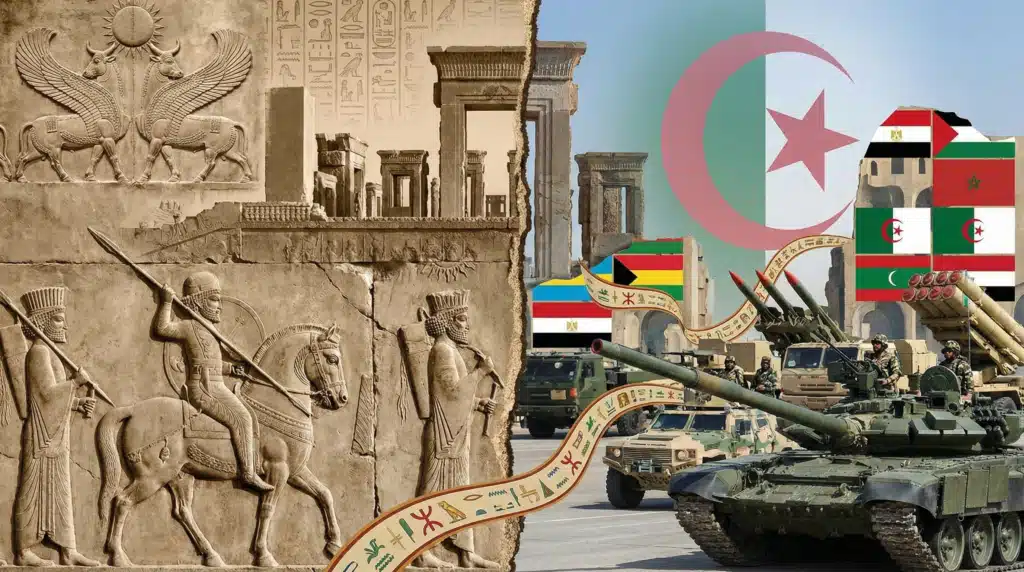
Unlike Magog or Rosh, the identity of Persia on the Gog and Magog war map is undisputed. Until 1935, the nation we now call Iran was officially known as Persia. This creates a direct link between the biblical text and modern geopolitics. Iran is currently the leading state sponsor of terrorism against Israel and has openly declared its desire to wipe the Jewish state off the map.
The inclusion of Persia (Iran) in the alliance is geopolitically significant. Historically, Persia and Russia have not always been allies, yet in recent years, we have seen a strengthening of ties between Moscow and Tehran, particularly regarding military cooperation and Syrian operations. The Gog and Magog war map predicts a military alliance between the power to the far north (Magog/Rosh) and the power to the east (Persia/Iran), a scenario that is unfolding in real-time today.
The African Alliance: Cush and Put
The coalition is not limited to the north and east. The Gog and Magog war map extends into the African continent, encircling Israel.
Cush (The Sudan/Ethiopia Region)
Biblical Cush is often translated as Ethiopia, but the ancient Kingdom of Cush was located primarily in modern-day Sudan, extending into parts of Ethiopia. Today, Sudan is a nation torn by Islamist strife and has historically been hostile toward Israel, though normalization talks have occurred. However, in a radicalized future scenario, the alignment of Sudan with a Russo-Iranian coalition is plausible.
Put (Libya)
Ancient Put is universally identified as Libya. Located to the west of Egypt, Libya has been in a state of chaos since the fall of Gaddafi. The fractured nation is a hotbed for mercenaries and arms dealing. The prophecy suggests that Libya (Put) will join the invasion force, providing the western flank of the pincer movement. On our Gog and Magog war map, this completes the encirclement: Magog/Rosh from the North, Persia from the East, and Cush/Put from the South/West.
Gomer and Beth-Togarmah: The Turkish Front
To finalize the Gog and Magog war map, we must identify Gomer and Beth-togarmah. Josephus identified Gomer with the Galatians, who dwelt in central Asia Minor (modern Turkey). Similarly, Beth-togarmah is historically linked to the region of Eastern Turkey and the Southern Caucasus (Armenia/Azerbaijan borders).
This is crucial because Turkey is currently a member of NATO. However, the political trajectory of Turkey under recent leadership has seen a pivot away from the West and toward Russia and Iran (the Astana Triangle). For the prophecy to be fulfilled, Turkey (Gomer/Beth-togarmah) must align militarily with Russia (Magog) and Iran (Persia). The current geopolitical shifting of Turkey makes the Gog and Magog war map look more realistic today than at any point in the last century.
Why Israel? The Strategic Motive
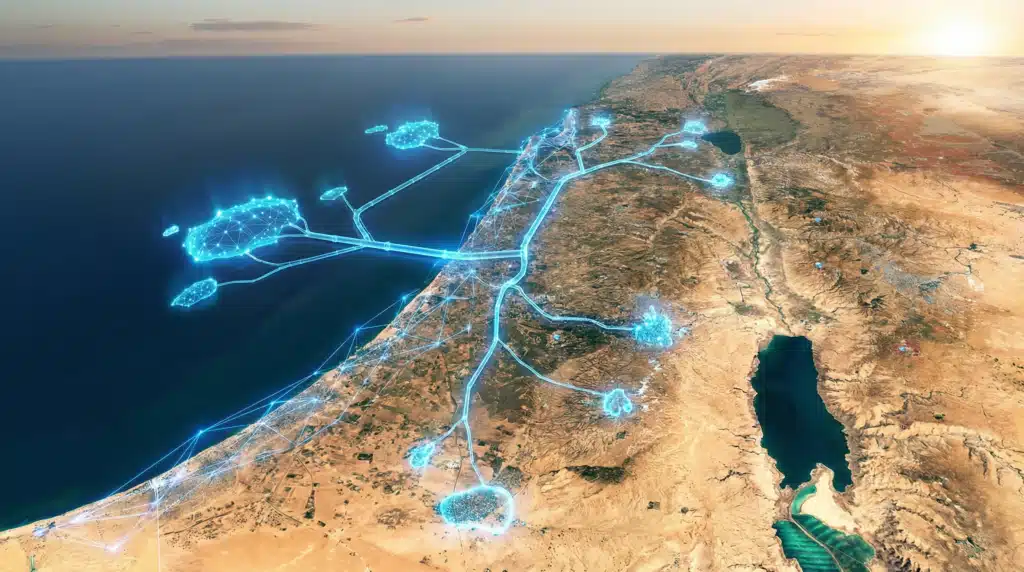
Ezekiel 38:4 describes God putting “hooks into the jaws” of Gog, dragging him into battle. But Ezekiel 38:12 reveals the human motive of the invader: “to take a spoil, and to take a prey.” Why would this massive coalition attack Israel? The Gog and Magog war map centers on a tiny strip of land, yet that land possesses immense value.
- Natural Gas and Energy: The discovery of the massive Leviathan and Tamar natural gas fields off the coast of Israel has transformed the nation into an energy exporter. This competes directly with Russian energy dominance in Europe.
- Strategic Location: Israel is the land bridge between Africa, Asia, and Europe. Controlling this territory is essential for any power seeking regional hegemony.
- Technology and Agriculture: Israel is a global leader in tech and food production, resources that are increasingly valuable in a resource-scarce world.
The “spoil” mentioned in the text serves as the economic bait, while the “hooks” represent the divine compulsion forcing the conflict to occur.
The Divine Outcome and Aftermath
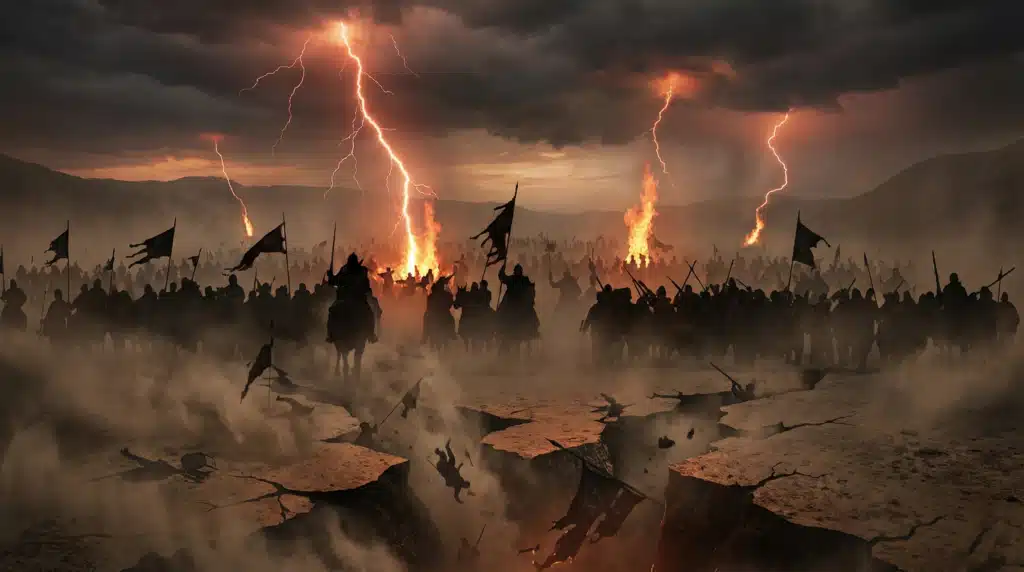
The conclusion of the conflict depicted on the Gog and Magog war map is supernatural. The invading armies do not fall by the Israel Defense Forces (IDF) or American intervention. Ezekiel 38:18-22 describes a massive earthquake, infighting among the coalition troops (friendly fire), pestilence, and torrential rain of fire and sulfur.
The destruction is so complete that the text describes two specific durations of aftermath:
- Seven Years: Israel will use the weapons of the invaders for fuel (Ezekiel 39:9).
- Seven Months: The house of Israel will be burying the dead to cleanse the land (Ezekiel 39:12).
This divine intervention marks a turning point in history, where the God of Israel validates His covenant and existence to the nations listed on the Gog and Magog war map. The supernatural nature of the victory suggests that this war is distinct from the Battle of Armageddon, which occurs at the very end of the Tribulation period, though scholarly debate on the timing continues.
In conclusion, the Gog and Magog war map is slowly being drawn by current events. With Russia (Rosh/Magog) asserting dominance in the north, Iran (Persia) entrenching itself in the east, and Turkey (Gomer) pivoting between alliances, the stage is set. For the biblical observer, these are not random geopolitical shifts, but the alignment of ancient shadows into modern realities.
1 thought on “Gog and Magog War Map — Who Attacks Israel? Biblical Prophecy Analysis 2026”