Table of Contents
- Introduction to the Gog and Magog Alliance
- Understanding the Biblical Origins (Ezekiel 38-39)
- The Core Nations of the Gog and Magog Alliance Map
- Magog, Rosh, Meshech, and Tubal
- Persia: The Eastern Pillar
- Cush and Put: The Southern Flank
- Gomer and Beth-Togarmah
- Geopolitical Significance of the Gog and Magog Alliance Today
- Visualizing the Gog and Magog Alliance Map
- Theological Interpretations and Timelines
- Conclusion: Why the Gog and Magog Alliance Matters
- Frequently Asked Questions
Introduction to the Gog and Magog Alliance
For centuries, biblical scholars, eschatologists, and historians have been deeply fascinated by the concept of the Gog and Magog Alliance. Rooted primarily in the prophetic texts of the Hebrew Bible, specifically the Book of Ezekiel, the Gog and Magog Alliance describes a massive, multi-national coalition that is prophesied to gather in the “latter days.” By creating a comprehensive Gog and Magog Alliance map, we can better understand how ancient biblical geography translates into the modern geopolitical borders we recognize today.
The Gog and Magog is not merely an abstract theological concept; for those who study biblical prophecy, it is a highly specific roster of nations. To grasp the full scope of the Gog and Magog, one must engage deeply with ancient ethnography, historical migrations, and the original Hebrew texts. When we superimpose the nations involved in the Gog and Magog onto a modern map, a striking picture emerges—one that involves vast territories across Eastern Europe, the Middle East, and North Africa.
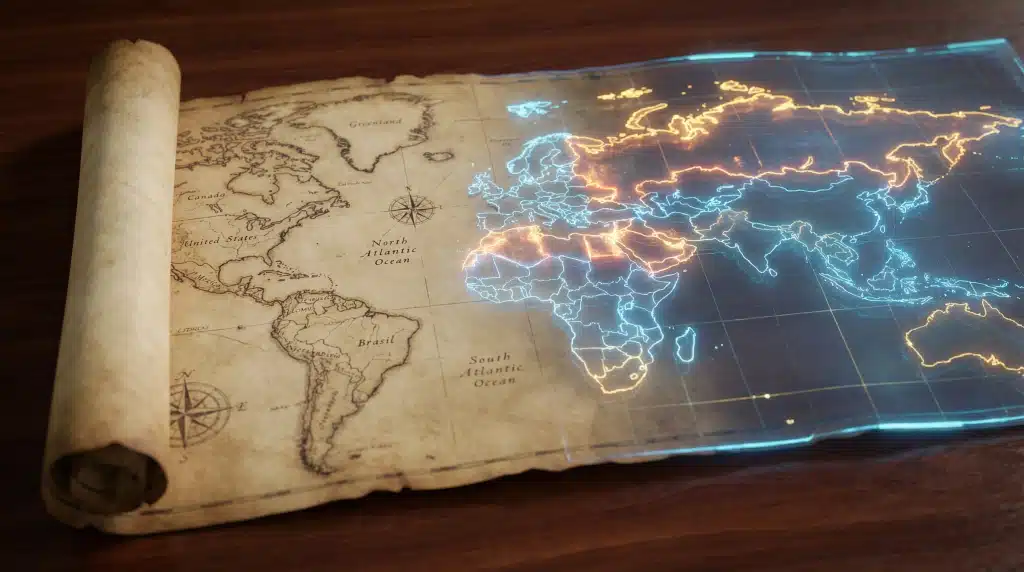
In this comprehensive guide, we will dissect the Gog and Magog Alliance, identifying exactly which modern-day countries correspond to the ancient names provided by the Prophet Ezekiel. By the end of this deep dive, you will have a clear, authoritative understanding of the Gog and Magog Alliance map and its implications for modern eschatology.
Understanding the Biblical Origins (Ezekiel 38-39)
To accurately map the Gog and Magog, we must begin with the source text: Ezekiel chapters 38 and 39. Written during the Babylonian exile (around 593–571 BC), Ezekiel received a vision detailing a massive invasion force. Ezekiel 38:2-6 outlines the primary members of the Gog and Magog Alliance: “Son of man, set your face against Gog, of the land of Magog, the chief prince of Rosh, Meshech, and Tubal… Persia, Cush, and Put will be with them… also Gomer with all its troops, and Beth Togarmah from the far north with all its troops—the many nations with you.”
In this context, “Gog” is not a place, but a title for a leader—much like “Pharaoh” in Egypt or “Caesar” in Rome. Gog is the architect and commander of the Gog and Magog. The term “Magog” refers to the land from which this leader hails. To build a highly accurate Gog and Magog map, we have to trace the ancient migrations of the descendants of Noah, specifically through his son Japheth, whose lineage is detailed in Genesis 10 (the Table of Nations). Each ancient name in Ezekiel’s Gog and Magog is derived directly from these ancient tribal patriarchs.
The defining characteristic of the Gog and Magog is its unified objective and geographical convergence. According to the text, the Gog and Magog will descend from the “far north” and surrounding regions to surround the mountains of Israel. Therefore, any true Gog and Magog map must account for a sprawling geographical footprint.
The Core Nations of the Gog and Magog Alliance Map
When eschatologists construct a Gog and Magog Alliance map, they engage in historical detective work. Let us break down the ancient names associated with the Gog and Magog Alliance and identify their corresponding modern-day countries. This step-by-step geographical translation is vital for understanding the true scale of the Gog and Magog Alliance.
Magog, Rosh, Meshech, and Tubal (Modern-Day Russia, Ukraine, and Turkey)
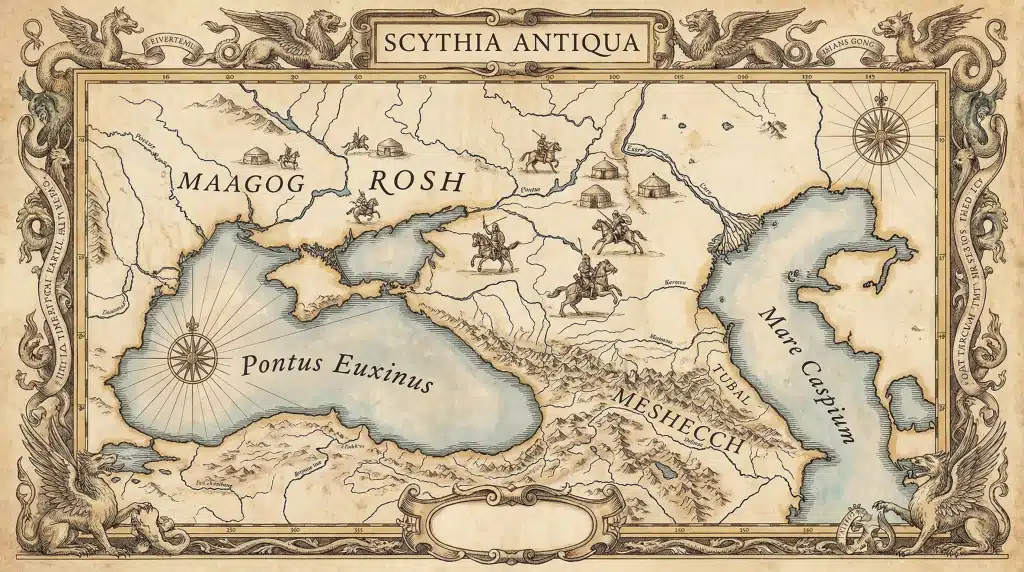
The northernmost contingent of the Gog and Magog Alliance consists of Magog, Rosh, Meshech, and Tubal. The first-century Jewish historian Flavius Josephus wrote that the descendants of Magog were known to the Greeks as the Scythians. The Scythian tribes were nomadic warriors who inhabited the vast steppes north of the Black Sea and the Caspian Sea. On a modern Gog and Magog map, this territory encompasses modern-day Russia, Ukraine, and parts of the Central Asian republics (such as Kazakhstan).
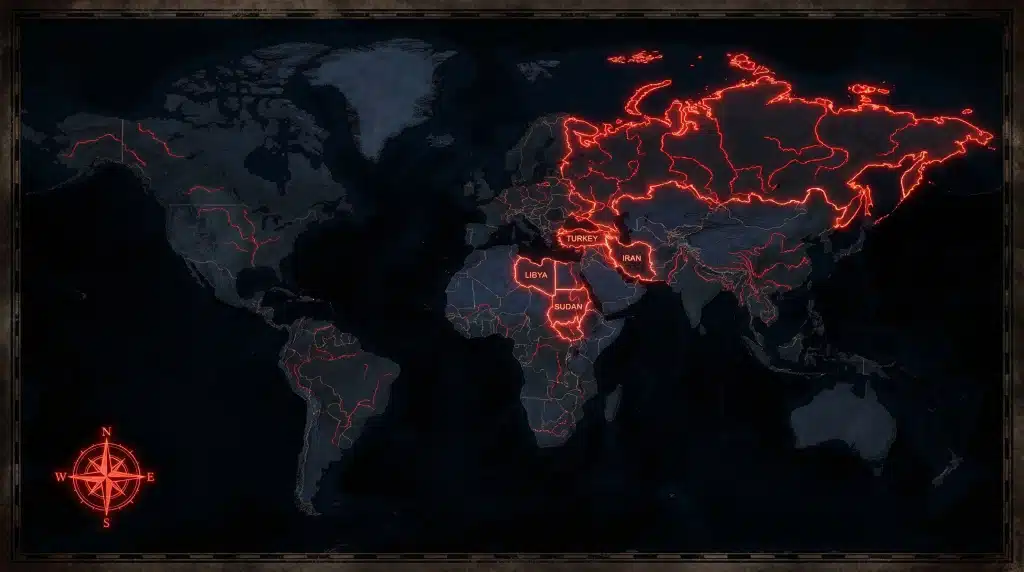
The word “Rosh” is heavily debated but frequently translated as a proper noun in modern prophetic studies of the Gog and Magog. Many scholars trace the etymological roots of “Rosh” to the early “Rus” people who settled around Kyiv and later Moscow, placing modern-day Russia at the undeniable helm of the Gog and Magog.
Meshech and Tubal are often paired together in ancient Assyrian texts (as Musku and Tabal). Historically, these tribes settled in the Anatolian peninsula, which is modern-day Turkey. Therefore, when visualizing the northern sector of the Gog and Magog, Turkey and the Russian sphere of influence are the primary actors.
Persia: The Eastern Pillar (Modern-Day Iran)
Of all the nations listed in the Gog and Magog, Persia is the easiest to identify on a contemporary map. The name Persia was officially changed to Iran in 1935. Historically, the Persian Empire was vast, covering territories that today include Iran, parts of Iraq, Afghanistan, and Pakistan. In the context of the Gog and Magog, modern-day Iran is viewed as a crucial, well-armed, and heavily motivated participant.
The inclusion of Iran in the Gog and Magog Group is significant because of the current geopolitical climate. Iran’s modern strategic partnerships with nations to its north align seamlessly with Ezekiel’s blueprint for the Gog and Magog. On a Gog and Magog Alliance map, Iran secures the eastern flank of the invasion force.
Cush and Put: The Southern Flank (Modern-Day Sudan, Ethiopia, and Libya)
The Gog and Magog Alliance is not merely a northern phenomenon; it features a massive southern flank. Ezekiel mentions Cush and Put as key members of the Gog and Magog Alliance. In ancient times, Cush referred to the territory south of Egypt. While sometimes translated as Ethiopia, the ancient Kingdom of Cush was predominantly located in what is today the Republic of Sudan.
Put represents the western portion of the North African contingent of the Gog and Magog Alliance. Historical records, including Babylonian chronicles, identify Put with the region of ancient Cyrenaica and the broader land of Libya. A fully realized Gog and Magog Alliance map will show a powerful pincer movement, with forces from Sudan and Libya moving northward and eastward to join the primary coalition. Thus, the Gog and Magog Alliance effectively encompasses a massive sweep of the African continent.
Gomer and Beth-Togarmah (Modern-Day Turkey and Eastern Europe)
To round out the Gog and Magog Alliance, Ezekiel names Gomer and Beth-Togarmah. According to Josephus and early Christian writers like Jerome, Gomer’s descendants (the Cimmerians) settled in the regions of modern-day Turkey, eventually migrating into parts of Eastern Europe (along the Danube). Beth-Togarmah, “from the far north,” is widely identified by ancient Armenian and Georgian historians as the ancestral fathers of the Turkic and Caucasian peoples.
Consequently, an accurate Gog and Magog Alliance map heavily features the modern Republic of Turkey. In fact, Turkey covers the historical lands of Meshech, Tubal, Gomer, and Beth-Togarmah, making it a pivotal geographical bridge in the Gog and Magog Alliance. The consolidation of these regions confirms that the Gog and Magog Alliance is a transcontinental powerhouse.
Geopolitical Significance of the Gog and Magog Alliance Today
Why is the Gog and Magog Alliance heavily discussed in modern times? The answer lies in the striking parallel between the ancient Gog and Magog Alliance map and contemporary geopolitical alignments. For much of the 20th century, the idea of a cohesive Gog and Magog Alliance seemed highly improbable due to differing religious, political, and economic ideologies among the listed nations.
However, recent decades have witnessed profound shifts. The strengthening of military, economic, and diplomatic ties between Russia (Magog/Rosh) and Iran (Persia) serves as a primary catalyst for modern interest in the Gog and Magog Alliance. Furthermore, Russia’s growing influence in the Middle East and North Africa—including strategic footholds in Syria, Libya (Put), and Sudan (Cush)—mirrors the exact coalition described in the Gog and Magog Alliance.
Turkey, which historically acted as a Western-aligned buffer (via NATO), has increasingly charted an independent, eastward-looking foreign policy, engaging frequently in trilateral summits with Russia and Iran. For observers of biblical prophecy, watching these specific nations formulate pacts is akin to watching the Gog and Magog Alliance map come to life in real-time. The framework of the Gog and Magog Alliance is no longer just a biblical theory; it resembles daily geopolitical news.
Visualizing the Gog and Magog Alliance Map
When constructing a visual Gog and Magog Alliance map, you will observe a distinct geographical pattern. The map forms a massive outer ring of nations. At the direct center of the Gog and Magog Alliance map sits the modern State of Israel. Ezekiel explicitly states that the Gog and Magog Alliance will descend upon the “mountains of Israel,” a land “recovered from the sword” whose people were “gathered from many nations” (Ezekiel 38:8).
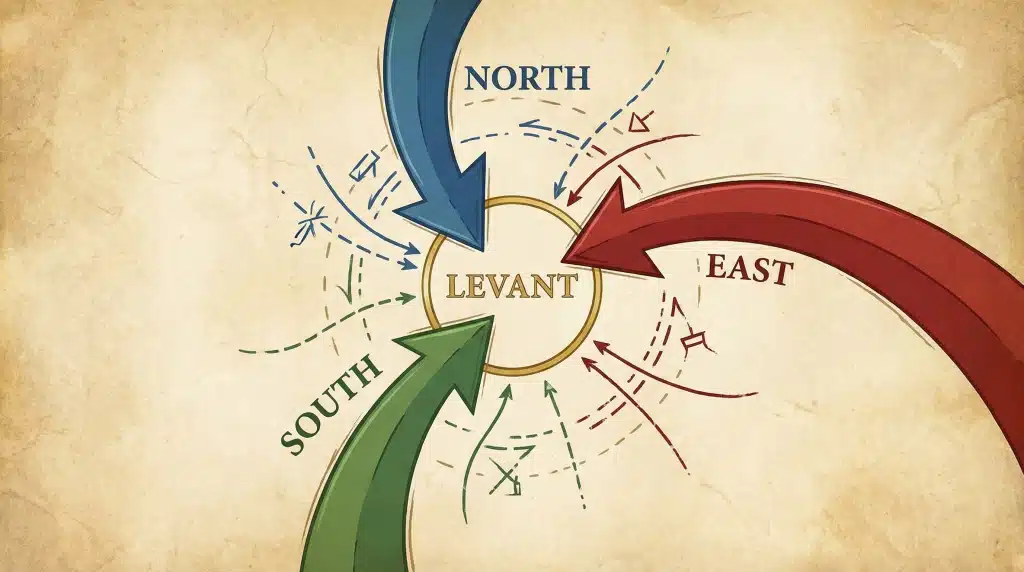
The visual impact of the Gog and Magog map is staggering. It reveals a coalition of some of the most resource-rich and heavily armed nations on earth. The northern vectors point downward from Moscow and Ankara. The eastern vector points westward from Tehran. The southern vectors point upward from Khartoum and Tripoli. The Gog and Magog map effectively isolates the target region, illustrating an inescapable encirclement that, according to the prophecy, can only be broken by divine intervention.
Theological Interpretations and Timelines
Within eschatological circles, there is ongoing debate regarding the exact timing of the Gog and Magog invasion. While there is broad consensus on the geographical layout of the Gog and Magog map, the chronological placement varies.
Some scholars believe the Gog and Magog will mobilize before the start of the Tribulation period (a seven-year period of global hardship described in Revelation). Others place the invasion of the Gog and Magog at the mid-point of the Tribulation, occasionally conflating it with the Battle of Armageddon, though many point out the distinct differences in the nations involved. Finally, Revelation 20 mentions a final gathering of “Gog and Magog” at the end of the Millennial reign of Christ. Most theologians differentiate between the Ezekiel 38 Gog and Magog (a specific regional coalition) and the Revelation 20 event (a global, post-millennial rebellion).
Regardless of the specific timeline, the study of the Gog and Magog Alliance serves as a focal point for understanding the biblical worldview of history’s culmination. The Gog and Magog emphasizes a sovereign orchestration of world events, where nations are drawn into a conflict that ultimately serves a higher divine purpose.
Conclusion: Why the Gog and Magog Alliance Matters
Understanding the Gog and Magog Alliance map offers a unique lens through which to view both ancient history and modern global affairs. By tracing the genealogical roots of Japheth and Ham’s descendants, we can confidently project the ancient identities of Magog, Rosh, Meshech, Tubal, Persia, Cush, Put, Gomer, and Togarmah onto the modern globe.
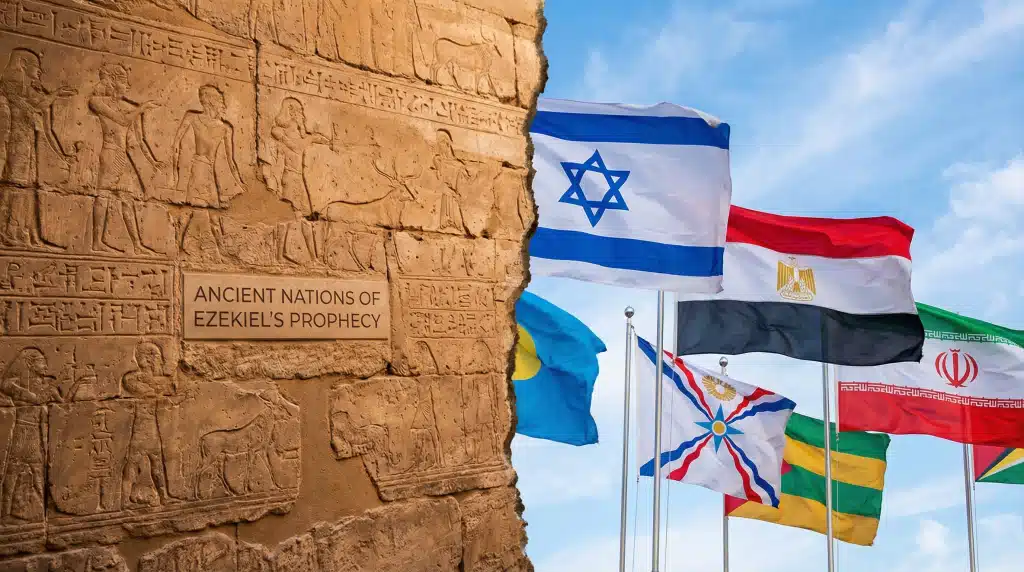
The resulting Gog and Magog map is a testament to the enduring nature of biblical prophecy. It underscores how territories encompassing modern-day Russia, Turkey, Iran, Sudan, and Libya play central roles in prophetic narratives. Whether one approaches the Gog and Magog Alliance from a perspective of devoted faith, historical curiosity, or geopolitical analysis, the alignment of these specific nations is undeniably fascinating. As world events continue to shift, the Gog and Magog Alliance will remain a critical topic of study for anyone looking to map out the future of international relations and eschatological timelines.
Frequently Asked Questions
What exactly is the Gog and Magog Alliance?
The Gog and Magog Alliance refers to a prophesied coalition of nations detailed in Ezekiel 38-39. Led by a figure known as “Gog” from the land of “Magog,” this massive military alliance is prophesied to invade the land of Israel in the “latter days.”
Which modern-day country is Magog?
Based on historical records from figures like Flavius Josephus and ancient migratory patterns of the Scythian people, Magog is widely identified on a modern Gog and Magog Alliance map as the territory covering modern-day Russia, Ukraine, and the Central Asian steppes.
Why are Russia and Iran often mentioned together in prophecy?
Russia (Magog/Rosh) and Iran (Persia) are both explicitly named as core members of the Gog and Magog Alliance. The fact that these two nations have formed tight military and economic alliances in modern times is viewed by many biblical scholars as a fulfillment of the Ezekiel 38 prophecy.
Is Turkey part of the Gog and Magog Alliance?
Yes, Turkey features heavily in the Gog and Magog Alliance map. The ancient names Meshech, Tubal, Gomer, and Beth-Togarmah are all historically located within the Anatolian peninsula, which constitutes modern-day Turkey.
Does the Gog and Magog Alliance occur before or after the Tribulation?
This is a subject of debate among theologians. Many pre-millennial scholars believe the Ezekiel 38 Gog and Magog Alliance invasion happens just before or during the first half of the Tribulation. A second, separate event involving “Gog and Magog” is mentioned in Revelation 20, which takes place after the Millennial reign.
1 thought on “Gog and Magog Alliance Map: Which Countries Are Involved?”