Table of Contents
- The Geopolitical Nightmare: A Kingdom on the Brink
- The Vision of the Seraphim: Terror in Holiness
- The Indictment: Why the Earth Mourns
- The Song of the Vineyard: A Harvest of Blood
- The Day of the Lord: Cosmic Devastation
- The Fall of Lucifer: The King of Babylon’s Doom
- The Suffering Servant: Violent Redemption
- The Final Warning: The Worm That Does Not Die
Book of Isaiah: Most scholars call Isaiah the “Fifth Gospel” for its message of hope, but they are actively ignoring the blood-soaked pages that predict our exact future. It describes a global cataclysm so specific, it defies logic. Cities burning. The sun turning black. A judgment so terrifying, most churches refuse to preach it. Hidden within the texts is a pattern suggesting these aren’t just ancient warnings; they are a countdown that has already begun.
The Geopolitical Nightmare: A Kingdom on the Brink
To understand why this book is a document of absolute terror, we must step into the heat of the 8th Century B.C. The Southern Kingdom of Judah is crumbling. Stability has died with King Uzziah. Corruption is rampant, and the poor are ground into dust by the elite. But internal rot pales in comparison to the storm gathering on the horizon: Assyria.
The Neo-Assyrian Empire was the first military superpower—a war machine of unparalleled cruelty. They flayed enemies alive and piled skulls at city gates. In Isaiah 10:5, the prophet delivers a shocking verdict: “Woe to the Assyrian, the rod of my anger!” Isaiah claims this brutal empire is actually a weapon held in the hand of God. The terror here is theological: the realization that the safety net is gone, and the monsters have been enlisted to discipline the people.
The Vision of the Seraphim: Terror in Holiness
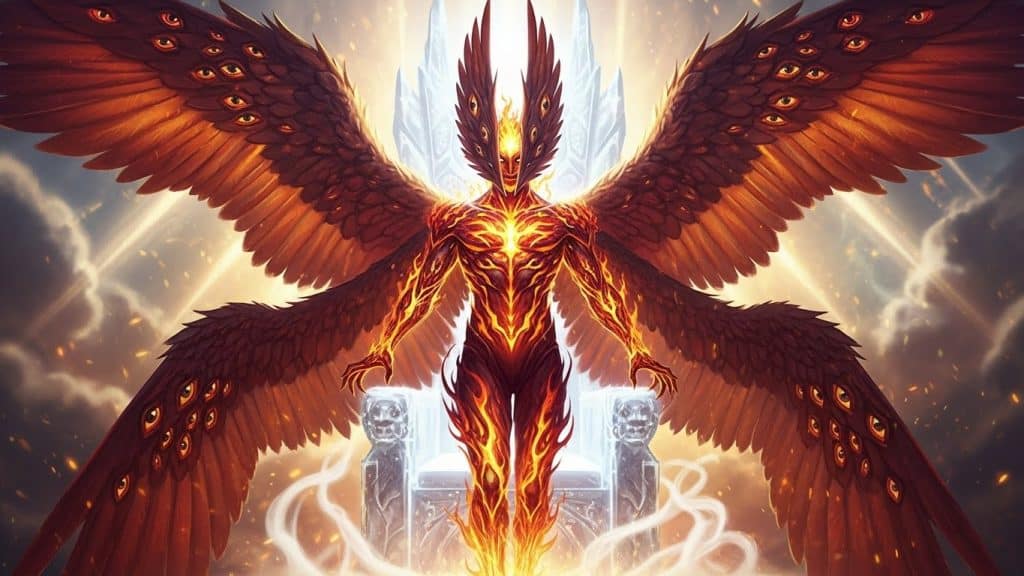
In Chapter 6, Isaiah comes face to face with the real threat—a vision so overwhelming it nearly kills him. He sees the Seraphim, the “Burning Ones.” These are not chubby cherubs; they are entities of incandescent fire. They cover their faces because even angels cannot bear to look directly at the essence of God.
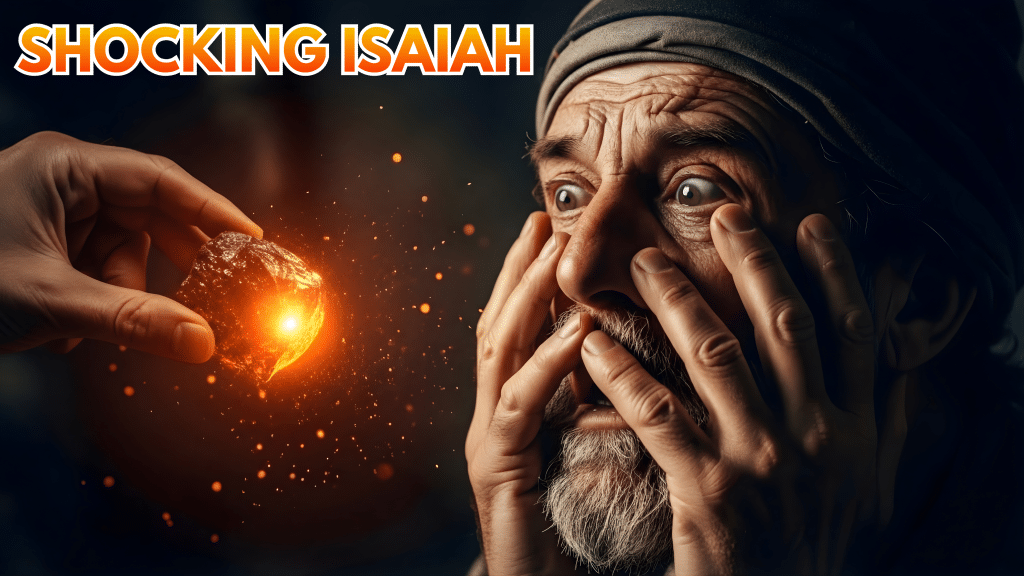
They cry “Holy, Holy, Holy,” representing the superlative degree of perfection. Isaiah’s reaction is not praise, but a scream: “Woe is me! For I am undone!” The presence of God is a crushing weight, a reality so dense it displaces the air. To be purified, a Seraph presses a burning coal to Isaiah’s lips. Grace in Isaiah is not a soft blanket; it is a cauterization. To be made ready for God is to be burned clean.
The Indictment: Why the Earth Mourns
God calls the universe as a jury in a cosmic lawsuit. He describes the nation as a body covered in putrefying sores. This is a “zombie” civilization—dead in spirit but animated by greed. Most shocking is God’s loathing for their religion. He tells them He hates their feasts and prayers because their hands are full of blood. Social injustice—crushing the fatherless and the widow—transforms the Protector into the Destroyer.
The Song of the Vineyard: A Harvest of Blood
Isaiah Chapter 5 presents the “Song of the Vineyard.” God did everything right to plant a choice vine, but it produced only “wild grapes”—stinking, putrid fruit. God’s judgment is Divine Abandonment. He removes the hedge of protection and lets the thorns take over. When justice is replaced by bloodshed, the Gardener simply walks away, leaving the soul or nation to its own ruin.
The Day of the Lord: Cosmic Devastation
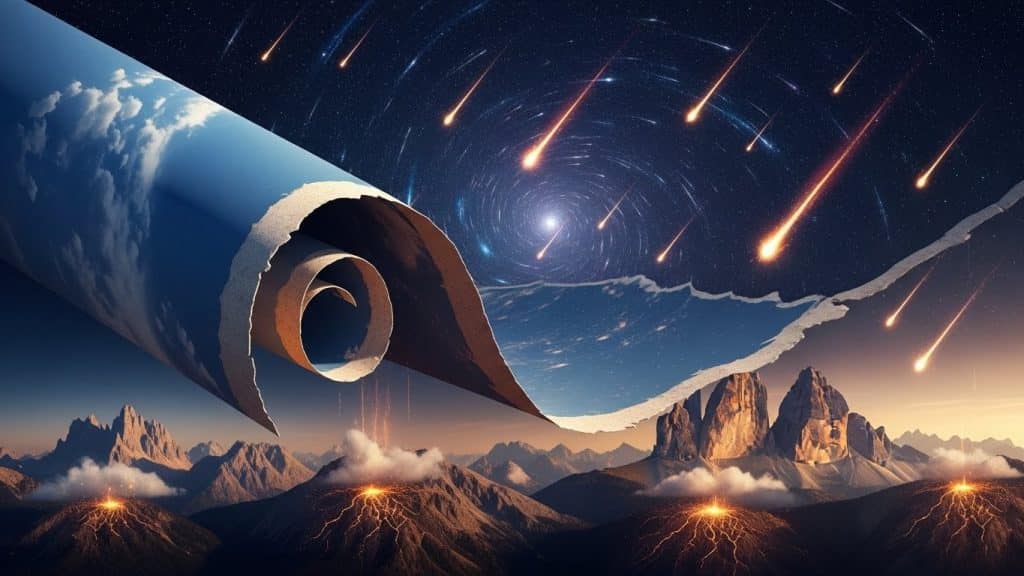
This is the epicenter of fear. Isaiah describes the “un-creating” of the world. The stars refuse to give light, and the sky rolls up like a scroll. This imagery targets human pride. Every fortified tower and arrogant ship is cut down. Humans claw at the dirt, hiding in caves from the “splendor of His majesty.” The terror comes from the fact that God’s glory is lethal to corruption.
The Fall of Lucifer: The King of Babylon’s Doom
In Chapter 14, Isaiah composes a taunt song against a cosmic tyrant. We see the ladder of pride: “I will ascend into heaven… I will be like the Most High.” Isaiah cuts the strings, showing the “Day Star” brought down to Sheol. The shadowy spirits of dead kings rise to mock him. The being who shook kingdoms is now sandwiched between maggots and worms. It is a reminder that the higher the pedestal, the more catastrophic the collapse.
The Suffering Servant: Violent Redemption
Moving from cosmic apocalypse to intimate horror, Isaiah 52 and 53 describe a figure marred beyond human semblance. This is not a heroic warrior, but a man de-created by violence. The most terrifying part? “It pleased the Lord to bruise him.” The God of Justice poured the full cup of wrath onto an innocent vessel. Redemption is violent; it is a transaction written in blood. We are healed only because he was torn apart.

The Final Warning: The Worm That Does Not Die
Isaiah ends not with a comfort, but with a scar. The final verse describes the faithful going out to look at the corpses of those who transgressed: “For their worm shall not die, neither shall their fire be quenched.” This is the origin of the concept of Gehenna. The book dismantles the illusion of neutrality. There are only two paths: worshipping on the Holy Mountain or burning in the valley. The fire is the same; it is God’s presence, which is either warmth or agony depending on the soul.
Frequently Asked Questions
Why is Isaiah called the ‘Fifth Gospel’?
It is called the Fifth Gospel because it contains more detailed prophecies about the life, death, and resurrection of Jesus Christ than any other Old Testament book, specifically in the ‘Servant Songs.’
What makes the vision of the Seraphim so terrifying?
The Seraphim are beings of pure fire who cannot even look at God. Their presence reminds us that God’s holiness is a ‘consuming fire’ that is dangerous to anything impure or prideful.
What is the ‘Little Apocalypse’ in Isaiah?
The Little Apocalypse refers to chapters 24-27, which describe a planetary judgment where the earth is defiled and eventually unmade to make way for a new creation.
What does Isaiah say about the end of the world?
Isaiah predicts that the heavens will vanish like smoke, the stars will fall, and God will create a New Heaven and a New Earth after a period of intense, refining fire.