
Table of Contents
- The Genesis of Elam: Foundations of the Biblical Destiny of Iran
- Cyrus the Great: The Shepherd of the Almighty
- The Celestial Conflict: Daniel and the Prince of Persia
- Esther: Providence in the Court of Shushan
- The Magi: Persian Wisdom Meets the Messiah
- Jeremiah’s Oracle: The Breaking of the Bow of Elam
- The Throne in Elam: A Divine Coup
- The Great Awakening: The Biblical Destiny of Iran Revealed Today
- Ezekiel’s Alliance: The Gog and Magog Mystery
- Isaiah’s Vision: The Highway of Holiness
- Frequently Asked Questions
What if the headlines you scroll through today were actually drafted three thousand years ago? When we look at the Middle East, specifically Iran, we often see a geopolitical adversary or a land of turmoil. However, ancient scripture reveals a dormant giant named Persia with a trajectory that defies modern political logic. Scholars and theologians often debate the end times, but many have missed a hidden timeline—one that links the ancient throne of Cyrus directly to events unfolding this very week. The Biblical destiny of Iran is not a narrative of ultimate destruction, as many expect, but a complex saga of judgment followed by a divine twist of redemption that is already beginning to manifest.
The Genesis of Elam: Foundations of the Biblical Destiny of Iran
To truly understand the Biblical destiny of Iran, we must return to the mist-shrouded dawn of the post-diluvian world. When the earth was still drying from the waters of the Great Deluge, the sons of Noah stepped forth to carve the boundaries of nations. Among the progeny of Shem, the ancestor of the Semitic peoples, the very first name recorded in the sacred scrolls is Elam. This is not merely a genealogical footnote; it is a declaration of primacy regarding the Biblical destiny of Iran.
Before the rise of Babylon or the terror of Assyria, the highlanders of the Zagros Mountains were establishing a legacy. Deep within the scorching plains of Khuzestan, these descendants of Shem raised a monument to human endurance: Susa. Imagine a city so ancient that its origins dissolve into the twilight of prehistory. Susa stood as the beating heart of the region, a political fortress and spiritual sanctuary.
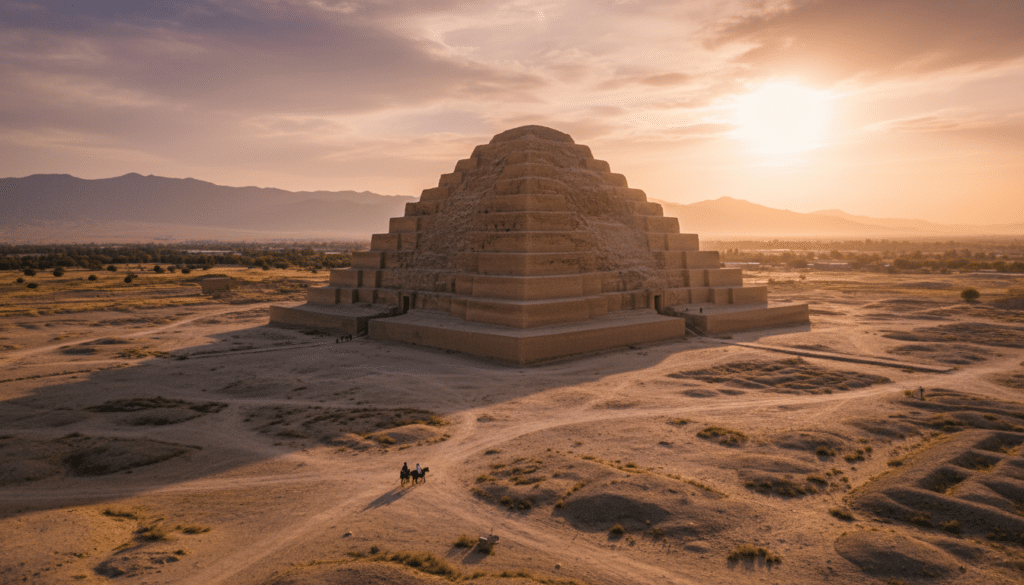
The geography of the Iranian plateau was more than terrain; it was destiny. Whoever held the high ground of Iran held the keys to the ancient world. It was here that the stage was set for the first great collision of sacred history—the War of the Kings recorded in Genesis 14. The sword of Elam crossed the spear of Abraham, forging a link that would never be broken. This primal foundation laid the groundwork for the Biblical destiny of Iran, transforming highlanders from conquerors into instruments of God’s redemption.
Cyrus the Great: The Shepherd of the Almighty
In the swirling mists of time, the Biblical destiny of Iran took a turn that reverberates through theology to this day. Two centuries before his birth, the Hebrew prophet Isaiah looked into the abyss of the future and saw a light rising in the East. He did not see a descendant of David, but a Persian named Cyrus. God called him by name long before he was conceived, bestowing upon this pagan monarch the title Mashiach—the Anointed One.
How does a king who did not worship Yahweh fit into the Biblical destiny of Iran? This is the terrifying beauty of Divine Sovereignty. The Lord declared through Isaiah, “I have girded thee, though thou hast not known me.” Cyrus was the Shepherd who would perform all the Lord’s pleasure, striking at the heart of Babylonian tyranny.
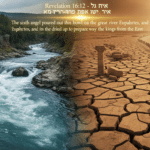
When Persian engineers diverted the Euphrates and captured Babylon without a battle, it wasn’t just a military victory; it was a fulfillment of the Biblical destiny of Iran to be a deliverer. Unlike the Assyrians who ruled by the lash, Cyrus issued the Edict of Liberation. He returned the stolen vessels of the Temple and funded the rebuilding of the House of God. This Persian monarch stands as an eternal monument to the truth that the God of Israel directs the flow of empires. Even in a pagan land, the Biblical destiny of Iran was being forged by the unseen hand of the Almighty.
The Celestial Conflict: Daniel and the Prince of Persia
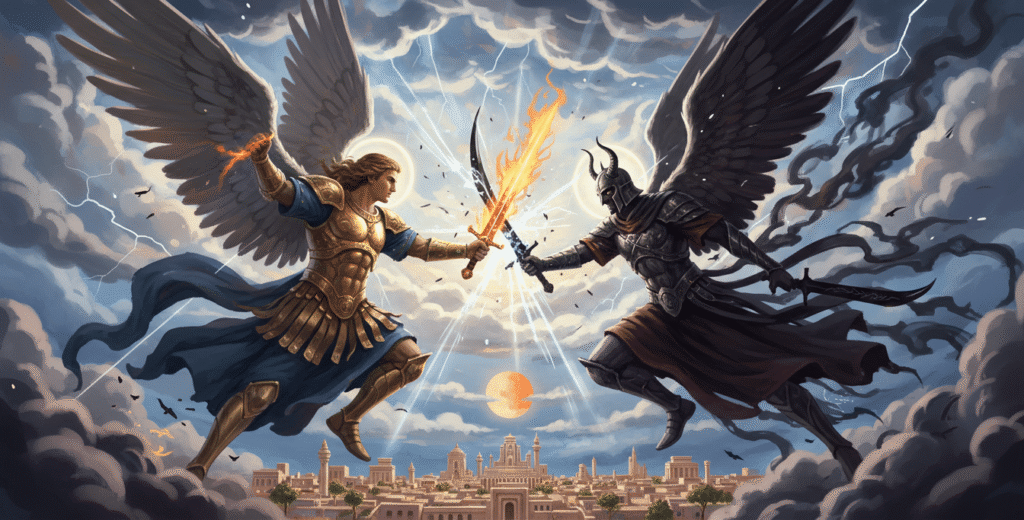
The narrative of the Biblical destiny of Iran shifts from the physical throne to the spiritual atmosphere in the Book of Daniel. By the banks of the Tigris, the prophet Daniel entered a profound state of mourning. For twenty-one days, the heavens remained silent. When the angelic messenger finally arrived, he revealed a staggering truth: the answer had been intercepted by a dark sentinel—the Prince of Persia.
This was no mortal king; this was a territorial spirit, a fallen dignitary of the unseen realm claiming authority over the Biblical destiny of Iran. The conflict was so intense that Michael, the archangel of war, had to intervene. This narrative unveils the concept of territorial spirits that seek to mold the culture and politics of empires. The war for Persia did not end on the banks of the Tigris; it echoes down through centuries. The Biblical destiny of Iran is a battlefield where forces of light and darkness contend for the soul of a civilization.
Esther: Providence in the Court of Shushan
Within the winter capital of Shushan, the Biblical destiny of Iran was woven through the courage of an orphan named Hadassah, known to history as Esther. The Book of Esther is unique for the absence of the name of God, yet His fingerprints are everywhere. When Haman the Agagite sought to annihilate the Jews, it was a spiritual assault launched from the high seat of Persian governance.
Esther’s rise to the throne was not accidental; it was pivotal to the Biblical destiny of Iran. Her declaration, “If I perish, I perish,” shifted the balance of the universe. The deliverance in Shushan birthed the festival of Purim, a chapter of Iranian heritage proving that the fate of the chosen people is inextricably linked to the heart of Persia. Even when God hides His face, He is steering the Biblical destiny of Iran toward redemption.
The Magi: Persian Wisdom Meets the Messiah
Long before modern nations formed, the spiritual Biblical destiny of Iran was being written in the stars. The Magi, priest-scholars of the Parthian Empire, stood as sentinels of the night. Tracing their lineage of wisdom back to Daniel, they guarded the Hebrew prophecies. When the Star of Bethlehem pierced the darkness, they recognized it as a summons.
Their journey was an epic expedition from the East to bow before the King of Kings. By presenting Gold, Frankincense, and Myrrh, the Magi bridged the gap between the East and the Divine. The Biblical destiny of Iran was highlighted as these Gentile wise men became the first heralds of a new kingdom. They returned to their country by another way, symbolizing a profound spiritual shift that still haunts the region: an empire discovering that its true destiny lies in submission to the Christ.
Jeremiah’s Oracle: The Breaking of the Bow of Elam
Deep within the prophetic library stands an oracle that maps the Biblical destiny of Iran with chilling precision. In Jeremiah 49, the prophet addresses Elam, the ancestor of Persia. The prophecy begins with a terrifying image: “Behold, I will break the bow of Elam, the mainstay of their might.”
The Elamites were renowned for their archery, a symbol of their military supremacy. The breaking of the bow signifies the total collapse of military confidence—a neutralization of national pride. This aspect of the Biblical destiny of Iran suggests that before true restoration can occur, reliance on martial strength must be shattered. Following this, the prophecy speaks of a massive dispersal, a scattering of the people to the four winds. This mirrors the modern diaspora of Iranians, wandering the earth and carrying the memory of a homeland swept by judgment.
The Throne in Elam: A Divine Coup
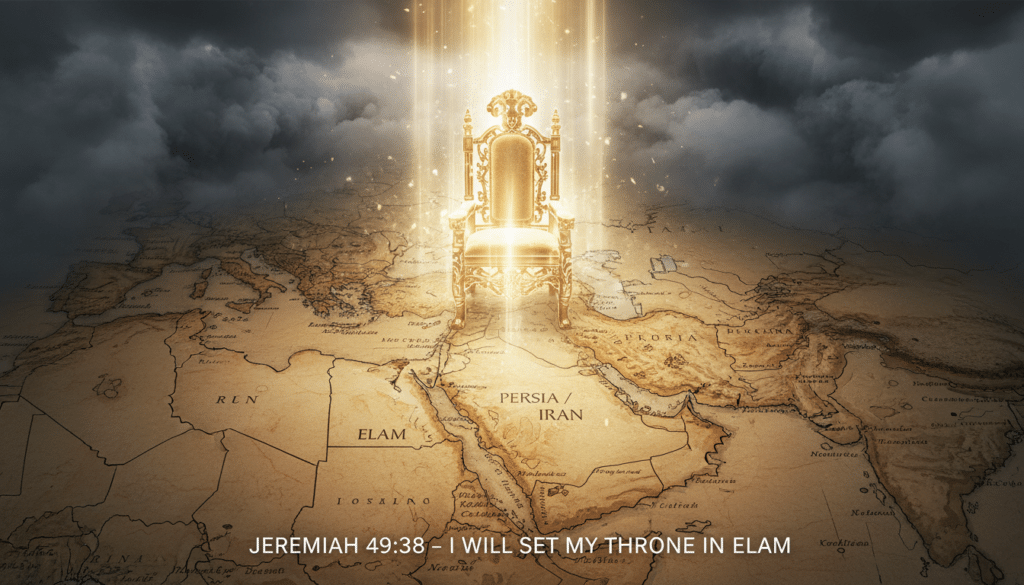
However, the Biblical destiny of Iran is not a tragedy; it is a divine intervention. Jeremiah 49:38 declares, “I will set my throne in Elam and destroy their king and officials.” This is a Divine Coup. For God to establish His throne within the borders of Iran is to announce the end of competing dominions. It signifies the transition from the tyranny of mortal men to the liberation of divine governance.
Why is this specific terrain selected? Because the Biblical destiny of Iran involves reclaiming a spiritual gate. By setting His throne in Elam, the Lord plants His flag in the heart of the enemy’s camp. The prophecy concludes with a promise for the “latter days”: “I will bring back the captivity of Elam.” This restoration is the ultimate goal. Out of the wreckage of military defeat, a new people emerges, ready to welcome the Throne set in their midst.
The Great Awakening: The Biblical Destiny of Iran Revealed Today
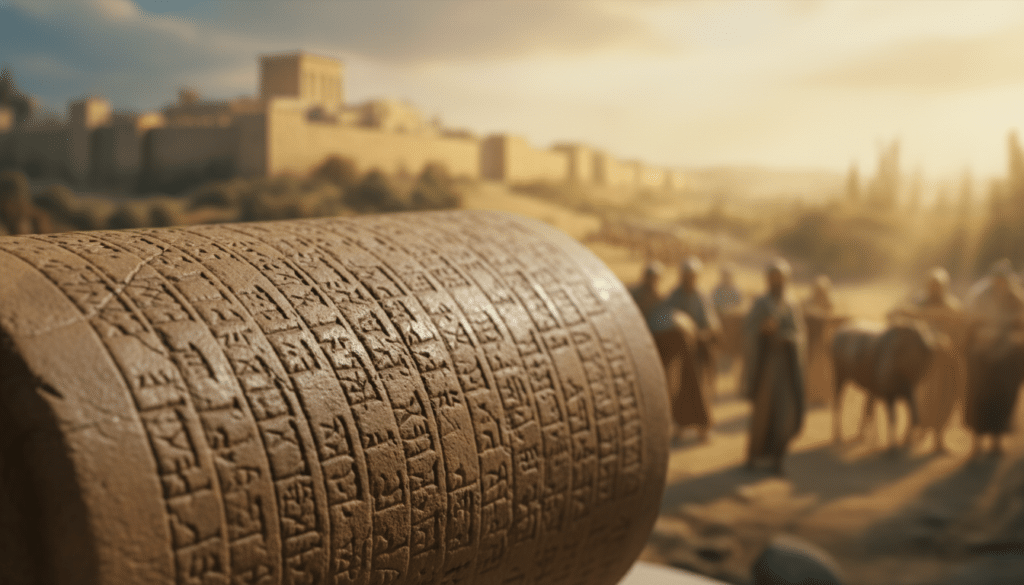
We are currently witnessing the fulfillment of the Biblical destiny of Iran in real-time. Beneath the heavy veil of modern geopolitics, a paradox is unfolding. Despite extreme hostility, Iran is home to the fastest-growing church in the world. This is not a revival of buildings but of souls—a movement of whispers in secret basements.
Thousands report visitations by a “Man in White”—Jesus Christ—appearing in dreams to those who have never held a Bible. The Biblical destiny of Iran is being realized as the God of Daniel invades the slumber of a nation. The hammer of persecution has only served to purify the church. Women, echoing the courage of Esther, are leading this spiritual revolution. The seal has been broken, and the empire is changing from the ashes up, proving that the Biblical destiny of Iran is one of resurrection.
Ezekiel’s Alliance: The Gog and Magog Mystery
No discussion of the Biblical destiny of Iran is complete without examining Ezekiel 38. Here, Persia is named as a key member of the Gog and Magog coalition. This prophecy describes a dark manifestation of military power, aligned with the north, marching toward the Mountains of Israel. But is this merely political?
The prophet reveals that divine compulsion drives this alliance. God puts “hooks in their jaws,” drawing them into a conflict that serves as a theater of divine glory. The destruction of this invading force is not just about the protection of Israel but the liberation of the Persian people from a warmongering spirit. In the ruin of the regime’s greatest gamble lies the seed of the Biblical destiny of Iran‘s spiritual awakening—a moment when the eyes of the nations are opened to the Lord.
Isaiah’s Vision: The Highway of Holiness
Looking further into the future, the Biblical destiny of Iran integrates into Isaiah’s vision of the Highway of Holiness. Isaiah 19 speaks of a day when there will be a highway from Egypt to Assyria (which encompasses modern Iran). In that day, Israel will be “the third” alongside Egypt and Assyria, a blessing in the earth.
This prophecy shatters historical hatred. The Biblical destiny of Iran is to be a pillar of the East, a “work of God’s hands.” Imagine the armies of the East, not marching to war, but traveling the Highway to worship. This is the ultimate vindication of the Iranian people—a move from the periphery of God’s story to the center of His administration. The King is coming, retracing the path of the exiles through the Eastern Gate, and the Biblical destiny of Iran is to welcome Him home.
Conclusion:
The Biblical destiny of Iran is a tapestry woven with threads of judgment and radiant hope. From the breaking of the bow to the establishing of the Throne, the scripture promises that the Prince of Peace has laid claim to the hearts of the Persian people. The shackles are breaking, and a new Cyrus generation is rising.

Pingback: Gog and Magog War Map — Who Attacks Israel? Biblical Prophecy Analysis 2026 - Soft Bible
Pingback: Is Matthew 24 Being Fulfilled Right Now? The Signs of the End Times Explained - Soft Bible