Table of Contents
Every time a major conflict erupts in the Middle East or Eastern Europe, search engines spike with a singular, urgent question: Is this the end? For centuries, believers have watched the geopolitical stage, Bible in one hand and newspaper in the other, trying to discern if current events are the harbinger of the return of Jesus. The anxiety is palpable, but Scripture commands us not to be driven by fear, but by wisdom.
To understand if a specific war signals the return of Jesus, we cannot rely on headlines alone; we must dive deep into eschatology—the study of end times. The Bible provides a roadmap, not necessarily of dates, but of conditions and convergences that will precede the Second Coming. This article provides a comprehensive, authoritative analysis of how modern warfare aligns with ancient prophecy and what it means for the imminent return of Jesus.
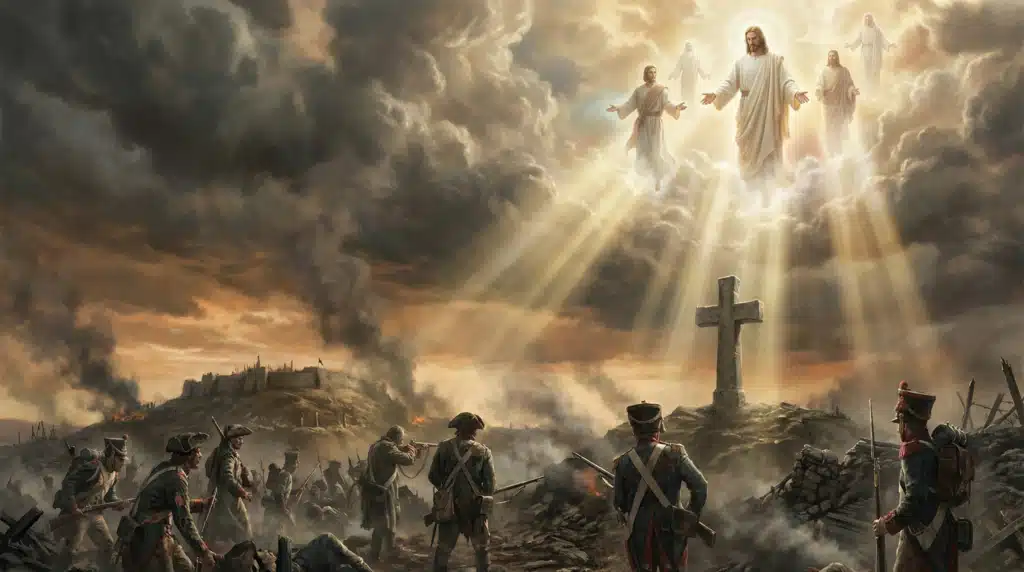
Current Events Through the Lens of Prophecy
We live in an era of unprecedented volatility. The global order established after World War II is fraying. We are witnessing the rise of ancient empires under modern flags—Russia, Iran (biblical Persia), and Turkey (biblical Togarmah/Gomer). When these nations move militarily, students of prophecy pay attention because these specific geographic players are mentioned explicitly in relation to the events leading up to the return of Jesus.
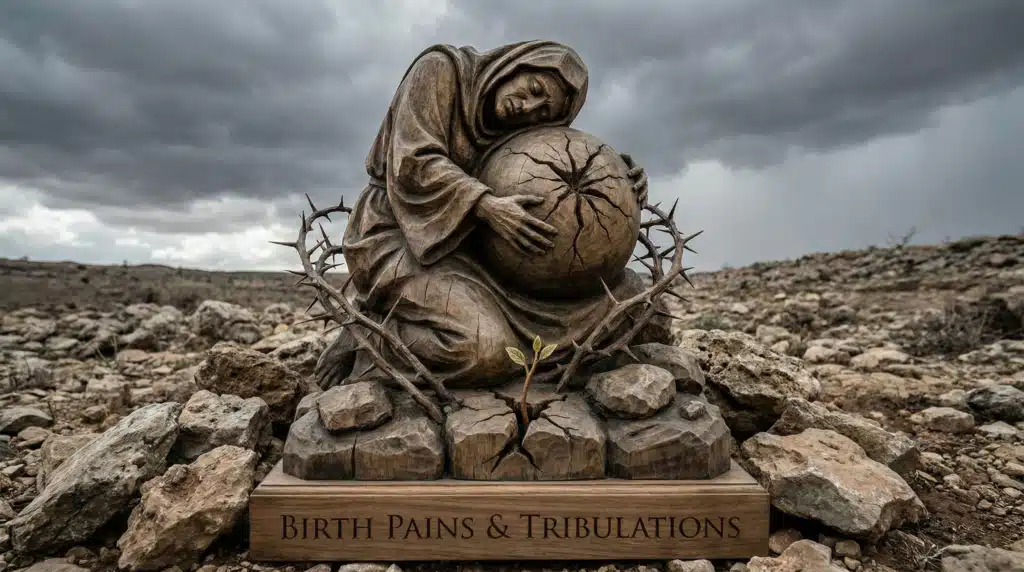
However, it is crucial to distinguish between “birth pains” and the actual delivery. In the 20th century, two World Wars devastated the planet, yet they did not immediately usher in the millennial kingdom. Why? Because other prophetic prerequisites had not yet been met. Today, however, the landscape is different. The re-establishment of Israel in 1948 changed the prophetic calculus entirely. Now, when we ask if a war signals the return of Jesus, we must ask: Does this war involve Israel? Does it align with the coalitions described in Ezekiel and Revelation?
Understanding the return of Jesus requires us to look past the political pundits and see the spiritual narrative. The Bible describes a trajectory of history that culminates in Jerusalem. Therefore, any major war that isolates Jerusalem or threatens its existence is a potential accelerant for the timeline regarding the return of Jesus.
Wars and Rumors of Wars: The Olivet Discourse
The most famous teaching regarding the end times comes from Christ Himself in Matthew 24, Mark 13, and Luke 21. Sitting on the Mount of Olives, the disciples asked Him, “What will be the sign of your coming and of the close of the age?” Jesus’s first response was a warning against deception, followed immediately by a description of global conflict.
Jesus stated: “And you will hear of wars and rumors of wars. See that you are not alarmed, for this must take place, but the end is not yet. For nation will rise against nation, and kingdom against kingdom…” (Matthew 24:6-7, ESV). Crucially, He calls these the “beginning of the birth pains.” This metaphor is essential for understanding the timing of the return of Jesus. Birth pains increase in frequency and intensity as the birth approaches.
Therefore, the mere existence of a war does not prove the immediate return of Jesus is tomorrow. There have always been wars. However, the scale and the lethality potential (via nuclear or biological means) fit the description of the “great tribulation” described later in the chapter—a time so severe that “if those days had not been cut short, no human being would be saved” (Matthew 24:22). This capability for total self-annihilation is unique to our modern era and is a grim prerequisite for the scenario requiring the return of Jesus to save humanity from itself.

Ezekiel 38: The Gog and Magog Scenario
While Matthew 24 gives a general overview, the Prophet Ezekiel provides specific details that many scholars believe describe a war shortly preceding the tribulation period or the return of Jesus. Ezekiel chapters 38 and 39 describe an invasion of Israel by a massive coalition of nations from the “uttermost parts of the north.”
Identifying the Players
The coalition is led by a figure named “Gog” from the land of “Magog.” The allied nations listed include:
- Rosh, Meshech, and Tubal: Often identified by historical geography as Russia and former Soviet republics or parts of Turkey.
- Persia: The modern state of Iran (the name changed from Persia only in 1935).
- Cush and Put: Modern-day Sudan/Ethiopia and Libya/North Africa.
- Gomer and Beth-togarmah: Regions in modern-day Turkey.
For centuries, this prophecy seemed impossible. Russia and Iran were not allies; Turkey was a secular state allied with the West; and Israel didn’t even exist as a nation. Today, however, we see a tightening military alliance between Russia and Iran, with Turkey increasingly hostile toward Israel. A war involving this specific coalition would be a flashing red light signaling the nearness of the return of Jesus.
The outcome of this war, according to Scripture, is not determined by the IDF or American intervention, but by God Himself intervening with natural disasters to destroy the invading armies. This supernatural event will reawaken the world to the reality of God, setting the stage for the final countdown to the return of Jesus.
Israel: The Prophetic Clock
You cannot discuss the return of Jesus without discussing Israel. Israel is often called God’s time clock. In Luke 21:24, Jesus speaks of Jerusalem being “trampled underfoot by the Gentiles, until the times of the Gentiles are fulfilled.” The recapture of Jerusalem by Israel in 1967 is viewed by many scholars as a massive prophetic marker signaling that we are in the final generation leading to the return of Jesus.
The prophets Amos, Jeremiah, and Ezekiel all prophesied that in the last days, the Jewish people would be regathered from the “four corners of the earth” back to their ancestral land. This has happened. They also prophesied that the land, which had been desolate, would bloom again. This has happened. Now, Zechariah 12:3 predicts that Jerusalem will become a “heavy stone for all the peoples.” We see this daily in the United Nations and global media. The obsession of the world with this tiny strip of land is irrational unless viewed through the lens of spiritual warfare and the impending return of Jesus.
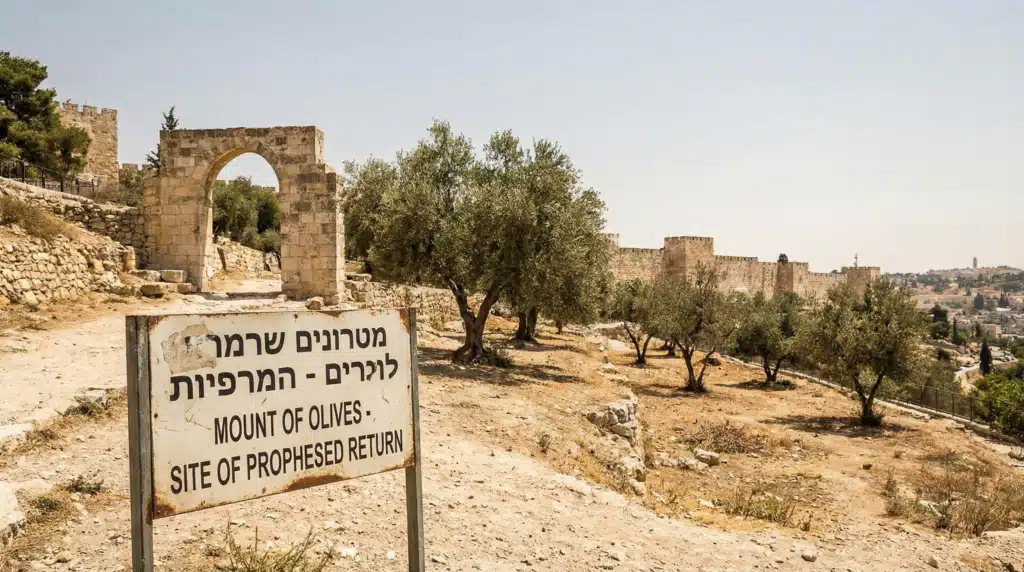
If a current war threatens the sovereignty of Israel or the status of Jerusalem, it is not just a geopolitical conflict; it is a theological event. The ultimate return of Jesus will occur specifically at the Mount of Olives (Zechariah 14:4) to defend Jerusalem from annihilation at the Battle of Armageddon.
The Convergence: Why This Time Might Be Different
Skeptics often say, “People have predicted the return of Jesus for centuries, and they were always wrong.” This is true. However, what makes our current generation unique is the convergence of signs. In the past, we might have seen a war, or a plague, or an earthquake. Today, we are seeing all of them simultaneously, alongside technological advancements that make specific prophecies possible for the first time in history.
Consider the “Mark of the Beast” prophecy in Revelation 13, which describes a global economic system where no one can buy or sell without a mark. Before the digital age, this was logistically impossible. Today, with blockchain, central bank digital currencies (CBDCs), and bio-metric surveillance, the infrastructure for such a system is being built before our eyes. The convergence of this technology with global warfare and moral decline creates a “perfect storm” scenario that points heavily toward the return of Jesus.
Furthermore, the Gospel is being preached to all nations (Matthew 24:14) at a speed previously unimaginable due to the internet and satellite technology. The acceleration of Bible translation and digital evangelism removes one of the final barriers to the Jesus return

Faith Over Fear: How to Prepare
If the current war is indeed a signal of the return of Jesus, how should Christians respond? The Bible never presents prophecy to scare us, but to prepare us. In Luke 21:28, Jesus says, “Now when these things begin to take place, straighten up and raise your heads, because your redemption is drawing near.”
1. Spiritual Readiness: The parable of the Ten Virgins (Matthew 25) warns against spiritual lethargy. We must ensure our “lamps” are filled with oil—meaning we are walking in the Holy Spirit, not just cultural Christianity. It will be sudden, “like a thief in the night” (1 Thessalonians 5:2).
2. Evangelistic Urgency: If time is short, our priorities must shift. The return of Jesus implies a final judgment. This should motivate us to share the Gospel with love and boldness. War reminds us of the fragility of life; it opens doors to discuss eternity.
3. Watchful Prayer: We are commanded to “watch and pray.” This means keeping an eye on events like the Ezekiel 38 scenario or the rise of globalism, interpreting them through Scripture, and praying for God’s will—including praying for the peace of Jerusalem (Psalm 122:6). Recognizing the signs of the return of Jesus keeps us from being blindsided by world events.
Conclusion
Does the current war signal the return of Jesus? While we cannot set a date, the alignment of nations, the focus on Israel, and the convergence of global crises strongly suggest we are living in the season of His coming. The stage is being set for the final act of human history. The “birth pains” are becoming more frequent and intense.
The return of Jesus is the “blessed hope” of the church. It is the solution to a world tearing itself apart through war and greed. As we watch the headlines, let us not be filled with dread, but with anticipation. The King is coming. The question is not just when the return of Jesus will happen, but whether you are ready for it.
Frequently Asked Questions
Q: What is the difference between the Rapture and the Second Coming?
Q: Does the Bible mention nuclear war?
Q: Who are Gog and Magog?
Q: Can we know the date of the return of Jesus?
Q: What is the ‘abomination of desolation’?
Who are Gog and Magog?
Gog is a leader, and Magog is a land mentioned in Ezekiel 38. They represent a coalition of nations from the north (likely Russia, Turkey, and Iran) that will attack Israel. This invasion is a major prophetic marker that the return of Jesus and the end of the age are approaching.