Table of Contents
- The Intersection of Politics and Prophecy
- Defining Armageddon: Biblical Context vs. Cultural Myth
- The King Cyrus Argument: A Flawed Vessel
- The Jerusalem Catalyst: Accelerating the End Times
- Christian Nationalism and Dominionism
- Theological Counter-Arguments and Risks
- Conclusion: Prophecy or Self-Fulfilling Prophecy?
- Frequently Asked Questions
The Intersection of Politics and Prophecy
In the landscape of modern American theology and political discourse, few questions are as charged or as complex as this: Did Jesus choose Trump to start Armageddon? This inquiry is not merely a fringe conspiracy theory; it represents a significant undercurrent of thought within specific subsets of Evangelicalism and Charismatic Christianity. To understand the gravity of this question, one must look beyond the surface of cable news pundits and delve into the deep waters of eschatology—the theological study of the end of the world.
For decades, the intersection of American politics and biblical prophecy has been a fertile ground for speculation. However, the rise of Donald Trump introduced a unique variable. Unlike previous leaders who wore their faith on their sleeves in traditional ways, Trump’s appeal to the religious right was pragmatic and, for some, prophetically ordained. The question “Did Jesus choose Trump to start Armageddon?” suggests a belief that political maneuvering is a mechanism for spiritual acceleration, ushering in the final battle between good and evil.
This article aims to dissect this phenomenon with authoritative precision. We will not simply dismiss the claim but analyze the biblical hermeneutics, the geopolitical implications, and the sociological factors that lead millions to ask: Did Jesus choose Trump to start Armageddon? By examining the scriptures of Revelation, Daniel, and Isaiah alongside modern geopolitical moves, we can uncover why this narrative persists.
Key Theological Concept: Dispensationalism is a system of biblical interpretation that sees history divided into different eras (dispensations) and anticipates a literal restoration of Israel and a final tribulation period.
Defining Armageddon: Biblical Context vs. Cultural Myth
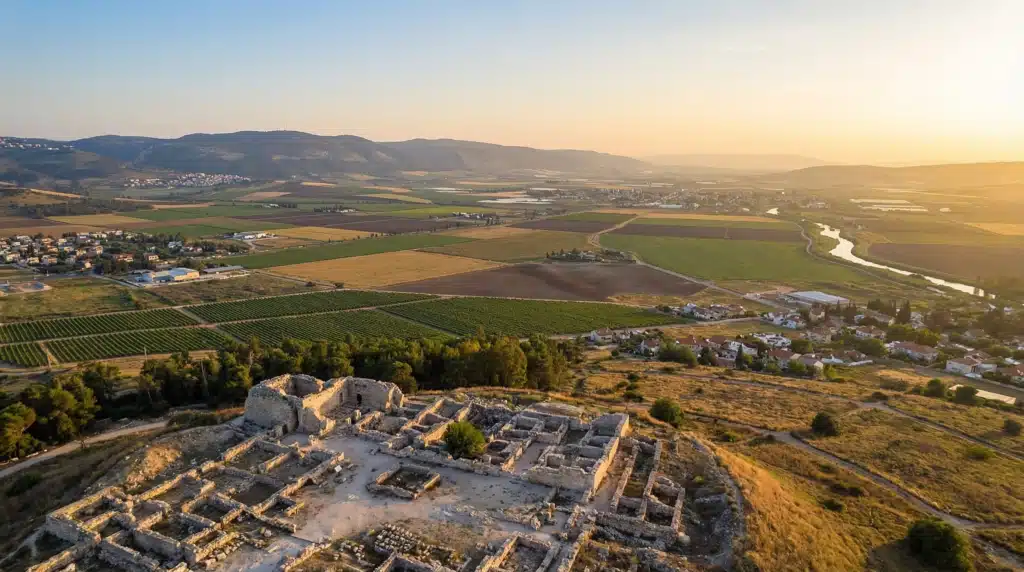
To rigorously answer “Did Jesus choose Trump to start Armageddon?”, we must first accurately define what Armageddon is. In popular culture, the term is synonymous with global nuclear annihilation or an asteroid impact. However, in biblical theology, specifically Revelation 16:16, Armageddon (Har Megiddo) refers to a literal geographic location in Israel—the Mount of Megiddo—where the kings of the earth gather for war against God.
The question “Did Jesus choose Trump to start Armageddon?” relies on a specific interpretation of these texts. It presumes that human agents are required to set the stage for this divine intervention. This view is heavily influenced by Dispensationalist theology, which gained massive popularity in the 19th and 20th centuries. Adherents believe that specific prerequisites must be met before Christ returns, including the re-establishment of Israel and the rebuilding of the Third Temple.
When believers ask, “Did Jesus choose Trump to start Armageddon?”, they are often asking if Trump is the catalyst for the geopolitical instability required to bring nations to the valley of Megiddo. They look for signs of conflict involving Russia (often identified as Magog), Iran (Persia), and Israel. In this worldview, peace treaties are paradoxically viewed as precursors to war, as the Antichrist is predicted to establish a false peace before the final conflict.
The King Cyrus Argument: A Flawed Vessel
A central pillar in the argument answering “Did Jesus choose Trump to start Armageddon?” is the King Cyrus prophecy. During the 2016 and 2020 elections, many evangelical leaders compared Donald Trump to Cyrus the Great, the Persian King mentioned in Isaiah 45. Cyrus was a pagan king, unaware of the Jewish God, yet he was used by God to free the Israelites from Babylonian captivity and fund the rebuilding of the Temple.
The logic follows: If God could use a flawed, non-believing king in ancient times to restore His people, could He not use a flawed modern leader for similar purposes? Those who ask “Did Jesus choose Trump to start Armageddon?” often view him not as a moral exemplar, but as a “wrecking ball” against a secular, globalist order that they believe is preparing the way for the Antichrist. By disrupting the global status quo, the argument goes, Trump aligns the nations into their prophetic positions.
Dr. Lance Wallnau and other charismatic leaders popularized the “Cyrus Candidate” theory. This reframes the question. Instead of asking “Did Jesus choose Trump to start Armageddon?” with fear, they ask it with hope—seeing the onset of the End Times not as a tragedy, but as the long-awaited return of the Messiah. For this demographic, Trump’s abrasive style and isolationist policies are features, not bugs, necessary to shatter the “Babylonian” system of modern governance.
The Jerusalem Catalyst: Accelerating the End Times
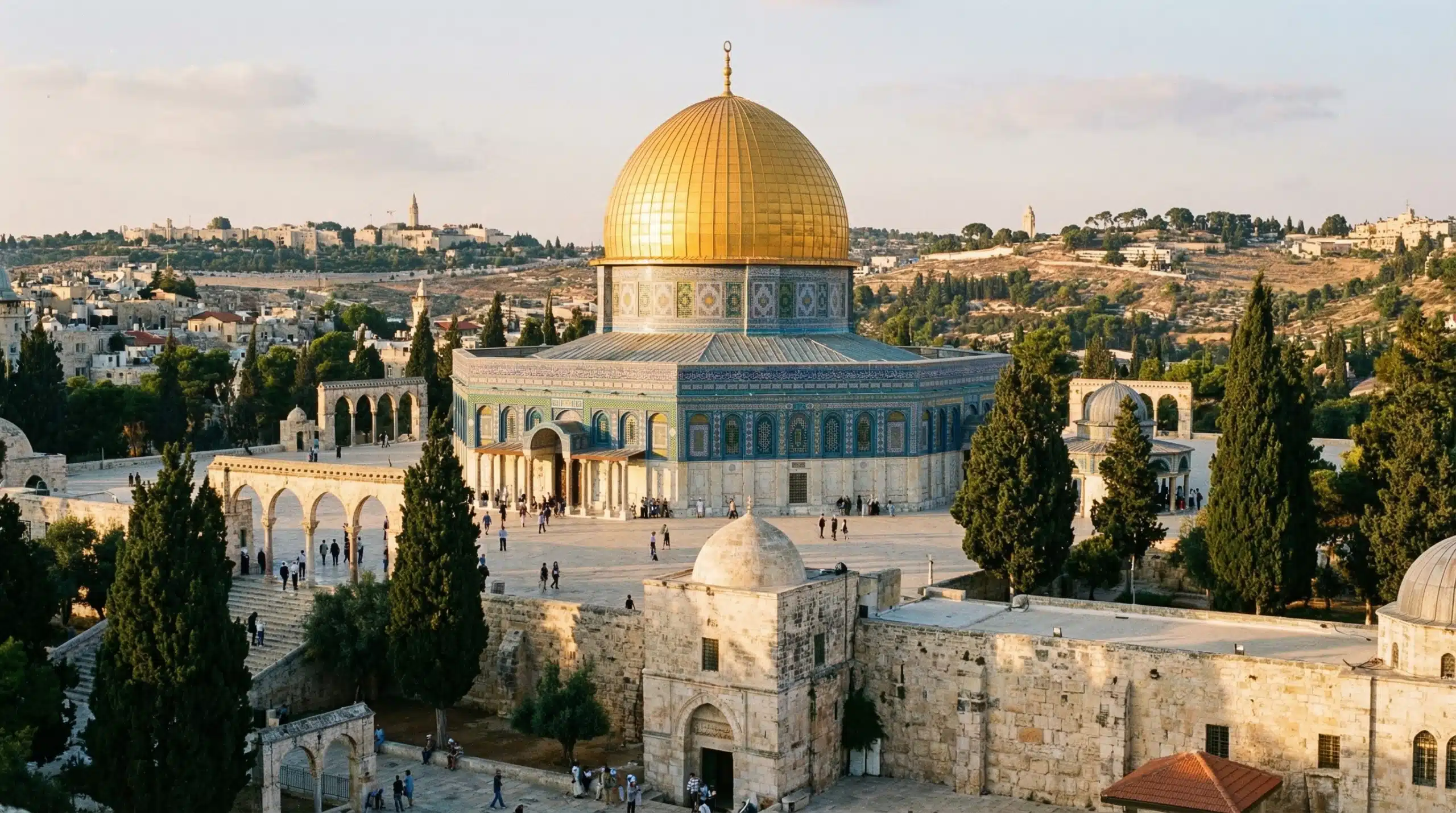
Perhaps the strongest evidence cited by those pondering “Did Jesus choose Trump to start Armageddon?” was the recognition of Jerusalem as Israel’s capital and the subsequent relocation of the U.S. Embassy. For decades, U.S. presidents signed waivers to delay this move to maintain regional stability. Trump’s decision to move forward was hailed by Christian Zionists as a prophetic milestone.
Why does this matter for the question “Did Jesus choose Trump to start Armageddon?” Because eschatology dictates that Jerusalem must be the center of attention in the Last Days (Zechariah 12:3). By officially recognizing Jerusalem, proponents argue that Trump accelerated the prophetic clock. This move enraged the Arab world and delighted those who believe the Jewish people must have full sovereignty over Jerusalem for the Third Temple to be built.
The Abraham Accords further complicate the answer to “Did Jesus choose Trump to start Armageddon?” While on the surface they are peace treaties, skeptical eschatologists point to scripture stating that the End will come when people say “Peace and safety” (1 Thessalonians 5:3). Therefore, even Trump’s peace deals are scrutinized through the lens of Armageddon—viewed as the temporary, fragile peace that precedes the final storm.
Christian Nationalism and Dominionism
To fully explore “Did Jesus choose Trump to start Armageddon?”, we must analyze the sociological framework of Christian Nationalism. This ideology posits that the United States has a distinct covenant with God and that Christians are called to occupy positions of power in the “Seven Mountains” of culture (government, education, media, etc.).
Within this framework, the question “Did Jesus choose Trump to start Armageddon?” takes on a militant tone. It isn’t just about waiting for Jesus to return; it is about actively engaging in spiritual warfare to reclaim the nation. Some extreme subsets of Dominionism believe that Christ cannot return until the Church has taken dominion over the earth. For them, Trump is a general in a spiritual war.
This perspective shifts the agency. It suggests that while God is sovereign, He uses strongman figures to crush the enemies of the faith. Consequently, the chaos or polarization resulting from such leadership is interpreted as the “birth pains” described in Matthew 24. If the question is “Did Jesus choose Trump to start Armageddon?”, the Christian Nationalist answer is often that Trump was chosen to draw the battle lines clearly between the “Sons of Light” and the “Sons of Darkness.”

Theological Counter-Arguments and Risks
Despite the fervor, many theologians vehemently reject the premise of the question “Did Jesus choose Trump to start Armageddon?” Mainline Protestants, Catholics, and non-Dispensational Evangelicals argue that this view borders on heresy or idolatry. They point to the dangers of “newspaper exegesis”—reading the Bible with the news in one hand and forcing current events to fit ancient texts.
1. The Sovereign vs. The Political: Critics argue that asking “Did Jesus choose Trump to start Armageddon?” grants too much power to a human politician. Biblical theology teaches that God alone determines the times and seasons (Acts 1:7). Attributing the onset of the apocalypse to an American election cycle is seen as Americentric arrogance.
2. The Character of Christ: The question “Did Jesus choose Trump to start Armageddon?” implies that Jesus—the Prince of Peace—is actively engineering global conflict through a divisive political figure. Counter-arguments emphasize that the Kingdom of God is “not of this world” (John 18:36) and is advanced through charity, humility, and the Gospel, not through geopolitical brinkmanship.
3. The Danger of Self-Fulfilling Prophecy: Perhaps the most dangerous aspect of asking “Did Jesus choose Trump to start Armageddon?” is the potential for believers to desire war. If a voting bloc believes that conflict in the Middle East is God’s will to hasten the Second Coming, they may oppose de-escalation efforts. This creates a terrifying feedback loop where theology drives foreign policy toward destruction.

Conclusion: Prophecy or Self-Fulfilling Prophecy?
So, did Jesus choose Trump to start Armageddon? From a strictly academic and theological standpoint, the answer depends entirely on one’s hermeneutic framework. For the Dispensationalist who sees history as a series of divine setups for a final act, the alignment of Trump’s policies with prophetic expectations regarding Israel is compelling evidence. For them, the chaos is confirmation.
However, for the majority of historical Christianity, the question “Did Jesus choose Trump to start Armageddon?” is a misunderstanding of the nature of the Kingdom of God. It reduces the cosmic return of Christ to a political roadmap dependent on American voters. While God often works through history in mysterious ways, the certainty with which some proclaim Trump as the trigger for the End Times is a modern phenomenon, rooted as much in sociology as it is in scripture.
Ultimately, the fascination with the question “Did Jesus choose Trump to start Armageddon?” reveals a deep anxiety about the state of the world and a longing for divine resolution. Whether one views Trump as a Cyrus, a catalyst for chaos, or merely a politician, the theological debate highlights the enduring power of apocalyptic thought in shaping human destiny.

2 thoughts on “Did Jesus Choose Trump to Start Armageddon? Biblical Analysis”