Table of Contents
The Geography of Mount Hermon
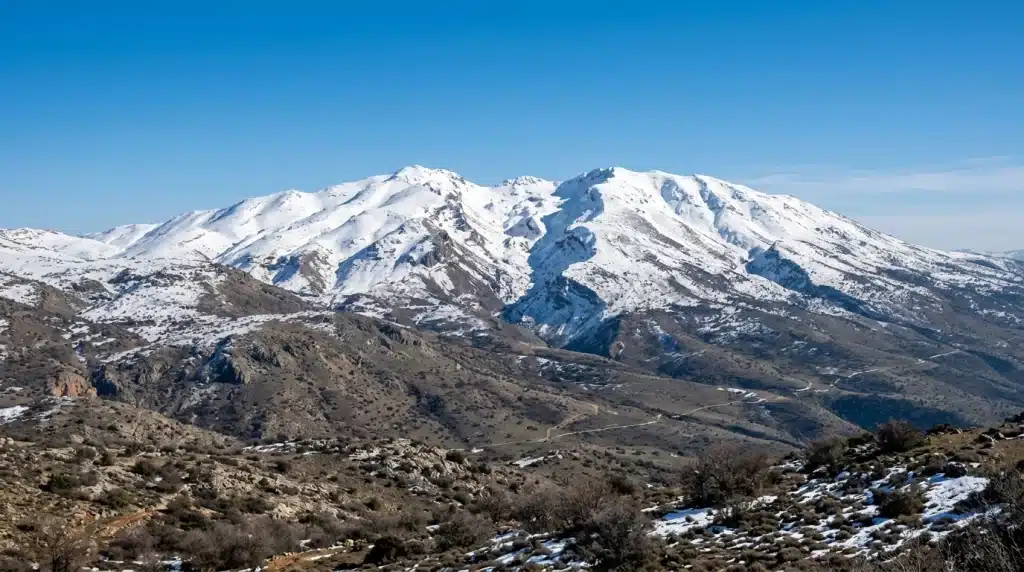
When you stand at the base of the Golan Heights and look up at the snow-capped peak of Mount Hermon, you immediately understand why the ancient writers considered it a sacred site. Mount Hermon in the Bible is more than just a mountain; it is the dominant geographical feature of the region, standing as the highest point in the Anti-Lebanon range. In my own travels through northern Israel, I was struck by how the mountain creates its own weather system, often gathering clouds around its summit while the valleys below remain scorching hot. This visual phenomenon provided the ancient inhabitants with a sense of awe and divinity that still lingers today.
Historically, the mountain served as the border between several ancient kingdoms. The Amorites called it Senir, while the Sidonians referred to it as Sirion. The name ‘Hermon’ itself comes from the Hebrew root meaning ‘devoted’ or ‘set apart,’ highlighting its status as a place reserved for divine encounters. When you read the psalms, particularly Psalm 133, the ‘dew of Hermon’ is mentioned as a symbol of life-giving abundance. I found that understanding this micro-climate is essential to interpreting the ancient poetry that celebrates the mountain’s unique ability to refresh the dry landscapes of the southern territories.
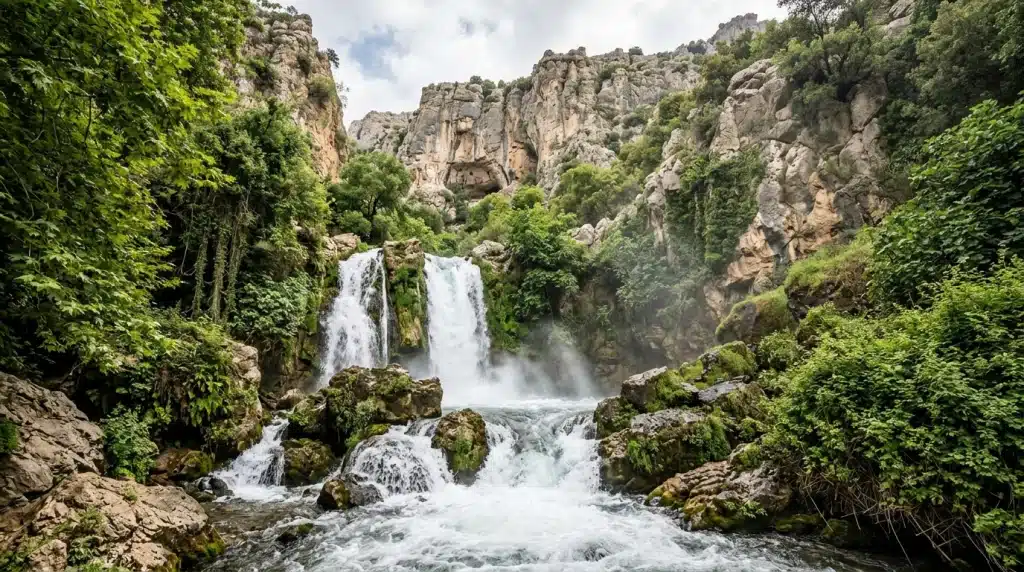
Beyond its physical stature, the mountain acted as a massive water tower. The snowmelt flows down into the Jordan River, making it the literal lifeblood of the Promised Land. Seeing the springs of Banias gushing from the mountain’s limestone base changed how I view the biblical narratives involving ‘living water.’ It is not just a metaphor; it is the physical reality of the region. The geography dictated the movement of armies and the location of temples, as every culture sought to claim the source of such vital natural resources as their own sacred territory.
Mount Hermon and the Watchers
One of the most intense and often overlooked aspects of the text is the connection between Mount Hermon in the Bible and the tradition of the Watchers. In the Book of Enoch, a non-canonical but highly influential text in early Jewish thought, it is explicitly stated that the fallen angels descended upon the summit of Hermon to enter into their unholy union with humanity. While many modern believers avoid these extra-biblical texts, understanding the cultural milieu of the First Century is crucial. When the apostles walked near Hermon, this dark legend was surely heavy in the air, informing how they interpreted the spiritual landscape.
I remember sitting with a theology professor who pointed out that the ‘Sons of God’ narrative in Genesis 6 is intrinsically tied to this specific mountain in the ancient mindset. The mountain was seen as the point of contact between the heavens and the earth, and unfortunately, it was also the point of invasion by rebellious celestial beings. This adds a layer of depth to the stories of the Israelites fighting against the giants, or Nephilim, who were said to occupy these northern regions. It was a place known for spiritual rebellion, setting the stage for a dramatic conflict between the kingdom of darkness and the coming Kingdom of God.
Avoiding this context often leaves a gap in our understanding of why certain events occurred exactly where they did. If you ignore the ‘Watchers’ tradition, you miss the cosmic weight of the geography. The early church fathers and Jewish writers were obsessed with the idea that the spiritual battle for humanity began on these slopes. Recognizing this helps us see the Bible not as a set of disconnected stories, but as a long, continuous account of God reclaiming territory that had been forfeited to spiritual corruption. It is a profound shift in perspective that transforms the mountain from a background setting into a frontline battlefield.
The Transfiguration on Mount Hermon
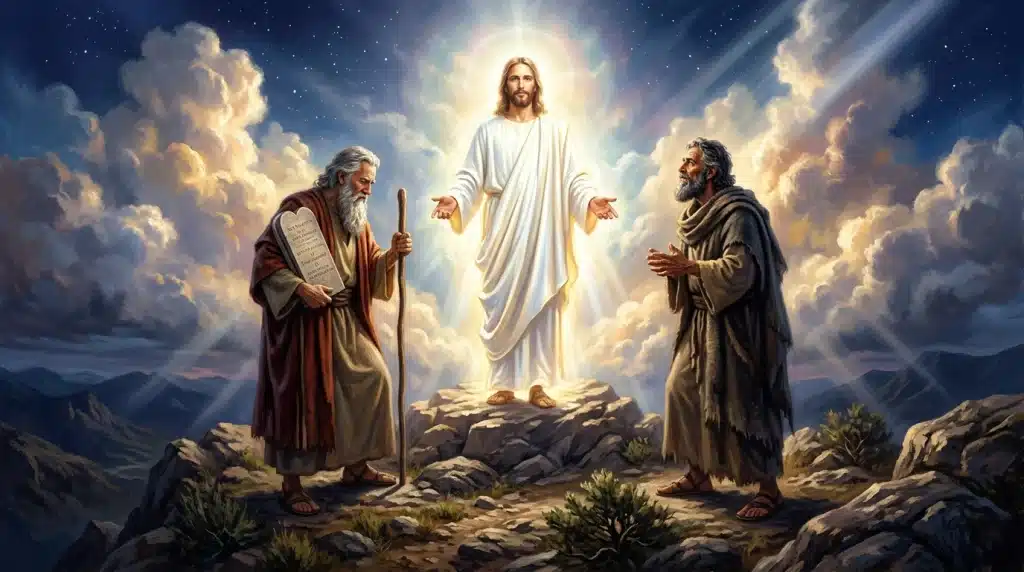
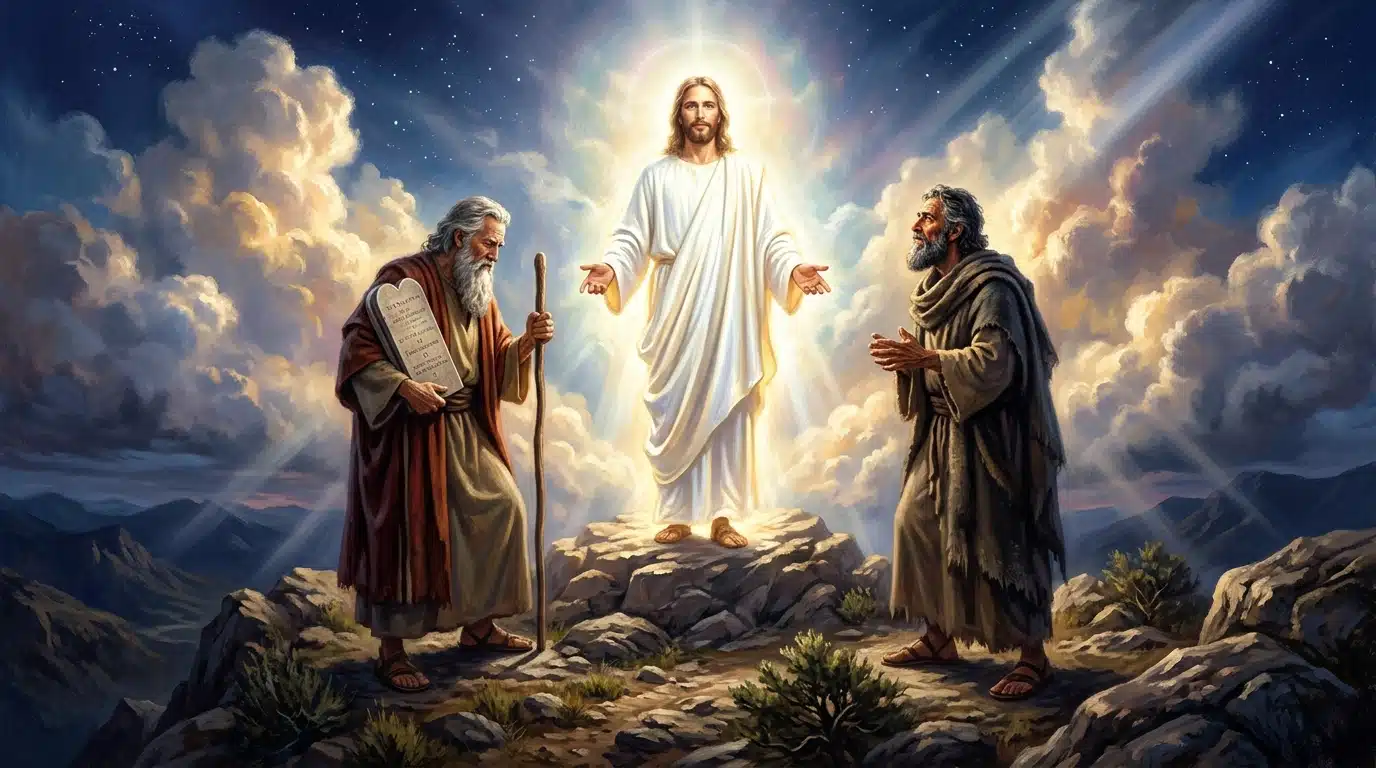
Perhaps the most significant event involving Mount Hermon in the Bible is the Transfiguration of Jesus. While tradition sometimes points to Mount Tabor, the geographic markers in the Gospel of Matthew—which describes Jesus traveling to the region of Caesarea Philippi—strongly favor the slopes of Hermon. I recall standing near the caves of Banias, looking up at the high ridge, and realizing that this is likely where Jesus brought Peter, James, and John to reveal His divine glory. The timing is vital; this event happened immediately after Peter’s confession of Jesus as the Messiah, marking a shift in the mission of the disciples.
The contrast here is staggering. Jesus takes His disciples to the very place where ancient tradition claimed the rebel angels had descended and corrupted the world. By appearing in His glorified state on this specific mountain, Jesus was effectively declaring a ‘mission accomplished’ against the principalities and powers that had claimed the high places of the world. It was a reclamation project. He wasn’t just showing off a miracle; He was asserting His authority over the very territory where the ‘Sons of God’ had once rebelled against the Father.
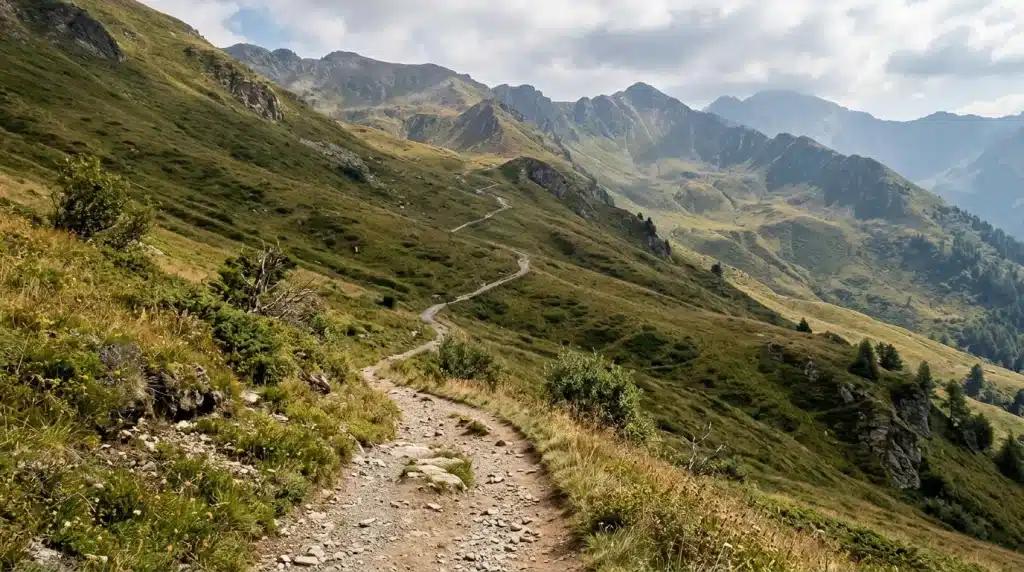
I’ve walked these trails, and the steep climb reminds you that this was no casual stroll. The effort the disciples put into reaching the summit mirrors the spiritual transformation they underwent. They were pushed beyond their physical limits to encounter something supernatural. Every time I read the accounts of the Transfiguration, I am struck by the silence of the mountain compared to the noise of the crowds Jesus usually encountered. It was a secluded moment of intimacy, where the veil between heaven and earth was pulled back just far enough for three men to catch a glimpse of the King of Kings.
Caesarea Philippi: The Gate of the Underworld
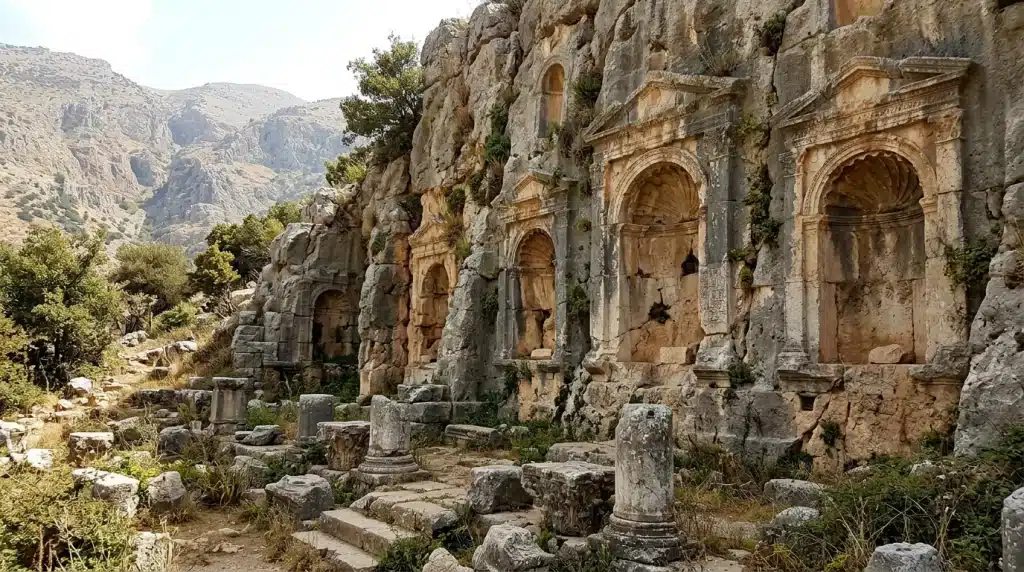
At the foot of Mount Hermon lies the city of Caesarea Philippi, which the locals called the ‘Gate of Hades.’ When I first visited the archaeological site, I was struck by the ruins of temples dedicated to Pan, the Greek god of nature and chaos. The mouth of the cave there was once considered an entrance to the underworld, a place where pagan worshipers threw sacrifices into the dark depths of the water. For the disciples, being in this city meant standing in the heart of paganism, a place that felt spiritually ‘dark’ and oppressive to the Jewish mind.
It is no coincidence that Jesus chose this location to ask, ‘Who do you say that I am?’ He was standing in front of the supposed gates of hell and asking His followers to define their allegiance. By building His church upon the confession that He is the Christ, Jesus was essentially saying, ‘The gates of hell will not prevail against My movement.’ It is a direct challenge to the authority that the inhabitants of this mountain once held. It wasn’t just a casual conversation; it was a defiant declaration of war against the dark powers that had been worshipped in that location for centuries.
Looking at the niche-filled walls where idols once stood, you feel the weight of history. The contrast between the cold stone statues of long-forgotten gods and the living presence of the Messiah is the central theme of this region. Every time I see a picture of these ruins, I am reminded that the church was never intended to be a fragile institution. It was built to stand against the ‘Gates of Hades’ in the very stronghold of the enemy. It is a powerful reminder that our faith is not just about personal comfort, but about standing firm in the face of spiritual resistance.
Spiritual Warfare and Sacred Space
The concept of ‘high places’ is a recurring theme when discussing Mount Hermon in the Bible. In the ancient Near East, mountains were always associated with the divine. Unfortunately, humanity’s tendency to misuse these sites for idolatry led to the frequent condemnation of ‘high places’ in the Old Testament. Hermon was not exempt from this, as various cultures built shrines along its slopes to placate the spirits they believed dwelled there. Understanding this helps us grasp why the prophets were so vocal about returning to the true worship of God, as opposed to the localized, spirit-focused worship that dominated the Canaanite cultures.
If you have ever felt a sense of overwhelming smallness while standing on a mountain, you can relate to why the ancients felt this was the place to meet God—or the gods. But for the believer, the lesson of Mount Hermon is that spiritual authority is found in the person of Jesus, not in the geography itself. We don’t need to climb a literal mountain to access the presence of the Creator.
However, the history of this mountain teaches us that there is a battle for our attention. We are constantly tempted to seek spiritual experiences in the ‘high places’ of the world, whether that is through technology, status, or self-actualization, rather than seeking the one who is the true source of life.
I’ve learned that the most effective way to engage with the biblical narrative is to view these spaces as reminders of God’s sovereignty. The mountain didn’t make the gods, and it doesn’t house the divine. The Almighty created the mountain. When Jesus stood on that summit, He was putting all of creation back under its rightful head. It is a pattern that repeats throughout the narrative of the Bible: human corruption claims a place, and God ultimately reclaims it through His presence and His people. It is a story of hope that encourages me whenever I feel overwhelmed by the state of our modern world.
Visiting the Region Today
If you ever have the chance to travel to the Holy Land, visiting the base of Mount Hermon is an experience that stays with you forever. It is not on the typical ‘tourist trail’ that focuses only on the Sea of Galilee or Jerusalem, but it is deeply rewarding. The air is crisp, the water is crystal clear, and the history is palpable. Walking the paths near the Banias waterfall, you can hear the roar of the water that feeds the Jordan, the same water that has flowed since the time of the kings. It connects you to the physical reality of the scriptures in a way that reading alone never could.
Practical advice for those planning a trip: definitely bring good hiking boots and a light jacket, as the temperature drops significantly as you gain elevation. The area is also a nature reserve, so you’ll need to manage your time if you want to see both the archaeological sites and the natural beauty of the springs. I suggest spending an entire day in the area, rather than rushing through. Take the time to sit by the water and read the passages in Matthew 16 or Mark 9. There is something unique about reading the text while looking at the very landscape where the events occurred.
My final takeaway from my time in this region is the importance of grounding our faith in history. Christianity isn’t a myth based on abstract ideas; it happened in specific places, to specific people, at specific times. Mount Hermon is a testament to that. It remains a silent witness to the history of God’s work on earth.
Whether you are a student of theology, a traveler, or someone just looking to understand the context of the Bible better, this mountain holds the keys to understanding the cosmic scale of the gospel. It is a place that invites you to look up, to think bigger, and to trust in the one who has authority over every mountain and every gate of hell.