Table of Contents
The Everywhere Verse
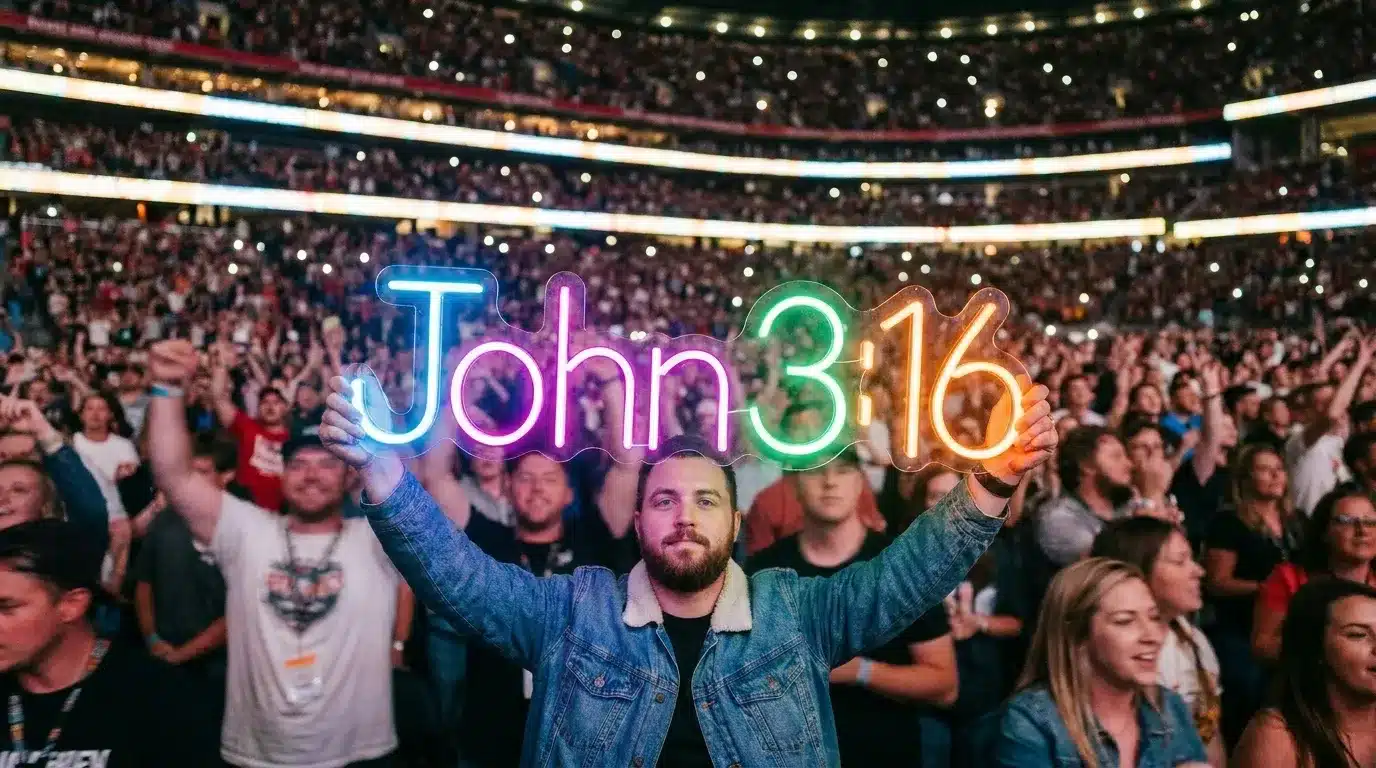
Have you ever seen that guy at a football game holding up a massive neon sign in the end zone? You know the one. If you want John 3:16 explained, you are definitely not alone. Seeing it on bumper stickers, highway billboards, painted on the cheeks of athletes, and even printed on the bottom of fast-food cups makes it the undisputed most famous Bible verse in history. But familiarity often breeds blindness. Because we see it everywhere, we stop thinking about what it actually means. Today, I want to get John 3:16 explained in a way that goes way beyond the basic Sunday School cliches.
I remember the first time I genuinely had John 3:16 explained to me in its original context. I grew up hearing the verse, but it sounded like a robotic catchphrase. It wasn’t until a mentor sat me down and walked me through the historical background that the lights finally came on. Getting John 3:16 explained properly changes everything. It shifts from being just a catchy slogan to a profound, life-altering truth.
If you have ever wanted John 3:16 explained in plain English, this guide is for you. We are going to look at the people involved, the Greek words used, and how this ancient text applies to our messy, modern lives. Let’s start getting John 3:16 explained right from the very beginning.
The Context: Who Was Jesus Talking To?
To have John 3:16 explained accurately, we cannot just rip the sentence out of the Bible and look at it under a microscope. We have to look at the room where it was spoken. Who was Jesus talking to? He wasn’t addressing a massive crowd on a hillside. He was having a deeply private, late-night conversation with a man named Nicodemus. Understanding Nicodemus is absolutely essential if you want John 3:16 explained correctly. Nicodemus was a Pharisee and a ruler of the Jews. This meant he was a highly educated religious elite. He knew the Torah inside and out. He was wealthy, powerful, and respected. Yet, he came to Jesus at night.
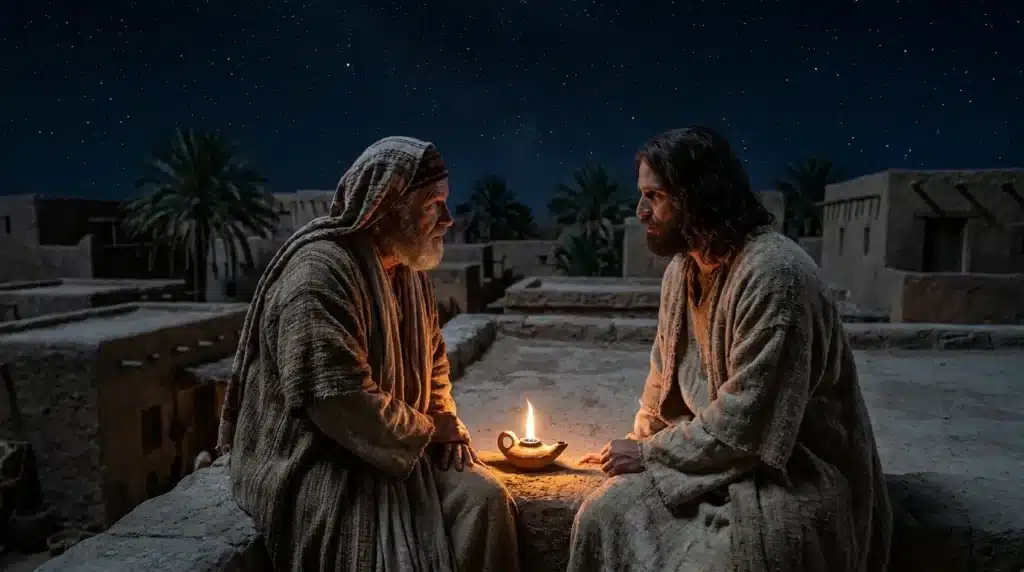
Why at night? Most scholars agree he was afraid of his peers seeing him. Jesus was a controversial figure, and Nicodemus had a reputation to protect. When Nicodemus arrives, he tries to flatter Jesus, but Jesus cuts right to the chase. He tells Nicodemus that unless a man is born again, he cannot see the kingdom of God. Nicodemus is entirely confused. He takes it literally, asking how an old man can re-enter his mother’s womb. This sheer confusion is the perfect setup.
When you hear John 3:16 explained, you must remember it was spoken to a religious expert who realized his vast knowledge wasn’t enough. Jesus was showing him that salvation isn’t about perfectly keeping religious rules; it’s about a total spiritual reset. This is the bedrock foundation for having John 3:16 explained.
Breaking Down The Verse: For God So Loved The World
Now, let’s get the core text of John 3:16 explained, piece by piece. The verse opens with: For God so loved the world. In the original Greek text, the word used for love here is agape. Getting this specific word in John 3:16 explained is crucial. Agape is not a warm, fuzzy feeling. It is not romantic love. Agape is a sacrificial, action-oriented love. It is a love that chooses the highest good for another person, regardless of the cost.
When I hear John 3:16 explained, I am always struck by the phrase the world. The Jewish expectation at the time was that the Messiah would come strictly to save Israel and crush their Roman oppressors. But Jesus shatters that exclusivity.

By saying God loves the world (the Greek word is kosmos), Jesus is throwing the doors wide open. He is including the outcasts, the rebels, the Romans, and people sitting behind glowing computer screens thousands of years later. A thorough John 3:16 explained study reveals that God’s love isn’t restricted to people who have their lives perfectly put together. It is a radical, boundary-breaking love. Every time I get this part of John 3:16 explained, it comforts me. It means I cannot outrun God’s reach. He doesn’t just love the shiny, polished versions of us; He loves the whole messy kosmos.
That He Gave His One and Only Son
As we continue getting John 3:16 explained, we hit the action phase of God’s love: that he gave his one and only Son. Love without action is just a sentiment. God’s agape love compelled Him to act. The phrase one and only comes from the Greek word monogenes. Older translations say only begotten. If you need this part of John 3:16 explained, think of monogenes as meaning unique or one of a kind. There is no one else like Jesus. He shares the exact nature of God the Father.
This part of John 3:16 explained highlights the sheer magnitude of the sacrifice. Have you ever valued something so much that you couldn’t bear to part with it? Imagine giving up your own child to save someone who hated you. That is the gravity of what is happening here. When pastors offer John 3:16 explained from the pulpit, they often focus on the cross. The giving of the Son wasn’t just sending Him to earth to teach good moral lessons; it was sending Him to be a sacrifice.
Jesus lived the perfect life we couldn’t live and paid the penalty for our brokenness. Having John 3:16 explained means facing the uncomfortable reality of our own need for rescue and the staggering price paid for our freedom.
That Whoever Believes In Him
This is where the rubber meets the road. To get John 3:16 explained properly, we must deeply analyze the word believes. The text says, that whoever believes in him. The Greek word here is pisteuo. This does not mean mere intellectual agreement. Many people think believing in Jesus is like believing George Washington was the first US President. You agree it’s a historical fact, but it doesn’t change how you drive to work or treat your family. When having John 3:16 explained, you learn that pisteuo means to trust in, cling to, and rely upon completely.

Let me give you an analogy that helped me get John 3:16 explained perfectly. Think of the famous tightrope walker Charles Blondin, who pushed a wheelbarrow across a tightrope suspended over Niagara Falls. The crowd cheered, believing he could do it. He asked a man in the crowd, Do you believe I can push a man across in this wheelbarrow? The man said, Yes, I believe! Blondin replied, Great, get in. Intellectual belief says, I know you can do it. Biblical belief—the pisteuo we see when getting John 3:16 explained—actually gets in the wheelbarrow.
It is a complete surrender of your weight and your life. This shifts Christianity from being a checklist of rules into a relationship of deep, active trust. You cannot claim to have John 3:16 explained to you if you skip over the demanding nature of true belief.
Shall Not Perish But Have Eternal Life
The final promise in the verse is shall not perish but have eternal life. Getting this conclusion of John 3:16 explained is vital for understanding Christian hope. The word perish doesn’t just mean physical death; everyone dies physically. It refers to spiritual ruin and eternal separation from God. It is the ultimate tragedy of a life disconnected from its Creator. But the alternative offered is eternal-life (zoe aionios in Greek). Often, when you hear John 3:16, eternal- life is portrayed simply as living forever in heaven playing harps on clouds. But that is only half the picture.

In the biblical context, eternal life isn’t just about quantity of time; it’s about the quality of life. In John 17:3, Jesus actually defines eternal-life as knowing God. When you get John 3:16 properly, you realize that eternal-life starts the exact moment you believe. It is a present possession. You don’t have to wait until you die to experience it. You get to step into a restored relationship with God right now. The fear of perishing is removed, replaced by a secure, unshakeable identity. Seeing John 3:16 in this light removes the anxiety of trying to earn our way into heaven. It is a gift received, not a wage earned.
Common Misconceptions
Even with John 3:16 thoroughly, people still fall into a few traps. The first misconception is that because God loves the world, everyone is automatically saved regardless of what they do. This is called universalism. However, a careful John 3:16 study shows that the promise is conditional: it is specifically for whoever believes. The love is universal, but the salvation requires an individual response. God doesn’t force His rescue on anyone who refuses it.
Another trap is turning this verse into a license to live however we want. People sometimes think, Well, I got John 3:16 to me, I believe, so I am safe to live a selfish life. But remember the wheelbarrow analogy. True belief transforms you. If you genuinely trust God, your actions will begin to align with His character. The goal of having John 3:16 is not to find a legal loophole to avoid hell; it is to fall in love with the God who sacrificed everything for you. When love is the motivator, obedience becomes a joy rather than a burden.
Applying This To Your Daily Life
Knowledge without application is useless. Now that we have had John 3:16 deeply, how does this change your Monday morning commute? First, it changes how you view yourself. If God loves you enough to give His one and only Son, your value is not based on your job, your bank account, or your Instagram followers. Your value is based on what God was willing to pay for you. Getting John 3:16 explained should radically cure your insecurities.

Second, having John 3:16 explained changes how you treat others. If God so loved the kosmos—the whole broken world—then we cannot write people off. That frustrating coworker, the rude cashier, the difficult family member; they are all deeply loved by God. We are called to mirror that agape love to them. Every time I get John 3:16 explained to me anew, it challenges my prejudices. It forces me to extend grace because I have received such massive grace myself. Let this verse be more than a bumper sticker. Let it be the lens through which you view every single day.