Table of Contents
- The Girl by the River: Beginning Miriam’s Untold Story
- The Silent Years: The Grit Behind Miriam’s Untold Story
- The Prophetess and the Tambourine: The Climax of Miriam’s Untold Story
- Leprosy and Sibling Rivalry: The Darker Side of Miriam’s Untold Story
- Crafting a Biblical Novel: Writing Miriam’s Untold Story
- Why We Still Need Miriam’s Untold Story Today
Have you ever closed a book, sat back, and realized your entire perspective on a historical figure just shifted? That is exactly how I felt when I first dove deep into biblical historical fiction. For years, I had read the standard accounts of Moses leading the Israelites, but I kept looking for Miriam’s untold story. In most Sunday school lessons, Moses’ sister is just a clever child by the river or a rebellious woman struck with leprosy.
But the reality of Miriam’s untold story is far more complex, beautiful, and heart-wrenching. As an avid reader and reviewer of the biblical novel genre, I am constantly searching for narratives that breathe life into the forgotten women of history. Uncovering Miriam’s untold story became a personal quest for me.
A truly great biblical novel does not just repeat the scriptures; it reads between the lines. It forces us to ask: what did she feel? How did she survive? Why did she lead? In this deep dive, I want to explore every facet of Miriam’s untold story. Whether you are a writer researching the Exodus, a reader looking for your next great biblical novel, or simply someone who loves discovering hidden historical gems, Miriam’s untold story offers a masterclass in faith, flaw, and leadership. Let’s unpack the pages of Miriam’s untold story together, starting from the muddy banks of the Nile.
The Girl by the River: Beginning Miriam’s Untold Story
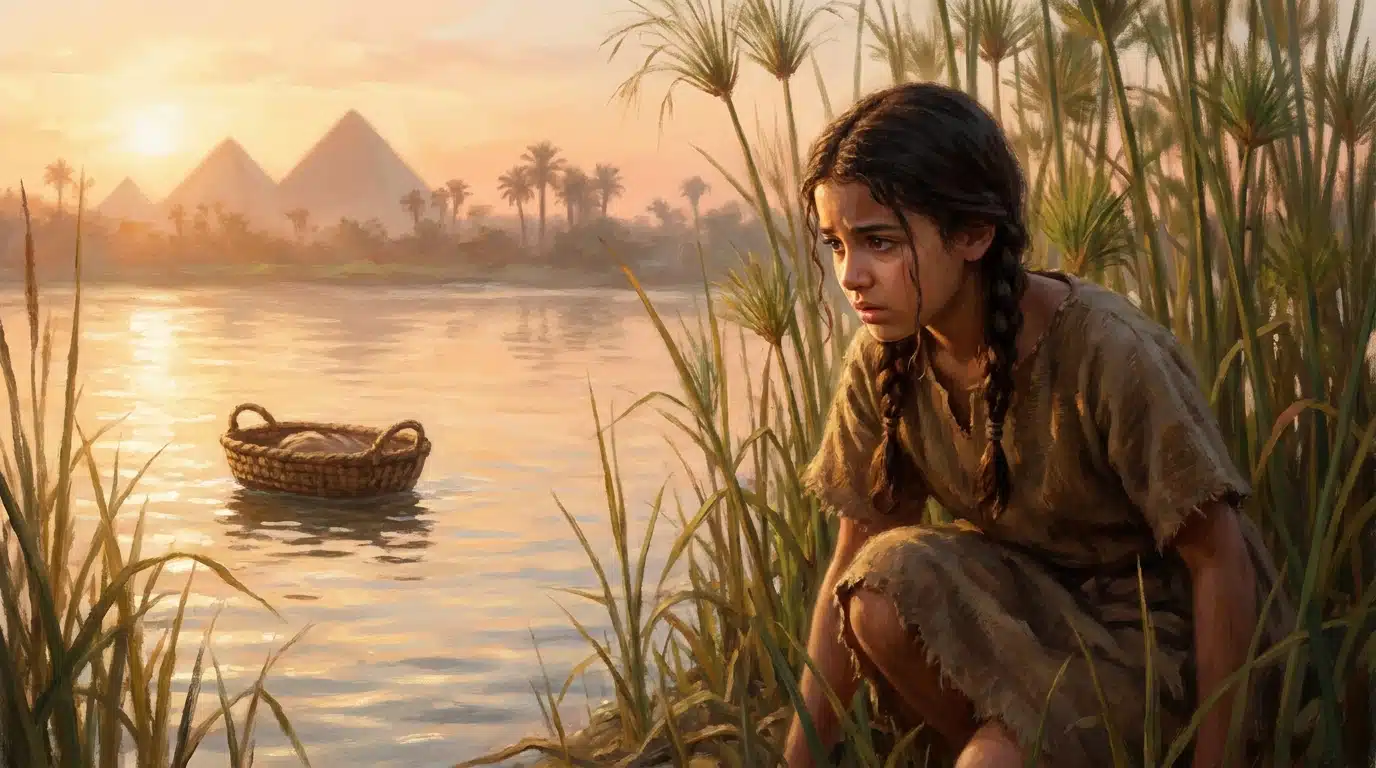
Every good biblical novel needs a gripping prologue, and Miriam’s untold story has one of the best in history. We find her hiding in the reeds of the Nile River, tasked with an impossible job: keeping her infant brother alive while avoiding the watchful eyes of Egyptian soldiers. But to truly grasp Miriam’s untold story, we must look past the basket. What was it like for a young Hebrew girl to approach an Egyptian princess? The sheer terror and bravery required in that moment is a cornerstone of Miriam’s untold story.
When I read a biblical novel that captures this scene, I look for the sensory details. The smell of the river mud, the heat of the Egyptian sun, the pounding of a young girl’s heart. Miriam’s Story begins with severe trauma. Her people were enslaved, infant boys were being thrown into the river, and her parents were broken by grief. Yet, in the midst of this darkness, Miriam’s Story is a spark of utter defiance. She did not just watch; she acted.
She negotiated. She secured a wage for her own mother to nurse the child. Any author tackling Miriam’s Story must highlight this early political savvy. It sets the stage for the powerful leader she would eventually become. If we only remember the child in the reeds, we miss the very foundation of Miriam’s Story.
The Silent Years: The Grit Behind Miriam’s Untold Story
One of the most fascinating aspects of Miriam’s untold story is the massive gap in the biblical text. Moses grows up in the palace, murders an Egyptian, and flees to Midian for forty years. But what about Moses’ sister? What was happening to her? This is where a talented author of a biblical novel can truly shine by fleshing out Miriam’s story. While Moses was tending sheep in the quiet wilderness, Miriam was likely making bricks in the blistering heat. The physical and emotional toll of those years is absolutely vital to understanding Miriam’s story.
She watched her people suffer, bleed, and die, all while clinging to the hope that God had not abandoned them. In my favorite interpretations of Miriam’s untold story, she is portrayed as an underground leader during these silent years. She wasn’t just waiting; she was enduring. She was keeping the oral traditions alive among the Hebrew women. The resentment she might have felt toward Moses—the brother who lived in luxury while she lived in squalor—adds an incredible layer of psychological depth to Miriam’s untold story.
A well-crafted biblical novel uses this tension to make Miriam’s untold story deeply relatable. Have you ever felt left behind while someone else received the blessing? That raw human emotion is the beating heart of Miriam’s untold story. Authors who explore Miriam’s untold story often show her struggling with doubt, making her eventual triumph at the Red Sea that much more powerful.
The Prophetess and the Tambourine: The Climax of Miriam’s Untold Story
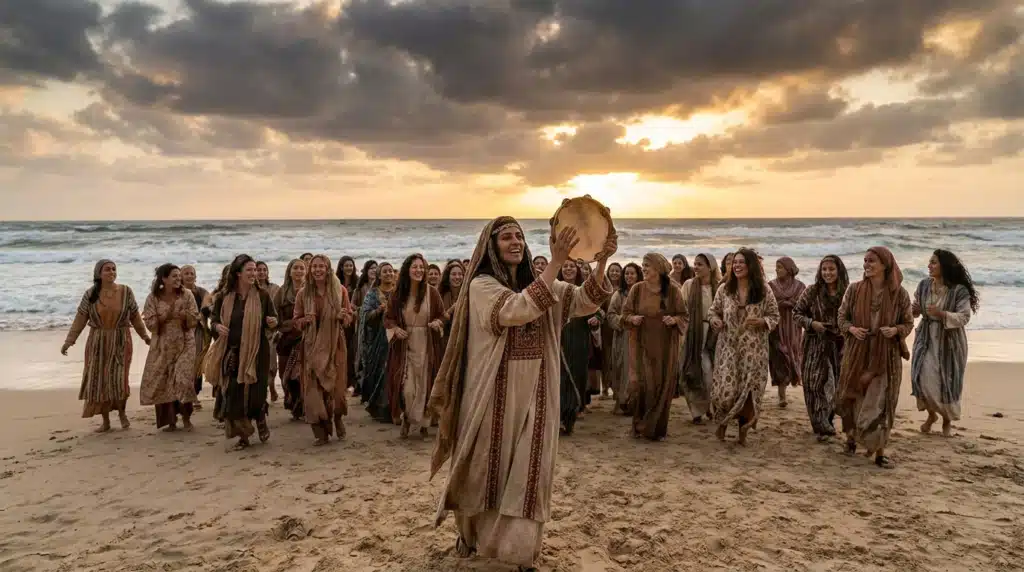
If you ask anyone to name a scene from story, they will likely mention the crossing of the Red Sea. Exodus 15 gives us a brief but magnificent glimpse into the height of Miriam’s untold story. After the sea crashes down on the Egyptian army, Miriam takes a tambourine, and all the women follow her in dancing and singing. This is not just a spontaneous party; it is a profound theological moment in story.
Think about the logistics of this moment in story. Where did the tambourine come from? A compelling biblical novel will suggest that Miriam packed that instrument while hurriedly fleeing Egypt. That simple detail reveals a staggering amount of faith within Miriam’s Story. She packed for a victory celebration while still running for her life. Exploring story means recognizing her as a legitimate spiritual leader. The text literally calls her a prophetess. She wasn’t just Moses’ sister; she was a core pillar of the Exodus.
When I review a biblical novel focusing on story, I want to feel the sand beneath her feet and hear the crash of the waves. I want the author to express the overwhelming relief and exhaustion of a woman who spent eighty years waiting for freedom. This triumphant scene is the emotional peak of story, and it deserves to be written with absolute reverence and joy.

Leprosy and Sibling Rivalry: The Darker Side of Miriam’s Untold Story
No human life is a constant string of victories, and Miriam’s untold story is no exception. In Numbers 12, we hit a deeply uncomfortable chapter in Miriam’s untold story. Miriam and Aaron speak out against Moses because of his Cushite wife, and they challenge his exclusive prophetic authority. God’s response is swift, and Miriam is struck with a skin disease, forced outside the camp for seven days. This dark turn is crucial for a realistic biblical novel portraying Miriam’s untold story.
It is easy to judge her, but a nuanced take on story asks: why did she do it? Was she feeling threatened by Moses’ new wife? Was she exhausted by the burden of leadership? The humanity within story shines brightest in her mistakes. She had led these people through the mud and blood of Egypt, only to feel sidelined in the wilderness. This flaw makes story incredibly authentic.
I have read several versions of story where those seven days outside the camp are vividly imagined. The isolation, the physical pain, the shame, and ultimately, the repentance. Those days represent the crucible of story. A powerful biblical novel doesn’t gloss over this failure. Instead, it uses it to show that God’s grace is large enough to cover the deepest insecurities. Bringing this brokenness into story proves she was a real, complicated woman, not a flawless statue.

Crafting a Biblical Novel: Writing Miriam’s Untold Story
For authors, taking on Miriam’s untold story is a daunting task. You have to balance strict biblical text with rich historical imagination. The best books about Miriam’s untold story do deep dives into Egyptian culture, Hebrew customs, and wilderness survival. When I write or review fiction based on Miriam’s untold story, the historical accuracy matters just as much as the emotional arc.
Writing Miriam’s untold story requires giving a voice to the voiceless. The biblical text is heavily patriarchal, often leaving women’s motives unexplained. Therefore, Miriam’s untold story must be constructed from the cultural context of the time. What was the role of a single, older woman in a nomadic tribe? How did she interact with Zipporah? Expanding on these relationships is what makes a book about Miriam’s untold story impossible to put down. Every dialogue tag, every description of the harsh desert, builds the world of Miriam’s untold story.
I often advise aspiring writers to read the scripture plainly, then ask “why” repeatedly. That is how you unlock Miriam’s untold story. Why did she wait by the reeds? Why did she pack the tambourine? Why did she rebel? Answering those questions is the secret to a bestselling biblical novel centered on Miriam’s untold story.
Why We Still Need Miriam’s Untold Story Today
We might live in a vastly different era, but the core themes of Miriam’s untold story are timeless. We all face moments where we feel small, overlooked, or pushed to the breaking point. The beauty of Miriam’s untold story is that it shows God using a marginalized, enslaved woman to help orchestrate the salvation of an entire nation. Her legacy is a testament to resilience.
When you pick up a biblical novel that features Miriam’s untold story, you aren’t just reading ancient history. You are reading a survival guide for the human spirit. Miriam’s untold story tells us that it is okay to be afraid, it is okay to stumble, and it is absolutely necessary to celebrate your victories with a loud tambourine. For anyone who feels like a background character in their own life, Miriam’s untold story is a powerful reminder that true leadership often happens quietly in the shadows before it steps into the light.
I highly encourage you to seek out fiction that dares to explore Miriam’s untold story. It will challenge your assumptions, deepen your faith, and give you a profound appreciation for Moses’ bold, imperfect, and deeply faithful sister. The impact of Miriam’s untold story will linger with you long after you turn the final page.